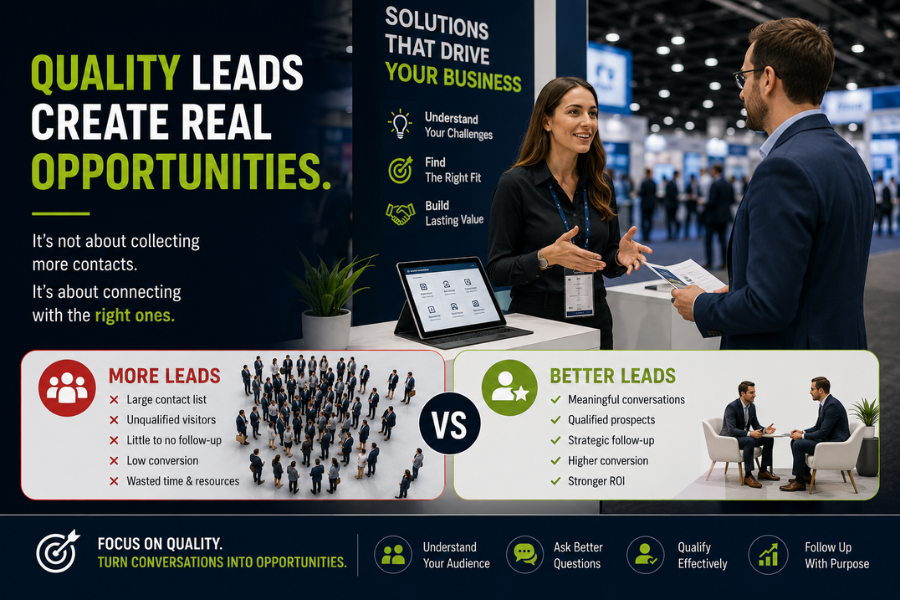
Most exhibitors measure trade show success by the number of leads they collect.
At the end of an event, teams often compare badge scans, business cards, meeting counts, and contact lists. A larger number usually feels like a better outcome.
But a few weeks later, reality often looks different.
One exhibitor may have collected 300 contacts and generated very little business.
Another may have collected 50 contacts and secured multiple opportunities.
What caused the difference?
The answer usually comes down to lead quality rather than lead quantity.
Companies preparing with a trade show booth builder for CES 2027 are increasingly shifting their focus from collecting more contacts to creating more meaningful conversations because they understand that not every lead carries the same value.
The most successful exhibitors don’t just attract visitors.
They identify the right visitors.
More Leads Doesn’t Always Mean Better Results
Trade shows naturally create excitement around numbers.
Large crowds make booths appear successful.
Busy teams feel productive.
Long lead lists create optimism.
However, activity and results are not always the same thing.
A contact list filled with students, vendors, competitors, and unqualified attendees may look impressive but generate little business value.
Successful exhibitors focus on finding attendees who have a genuine need, budget, timeline, or interest in their solutions.
The goal is not simply collecting names.
The goal is identifying opportunities.
Why Every Visitor Should Not Be Treated the Same
Many exhibitors use identical conversations for every attendee.
This approach often wastes valuable time.
Visitors arrive with different objectives:
- Some are researching solutions.
- Some are comparing suppliers.
- Some are existing customers.
- Some are industry partners.
- Some are simply exploring the event.
The strongest booth teams quickly identify who they are speaking with and adjust their conversations accordingly.
This creates more relevant interactions and helps prioritize high-value opportunities.
Questions Generate Better Leads Than Presentations
A common trade show mistake is starting every conversation with a product presentation.
Experienced exhibitors often do the opposite.
They begin with questions.
Questions help uncover:
- Business challenges
- Project goals
- Decision-making authority
- Budget considerations
- Purchasing timelines
The more information an exhibitor gathers, the easier it becomes to determine whether a visitor represents a genuine opportunity.
Companies exhibiting with a trade show booth builder for SEMA Show 2026 often find that consultative conversations generate stronger outcomes than product-focused presentations.
Why Attendees Remember Helpful Exhibitors
Trade show attendees speak with many companies during an event.
Most conversations blend together.
The exhibitors that stand out are often the ones that provide genuine value.
This may involve:
- Industry insights
- Practical recommendations
- Helpful advice
- Problem-solving discussions
Visitors remember companies that help them make better decisions.
This trust frequently becomes the foundation for future business relationships.
Booth Design Can Influence Lead Quality
Booth design affects more than appearance.
It also influences who engages with the exhibit.
Businesses working with a Custom Trade Show Booth Design in USA increasingly focus on creating environments that encourage meaningful interactions rather than simply maximizing traffic.
For example:
- Demonstration areas attract engaged prospects.
- Consultation spaces support deeper discussions.
- Interactive experiences encourage participation.
A strategic layout can improve both visitor engagement and lead quality.
Why Qualification Matters During the Event
Many exhibitors postpone lead evaluation until after the show.
This often creates unnecessary work.
Successful teams qualify leads while conversations are happening.
Simple qualification criteria may include:
- Level of interest
- Business need
- Decision-making role
- Purchase timeframe
- Follow-up priority
This makes post-show outreach significantly more effective.
It also prevents valuable opportunities from getting lost among less relevant contacts.
The Importance of a Clear Follow-Up Plan
Even highly qualified leads can lose momentum if follow-up is delayed.
Trade show attendees return to busy schedules immediately after an event.
Exhibitors that respond quickly often gain an advantage.
An effective follow-up strategy includes:
- Personalized communication
- Relevant resources
- Clear next steps
- Scheduled meetings
- Consistent outreach
The strongest trade show programs treat follow-up as an extension of the event rather than a separate activity.
Why Local Expertise Helps Improve Execution
Trade show success depends on more than lead generation.
Operational efficiency also plays a role.
Installation schedules, venue regulations, and logistical coordination can influence the overall exhibitor experience.
For major industry events, many companies work with a Trade Show Booth Builder in Las Vegas because local expertise helps simplify planning and reduce potential challenges.
When logistics run smoothly, teams can focus on building relationships instead of solving problems.
Long-Term Relationships Deliver the Greatest Value
Not every qualified lead becomes a customer immediately.
Some opportunities require weeks or months of nurturing.
This is why successful exhibitors evaluate trade show performance beyond immediate sales.
Important indicators include:
- Follow-up meetings
- Proposal requests
- Partnership discussions
- Pipeline growth
- Relationship development
Trade shows often create opportunities that continue generating value long after the event ends.
Conclusion
The most successful exhibitors understand that trade show success is not measured by the size of a contact list.
It is measured by the quality of opportunities created.
By asking better questions, focusing on attendee needs, qualifying leads effectively, and following up consistently, exhibitors can turn conversations into meaningful business outcomes.
Because at the end of the day, opportunities create ROI—not just names on a spreadsheet.