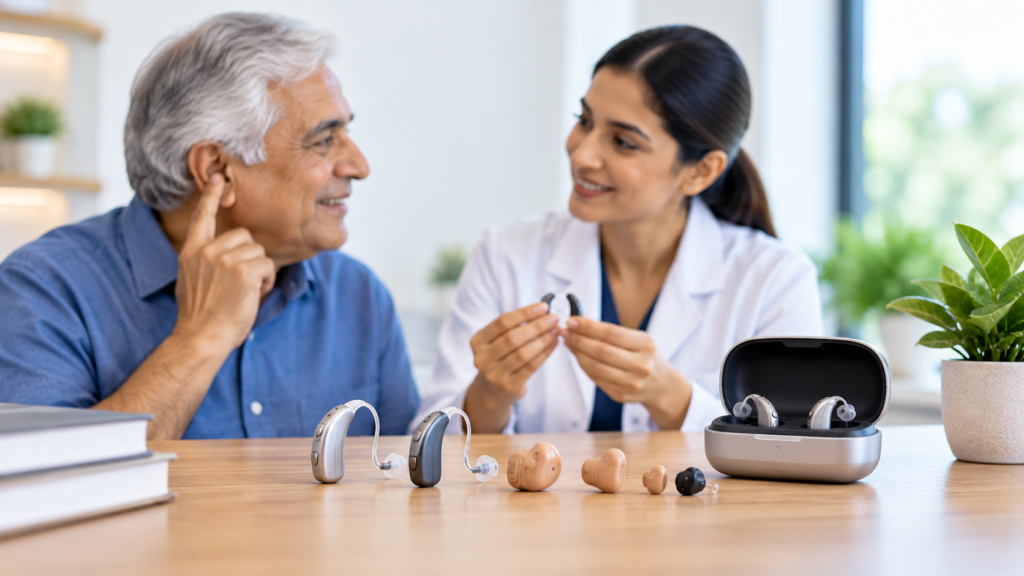
hearing aid
For many people, phone calls are an important part of everyday communication. Whether speaking with family, attending a work meeting, scheduling an appointment, or checking in with a friend, hearing clearly over the phone can make a significant difference.
However, phone conversations can become challenging when someone experiences hearing loss. Without visual cues such as lip movements and facial expressions, it may be harder to understand words, particularly when the speaker talks quickly or the surroundings are noisy.
Hearing aids may help some people communicate more comfortably over the phone. The right device, appropriate settings, and practical communication habits can all contribute to a better experience.
Why Can Phone Conversations Be Difficult With Hearing Loss?
Understanding speech over the phone can be different from listening to someone in person. When talking face-to-face, people often use visual information to support their understanding. On a phone call, they generally depend more heavily on the sound they receive.
Several factors may make phone conversations more difficult:
-
Reduced ability to hear certain speech frequencies
-
Difficulty distinguishing similar-sounding words
-
Background noise around the speaker or listener
-
Poor telephone audio quality
-
Speaking too quickly or too softly
-
Hearing loss that affects one or both ears
The level of difficulty varies depending on the person’s hearing profile and the type of phone being used.
Can Hearing Aids Help With Phone Calls?
Hearing aids can help some people hear telephone conversations more clearly by amplifying and processing incoming sound according to their hearing needs. However, the level of benefit depends on the hearing loss, the device, its programming, and the telephone connection.
Some hearing aids include features designed to support phone use, such as:
-
Wireless connectivity with compatible smartphones
-
Direct audio streaming
-
Telecoil compatibility in selected devices
-
Sound-processing settings
-
Volume and programme controls
Not every hearing aid supports every feature, and compatibility can vary between hearing aid models and phones. A hearing care professional can help users understand which options may be appropriate.
1. Bluetooth Connectivity and Direct Audio Streaming
Some modern hearing aids can connect wirelessly to compatible smartphones. Depending on the device and phone, this may allow audio from calls to be streamed directly to the hearing aids.
Potential benefits include:
-
Less need to hold the phone close to the hearing aid
-
A more convenient way to receive calls
-
Access to compatible phone audio through the hearing devices
-
Possible support for listening with both ears when the system allows it
Bluetooth features are not identical across all hearing aids. Compatibility, operating system requirements, battery use, and available functions should be checked before purchasing a device.
2. Telecoil Technology
Some hearing aids include a telecoil, also called a T-coil. This feature can receive compatible signals from certain telephones and assistive listening systems.
Telecoil performance depends on the hearing aid, telephone, environment, and available signal system. It is not included in every hearing aid, so users who are interested in this feature should discuss it during their hearing care consultation.
A hearing care professional can explain whether telecoil technology may be useful for a person’s specific communication needs.
3. Positioning the Phone Correctly
The best way to hold a phone can vary depending on the hearing aid style and technology.
For some users, placing the phone receiver close to the hearing aid microphone may help. However, holding the phone directly over the wrong part of the device can sometimes create feedback or make the sound harder to hear.
Users can ask their hearing care professional to demonstrate:
-
Where to position the phone
-
How to use the phone with their hearing aid
-
How to manage feedback
-
Which device settings may be helpful
-
Whether wireless streaming is available
Small changes in phone positioning can make conversations more comfortable for some users.
4. Why Background Noise Matters During Phone Calls
Background noise can interfere with speech understanding, even when the person is using a hearing aid. Noise may come from television, traffic, nearby conversations, fans, or other household appliances.
To make phone calls easier, try:
-
Taking calls in a quieter room
-
Turning down background audio
-
Avoiding conversations near loud machinery
-
Using a compatible streaming option when available
-
Asking the speaker to slow down or repeat important information
Hearing aids may include sound-management features, but they cannot remove every unwanted sound or guarantee clear speech in all environments.
5. Adjusting Hearing Aid Settings for Phone Use
Some hearing aids have different listening programmes or settings for particular situations. Depending on the device, a phone-related setting may be available.
A professional may help review:
-
Speech audibility
-
Sound comfort
-
Feedback issues
-
Telephone compatibility
-
Volume preferences
-
Wireless connection settings
Users should not assume that increasing volume is always the best solution. Excessive amplification may be uncomfortable and may not improve speech clarity. If phone conversations remain difficult, a professional review may be more helpful than simply turning up the volume.
6. Communication Strategies That Can Make Calls Easier
Technology is only one part of successful communication. Practical habits can also support better phone conversations.
Ask the Speaker to Talk Clearly
If you are struggling to understand, politely ask the person to speak clearly and at a comfortable pace.
Confirm Important Information
Repeat key details such as dates, times, addresses, and appointment information to confirm that you heard correctly.
Use Text or Written Confirmation When Appropriate
For important instructions, a follow-up text or email may help reduce misunderstandings. This can be especially useful for medical appointments, work-related information, and travel details.
Choose a Suitable Listening Environment
If possible, take calls in a quiet location where fewer competing sounds are present.
Tell Others About Your Communication Needs
Family members, colleagues, and friends may be able to communicate more effectively when they understand what makes listening easier for you.
What Should You Consider Before Buying a Hearing Aid for Phone Use?
If telephone communication is a major concern, mention this during your hearing assessment. Your hearing care professional can help you explore options based on your hearing profile and daily routine.
Consider asking the following questions:
-
Is the hearing aid compatible with my smartphone?
-
Does it support direct phone-call streaming?
-
Does it include a telecoil?
-
How does it perform in noisy environments?
-
Can the device be adjusted for telephone conversations?
-
What happens if the phone or hearing aid loses its wireless connection?
-
Is follow-up programming available after fitting?
The most suitable hearing aid depends on the person’s needs. A feature that is useful for one user may not be essential for another.
When Should You Arrange a Hearing Test?
If phone conversations have become increasingly difficult, a hearing assessment may help identify the underlying issue.
Consider arranging a hearing test if you:
-
Frequently ask people to repeat themselves
-
Struggle to understand phone conversations
-
Find speech unclear even when the volume is high
-
Have difficulty hearing in person as well as over the phone
-
Notice hearing changes in one or both ears
-
Avoid calls because communication feels tiring
A hearing assessment can help determine whether hearing loss is present and whether hearing support or further evaluation may be appropriate.
Sudden hearing loss, particularly in one ear, requires prompt medical assessment. It should not be managed by relying only on a hearing aid or increasing the telephone volume.
How Softone Hearing Can Support Your Hearing Care Journey
Phone communication is an important part of modern life, and difficulty hearing during calls can affect personal, professional, and social interactions. Hearing aids with suitable features may help some users, but professional assessment and appropriate device fitting remain important.
If you are experiencing difficulty understanding conversations, Softone Hearing provides personalized hearing care , including hearing tests, hearing assessments, hearing aids, and guidance based on individual hearing needs.
Whether you are exploring your first hearing aid or looking for support with an existing device, professional advice can help you understand your options and make informed decisions about hearing care.
Visit Softone Hearing to learn more about hearing tests, hearing aids, and hearing care services.