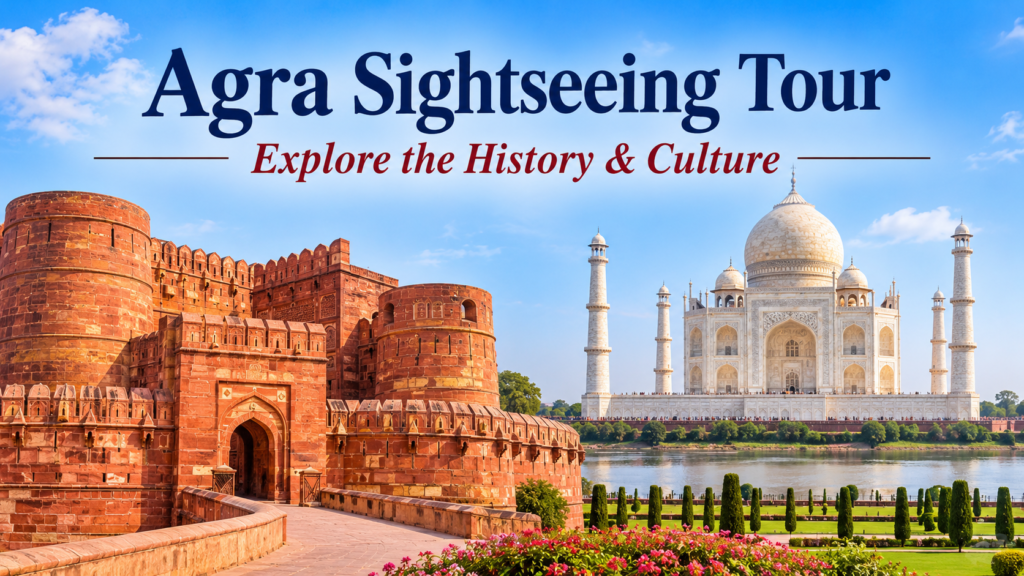
Agra is one of India’s most historically significant cities, known for its magnificent Mughal architecture, centuries-old monuments, traditional markets, and rich cultural heritage. Located in Uttar Pradesh, Agra attracts visitors from around the world who want to discover its historical landmarks and experience its local traditions.
While the Taj Mahal is the city’s most famous attraction, Agra has much more to offer. From impressive forts and historic mosques to traditional food markets and ancient temples, the city provides several interesting experiences for travelers. An Agra Sightseeing Tour is an excellent way to explore these attractions and understand the city’s connection with India’s history.
1. Discover the Magnificent Agra Fort
Agra Fort is one of the most important historical landmarks in the city. Built primarily using red sandstone, this impressive fort served as the main residence of several Mughal emperors.
The complex contains beautiful palaces, courtyards, mosques, and audience halls. Some notable structures include Jahangiri Mahal, Diwan-i-Khas, Diwan-i-Am, and Musamman Burj.
Visitors can observe a combination of Mughal architectural styles and learn about the historical events associated with the fort. Its elevated sections also offer views of the surrounding city and the Taj Mahal.
2. Visit Jama Masjid
Jama Masjid is another important historical and religious landmark in Agra. Built during the Mughal period by Jahanara Begum, the daughter of Emperor Shah Jahan, the mosque is known for its impressive architecture and spacious courtyard.
Its red sandstone construction, decorative details, and traditional Islamic architectural elements make it an interesting place for history and architecture enthusiasts.
The surrounding area also provides a glimpse into everyday life in old Agra, with busy streets, small shops, and traditional markets.
3. Explore Mankameshwar Temple
Mankameshwar Temple is one of the well-known religious sites in Agra. Dedicated to Lord Shiva, the temple attracts devotees throughout the year.
The temple is located in the old city and is associated with local religious traditions and stories. Its surroundings offer an opportunity to observe the spiritual and cultural atmosphere of Agra.
Visitors exploring the city’s heritage can include this temple to understand another aspect of its diverse history.
4. Experience Agra’s Traditional Markets
Agra’s traditional markets are an important part of the city’s identity. These busy shopping areas offer a variety of locally made products, traditional handicrafts, textiles, footwear, decorative items, and souvenirs.
Kinari Bazaar is particularly known for its wedding accessories, decorative materials, and traditional products. Sadar Bazaar is another popular shopping area where visitors can find handicrafts, leather goods, and local specialties.
Walking through these markets allows travelers to experience the city’s everyday lifestyle, interact with local shopkeepers, and discover traditional craftsmanship.
5. Taste Famous Agra Street Food
Food is an essential part of understanding any destination, and Agra has several local specialties worth discovering.
Some popular foods and snacks include:
- Agra Petha: A traditional sweet prepared using ash gourd and available in different flavors.
- Bedai and Jalebi: A popular breakfast combination featuring a spicy fried bread served with sweet jalebi.
- Dalmoth: A crunchy savory snack made with lentils, spices, and other ingredients.
- Pani Puri and Chaat: Popular Indian street foods available at several local food stalls.
- Dahi Bhalla: A traditional snack made with lentil dumplings, yogurt, and chutneys.
Exploring local food stalls provides an opportunity to experience the flavors and culinary traditions of the region.
6. Observe Traditional Havelis and Mughal Architecture
Agra’s historical identity extends beyond its major monuments. The older neighborhoods contain traditional havelis, historic buildings, narrow streets, and architectural details that reflect the city’s past.
These structures provide insights into the residential and commercial lifestyles of earlier generations.
During a heritage walk, visitors can observe traditional balconies, carved entrances, old courtyards, and architectural influences from the Mughal and colonial periods.
Photography enthusiasts may also find interesting subjects in these lesser-explored parts of the city.
7. Discover the Local Spice Markets
Agra’s spice markets offer another interesting experience for visitors. These markets are filled with the aromas of cardamom, cloves, turmeric, saffron, and other spices.
Walking through these busy streets provides a glimpse into the city’s traditional trading activities and local food culture.
Visitors can also learn about different spices, their uses in Indian cooking, and the role of traditional markets in everyday life.
8. Best Time to Visit Agra
October to March is generally considered a comfortable period for exploring Agra. During these months, temperatures are relatively pleasant for outdoor sightseeing and walking tours.
Summer temperatures can become quite high, particularly during May and June. Travelers visiting during this period should plan outdoor activities for early mornings or late afternoons.
Winter mornings may sometimes experience fog, which can affect visibility and travel schedules. Checking local weather conditions before visiting is helpful.
9. Tips for Planning an Agra Sightseeing Tour
A little preparation can make exploring Agra more comfortable and enjoyable. Consider these practical tips before planning your visit:
- Wear comfortable footwear: Walking through historical neighborhoods and monument complexes involves considerable walking.
- Carry drinking water: Staying hydrated is important, especially during warmer months.
- Respect religious customs: Follow appropriate dress guidelines when visiting temples and mosques.
- Check monument timings: Confirm opening hours and entry requirements before visiting historical attractions.
- Keep some cash: Smaller local shops and street vendors may not always accept digital payments.
- Allow enough time: Avoid rushing between attractions so you can appreciate their history and surroundings.
10. Explore Agra with a Guided City Experience
Exploring Agra with a knowledgeable local guide can provide a deeper understanding of its historical landmarks, architecture, and cultural traditions.
A guided walking experience can introduce visitors to the city’s vibrant streets, hidden alleys, historic temples, mosques, traditional havelis, spice markets, and local food stalls.
For travelers interested in discovering these aspects of the city beyond its famous monuments, an Agra Sightseeing Tour by Janu Private Tours offers a guided city experience.
The approximately three-hour experience includes a professional English-speaking walking guide, hotel pickup and drop-off, bottled water, and selected street food tastings. Travelers can discover places such as Jama Masjid and Mankameshwar Temple while learning about Agra’s local heritage.
Conclusion
Agra is much more than the home of the Taj Mahal. Its historic forts, religious landmarks, traditional markets, local food, and architectural heritage reveal many different aspects of the city’s identity.
Whether exploring the impressive Agra Fort, walking through old neighborhoods, tasting traditional sweets, or discovering historic mosques and temples, visitors can find plenty of interesting experiences throughout the city.
A thoughtfully planned Agra sightseeing experience helps travelers appreciate the history, culture, and everyday life that make this destination an important part of India’s heritage.