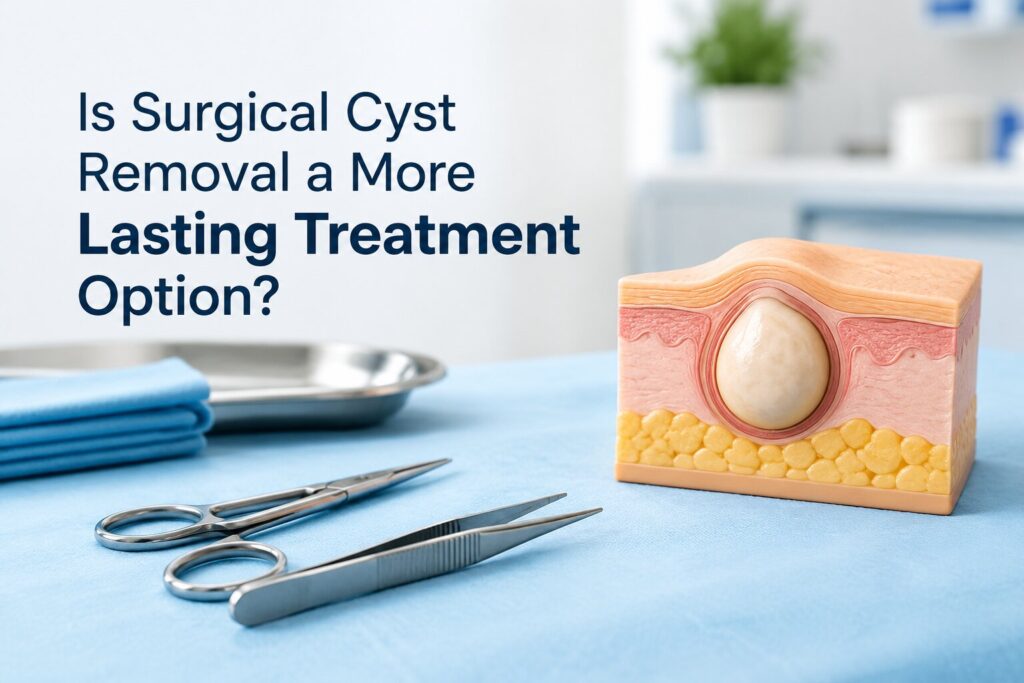
A cyst often begins as a small, painless lump that may attract little attention. Over time, however, it can grow, become irritated, or repeatedly cause discomfort. For people considering cyst removal surgery in London, one important question is whether removing the cyst completely can offer a more lasting solution than simply draining it.
The answer depends on the type, size, location, and condition of the cyst. While some cysts may only need monitoring, complete surgical excision can be considered when a cyst continues to cause problems or repeatedly returns after drainage.
Understanding the difference between these approaches can help you have a more informed conversation with a qualified medical professional.
When a Small Lump Starts Becoming a Bigger Concern
Not every skin lump needs treatment. Some cysts remain small and cause no discomfort for years.
The situation can change when the lump starts becoming larger, painful, or noticeable. A cyst may also become inflamed, making the surrounding skin red, swollen, and tender.
For some people, appearance is another important consideration. A visible lump on the face, neck, or another exposed area can affect confidence even when it is medically harmless.
Common reasons people seek assessment include:
- A cyst has gradually increased in size and is becoming more noticeable or uncomfortable.
- The area repeatedly becomes swollen, tender, or irritated, making everyday activities less comfortable.
- A cyst is located on a visible part of the body and is causing ongoing cosmetic concerns.
- Previous drainage provided temporary relief, but the same lump has gradually returned.
- The lump has changed in appearance or behaviour and needs professional assessment before treatment.
A medical assessment is particularly important for a new, changing, or unexplained lump because not every lump beneath the skin is a cyst.
Why Drainage May Not Provide a Lasting Answer
Drainage may be appropriate when a cyst becomes inflamed or infected. The procedure releases the material inside the cyst, helping reduce pressure and discomfort.
However, drainage does not necessarily remove the cyst wall or capsule.
This is an important difference. If the capsule remains beneath the skin, the cyst can potentially fill again after the contents have been removed.
That does not mean drainage is ineffective. It can have an important role in managing an inflamed cyst, particularly when complete excision is not appropriate at that particular time.
In some cases, a doctor may recommend drainage first and consider complete removal after the inflammation has settled. HSPM describes drainage as an option for contaminated or inflamed cysts before a later excision may be considered.
Why Removing the Cyst and Capsule Matters
Complete surgical excision takes a different approach. Instead of simply releasing the material inside, the procedure aims to remove the cyst itself along with its capsule.
The capsule is important because it forms part of the structure that surrounds the cyst contents.
When the entire cyst is removed successfully, there is less tissue left behind that could allow the same cyst to reform. This is why complete excision is often considered a more definitive treatment for suitable, non-infected cysts.
The potential long-term benefits include:
- Complete excision addresses the cyst structure rather than simply emptying its contents.
- Removing the capsule can reduce the likelihood of the same cyst returning in that location.
- A carefully planned incision can help the clinician manage both treatment and cosmetic considerations.
- Treating a recurring cyst can prevent repeated episodes of swelling, tenderness, and irritation.
- Professional removal avoids the risks associated with squeezing or attempting to open the cyst yourself.
HSPM states that its preferred approach for suitable skin cysts involves removing the complete cyst and capsule through excision.
Is Complete Excision Always the Better Choice?
Not necessarily.
The right treatment option depends on each patient’s individual circumstances. A cyst that is infected or significantly inflamed may require a different approach from a calm, uncomplicated cyst.
Trying to remove an inflamed cyst immediately may not always be appropriate. A clinician may first manage the inflammation and then consider definitive excision once the area has settled.
Likewise, a small cyst that remains symptom-free may not require treatment straight away.
The decision should consider:
- The cyst’s present condition, including any signs of inflammation or infection.
- Its size, location, and appearance, along with any changes noticed by the patient.
- Previous treatments and whether the cyst has returned after drainage or other procedures.
- The possible advantages of removal weighed against risks such as scarring or infection.
- The patient’s individual concerns, expectations and reasons for wanting treatment.
This personalised approach is important because there is no single treatment that is suitable for every skin cyst.
What Happens During Surgical Removal?
Complete cyst removal is generally performed as a minor procedure using local anaesthetic.
The treatment area is numbed before the clinician makes a carefully planned incision over or around the cyst. The cyst is then separated from the surrounding tissue and removed.
Where appropriate, the capsule is removed with the cyst to reduce the chance of recurrence.
The wound may then be closed with sutures. The exact technique depends on factors such as the cyst’s size, position and condition.
HSPM describes cyst excision as a minor procedure under local anaesthetic involving a small incision, removal of the cyst and closure of the treatment area.
For patients, understanding the basic process can make the procedure feel less uncertain. A consultation should also provide an opportunity to discuss the expected healing period, aftercare and potential scarring.
Why Location Can Influence the Treatment Approach
The location of a cyst can influence both the treatment plan and cosmetic considerations.
A cyst on the back may have different practical considerations from one on the face or neck. Areas that are more visible may require particular attention to incision placement and wound healing.
This does not mean a scar can be completely avoided. Any procedure involving an incision can leave some degree of scarring, and individual healing varies.
A qualified clinician can discuss the likely appearance of the wound and explain how aftercare may support the healing process.
Factors that can influence the final scar include:
- The size and position of the cyst can affect the length and placement of the incision.
- Individual healing characteristics can influence how the scar changes over time.
- Careful wound management can support normal healing after the procedure.
- Following post-treatment instructions can help reduce avoidable irritation during recovery.
- A clinician can explain realistic expectations rather than promising a completely scar-free result.
What Can Recovery Look Like?
Recovery after minor cyst excision is usually manageable, although the experience differs from one person to another.
Some patients may experience mild tenderness, bruising, or swelling around the treated area. These effects generally settle as the wound heals.
Proper aftercare plays an important role throughout the recovery period. The clinician should provide instructions about keeping the area clean, protecting the wound, and attending any recommended follow-up.
HSPM states that patients receive aftercare guidance following cyst removal, including instructions for looking after the treated area.
It is also worth remembering that the wound and scar can continue changing during the healing process. The appearance immediately after treatment does not necessarily represent the final result.
Why Professional Assessment Should Come First
A persistent lump should not automatically be assumed to be a cyst.
Other conditions can sometimes produce similar-looking lumps beneath the skin. A professional assessment helps determine whether the lesion is likely to be a cyst and whether removal is appropriate.
Medical assessment becomes particularly important if the lump:
- Has appeared recently and you are unsure what it is or why it has developed.
- Is growing quickly or has changed noticeably in size, shape or appearance.
- Has become painful, red, swollen or unusually tender around the surrounding skin.
- Feels different from other cysts or lumps you have previously experienced.
- Continues to cause concern even though it does not appear to be causing physical symptoms.
The NHS recommends medical assessment for unexplained skin lumps and advises against squeezing cysts yourself.
Why the Choice of Clinic Can Make a Difference
Once complete removal has been recommended, choosing an appropriate medical setting is another consideration.
A Harley Street skin clinic can provide access to clinicians working within a specialist medical environment, where dermatological assessment and minor skin procedures are part of the service.
Harley Street Prestige Medical provides cyst removal as part of its cosmetic dermatology services and states that its minor surgical procedures are performed in a regulated clinical environment by medical professionals.
When comparing clinics, patients can consider:
- Whether the procedure is performed by an appropriately qualified medical professional.
- Whether the clinic provides an assessment before recommending a treatment.
- Whether the practitioner explains possible risks, benefits and expected recovery.
- Whether the clinic provides clear wound-care and aftercare instructions.
- Whether cosmetic factors such as incision placement and potential scarring are discussed.
A thorough consultation should help you understand why a specific treatment has been advised.
When Drainage and Excision May Work Together
It is easy to think of drainage and surgical removal as competing choices, but they may sometimes form different stages of the same treatment plan.
An inflamed or infected cyst may first require drainage to reduce pressure and manage the immediate problem. Once the inflammation has settled, complete excision may then be considered.
This approach can be useful when immediate excision is not considered suitable.
A staged treatment plan may involve:
- Initial assessment to determine whether the cyst is inflamed, infected, or suitable for immediate removal.
- Drainage when necessary to release infected or accumulated material from the cyst.
- A period of healing to allow inflammation around the area to settle.
- Follow-up assessment before deciding whether complete excision is appropriate.
- Definitive removal of the cyst and capsule when the clinical situation allows.
HSPM also explains that drainage may prepare an inflamed cyst for future excision rather than necessarily serving as the final treatment.
Questions Worth Asking Before the Procedure
A consultation is an opportunity to understand your treatment rather than simply agreeing to a procedure.
You can ask the clinician what type of cyst they believe you have, whether removal is necessary, and why they recommend one approach over another.
It can also be helpful to discuss the expected scar, recovery time, and aftercare requirements before treatment.
Consider asking:
- Is complete removal suitable for my cyst based on its current condition?
- Would drainage or monitoring be a better option in my situation?
- Will the cyst capsule be removed during the procedure?
- Where is the incision likely to be placed?
- What type of scar should I realistically expect?
- How should I care for the wound after treatment?
- What symptoms should prompt me to contact the clinic after the procedure?
Asking these questions can give you a clearer understanding of treatment benefits and limitations.
Could Complete Removal Reduce Future Problems?
For a suitable cyst, removing both the cyst and its capsule may provide a longer-lasting result than drainage alone.
This can be particularly relevant for people who have experienced the same cyst returning after previous drainage.
However, it is important to separate recurrence of the treated cyst from developing a new cyst somewhere else. Complete removal of one cyst does not mean a person can never develop another cyst.
The aim is to address the existing cyst as thoroughly as possible.
There is also no guarantee that every procedure will produce the same outcome for every patient. Healing, scarring, and recurrence can vary depending on individual circumstances.
The Long-Term Advantage Comes From Complete Treatment
The main reason surgical excision can be a better long-term option for some cysts is straightforward: it aims to remove the entire cyst rather than simply emptying it.
Drainage can be valuable when immediate relief is needed, particularly for an inflamed or infected cyst. However, when complete excision is clinically appropriate, removing the cyst and its capsule may offer a more definitive approach.
For patients dealing with a persistent, recurring, or troublesome cyst, professional assessment is the right starting point.
A clinician can determine whether the lump is actually a cyst, assess its condition, and recommend the treatment that best fits the individual case.
Frequently Asked Questions
Can a cyst return after surgical removal?
A cyst can potentially return, but complete removal of the cyst and capsule is intended to reduce the chance of recurrence compared with drainage alone.
Is drainage better than surgical removal?
Drainage can be useful for an inflamed or infected cyst, while complete excision may offer a more lasting solution for a suitable non-infected cyst.
Does cyst removal leave a scar?
An incision can leave a scar, although its final appearance varies between patients and depends on factors such as location, size, and individual healing.
How long does cyst removal surgery take?
The procedure is generally a minor outpatient treatment under local anaesthetic, but the exact duration depends on the cyst and the technique required.
Should I have a lump checked before removal?
Yes. A new, changing, or unexplained lump should be assessed by a qualified medical professional before deciding whether surgical removal is appropriate.
Final Thoughts
A cyst does not always need to be removed, but recurring, painful, enlarging, or cosmetically concerning cysts may require professional treatment.
When complete excision is appropriate, removing both the cyst and its capsule can provide a more definitive result than drainage alone. The right approach, however, depends on the condition of the cyst and the individual patient.
If you are considering treatment, begin with a professional medical assessment. Understanding your options, expected recovery, possible scarring, and long-term outcomes can help you make a confident and informed decision.