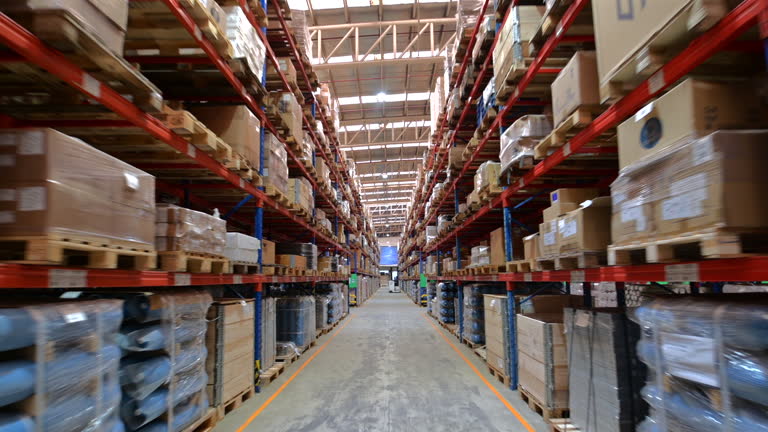
View of the storage room compartment in warehouse with fully units of cargo are various shipment ready for shipping to the destination or delivery to the site of working
Businesses that ship products across the Gulf and beyond often reach a point where storing and packing orders in-house stops making sense. Space runs short, peak seasons strain staff, and delivery promises become harder to keep. That is usually when owners start researching a 3PL warehousing service in Dubai, a model where a third-party logistics company stores inventory and handles fulfillment on a company’s behalf. Providers such as TABZ Logistics LLC operate in this space, and this guide explains, step by step, how to set up and manage the arrangement so it runs smoothly from day one.
What a 3PL Warehousing Service Does
Third-party logistics, or 3PL, means outsourcing part or all of the physical side of supply chain work. A warehousing provider receives goods, stores them, tracks stock levels, picks and packs orders, and often arranges outbound shipping or returns handling. Rather than building and staffing a facility, a company pays for the space and services it uses, which can make costs more flexible as demand rises and falls.
Dubai suits this model for several reasons. Its location links Asia, Europe, and Africa, its ports and airports handle large volumes of cargo, and its free zones offer customs and ownership arrangements that many importers and re-exporters find useful. Because rules can differ between a free zone and the mainland, it is worth confirming which setup fits your goods before choosing a facility. Understanding how a 3PL warehousing service in Dubai handles customs paperwork, storage, and delivery is the first step toward choosing well.
Step 1: Define Your Inventory and Order Profile
Know Your Product Mix
Start with the goods themselves. Size, weight, shelf life, fragility, and storage requirements all shape what kind of space you need. Electronics, apparel, food, cosmetics, and medical supplies each have different handling rules, and some require temperature control, which matters in a climate where summer heat is intense. Write these details down before talking to any provider so quotes and capabilities can be compared on the same terms.
Map Your Order Volumes
Next, look at how orders flow. How many orders ship on a typical day, and how much do volumes jump during sales or holidays such as Ramadan, Eid, or year-end shopping? How many items does a typical order contain, and what share of orders are returned? These figures help a provider estimate labor, space, and pricing, and they prevent unpleasant surprises when demand spikes.
Step 2: Check the Capabilities That Matter
Once your profile is clear, compare providers against the capabilities that affect your operation most. A useful checklist includes:
- Storage options such as ambient, temperature-controlled, and bonded space, depending on your goods
- Customs support, including documentation and experience with import, export, and re-export
- Pick, pack, and labeling services, including kitting or custom packaging if needed
- Returns handling and the process for inspecting and restocking items
- Inventory accuracy practices such as cycle counts and barcode scanning
- Safety, security, and insurance, including fire protection and access control
- Transport links to the ports, airports, and last-mile carriers you rely on
Ask for specifics in each area rather than general promises. A provider that can explain how it counts stock or handles damaged goods is showing real operating discipline.
Step 3: Plan the Onboarding and Transition
Prepare Product Data and Labeling
Clean data prevents most early problems. Provide accurate product codes, dimensions, weights, and barcodes, and agree on how items will be labeled on arrival. Decide in advance who handles customs classification and import paperwork so nothing sits at the port waiting for documents.
Test the Receiving Process
Rather than moving everything at once, many businesses send a smaller first shipment to test the process. This allows both sides to check receiving accuracy, storage placement, and system updates. Any gaps in communication or paperwork can be corrected while the stakes are still low.
Align Systems and Responsibilities
Confirm how the warehouse software will connect with your online store, ordering platform, or accounting tools, and who is responsible for each task. A written service agreement should cover service levels, response times, liability for loss or damage, storage and handling fees, and how either side can end the arrangement. Clear terms protect both parties.
Step 4: Monitor Performance After Launch
Track the Right Metrics
After launch, review a few core measures regularly: order accuracy, on-time dispatch, inventory accuracy, dock-to-stock time, and return processing time. Regular reports make problems visible early and give you a factual basis for conversations with your provider.
Hold Regular Reviews
A monthly or quarterly review keeps the relationship healthy. Discuss seasonal forecasts, upcoming product launches, and any recurring issues. Providers can plan space and staff much better when they hear about changes in advance, which matters even more for a 3PL warehousing service in Dubai supporting fast-moving online sellers during peak seasons.
Final Thoughts
Setting up outsourced warehousing works best when preparation comes first. Know your inventory, compare capabilities in detail, test the onboarding, and review results on a schedule. Readers who want a closer look at how this model works in practice can explore a 3PL warehousing service in Dubai and measure it against the checklist above.
Frequently Asked Questions
What is the difference between a 3PL and a freight forwarder?
A freight forwarder mainly arranges the movement of goods between locations, including shipping bookings and customs documents. A 3PL warehousing provider focuses on storing inventory and fulfilling orders, though many companies offer both. Some businesses use each for different parts of their supply chain.
Which businesses benefit most from outsourced warehousing?
E-commerce sellers, importers, distributors, and growing brands often benefit because they can scale space and labor without long-term facility commitments. Companies with seasonal peaks also gain flexibility. Businesses with very specialized handling needs should check carefully that a provider can meet them.
How are 3PL warehousing fees usually structured?
Fees often combine charges for storage, such as per pallet or per cubic meter, with fees for receiving, picking, packing, and returns. Some providers add charges for special packaging or reporting. Requesting a full fee schedule in writing helps avoid unexpected costs later.
How long does it take to onboard with a 3PL provider?
Timelines vary with product complexity, system integration, and customs readiness. Simple setups can move quickly, while those involving software integration or regulated goods usually take longer. A staged rollout that begins with a small test shipment is a common way to reduce risk.