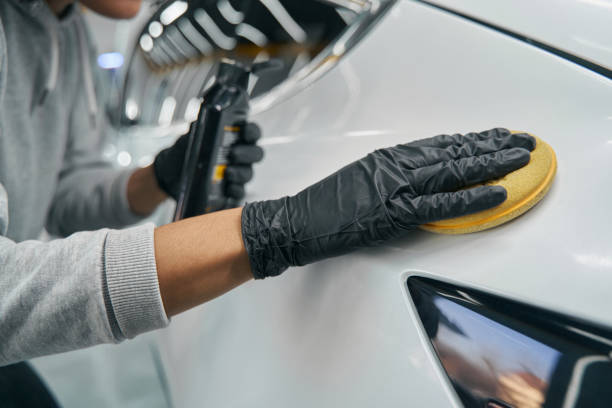
Cropped photo of experienced worker in protective gloves waxing exterior auto body panel
Few things change the look of a vehicle like a fresh coat of wax, yet most drivers know surprisingly little about what it does beneath the shine. Between old garage advice and new product labels, the topic can get confusing quickly. This article explains how car waxing in Boise ID works in practical terms, from the way protection forms to the steps that help results last through hot summers and icy winters. Local detailers such as The Detail Doctors field the same questions every season, and the answers below cover the ones that come up most often.
A Short Story of Wax and Paint
Wax has protected painted surfaces for a long time, starting with natural carnauba, a hard plant wax harvested from the leaves of Brazilian palms. Early car owners relied on paste waxes because they gave paint a warm glow and a slick surface that shed water. Modern products have expanded the choices, adding synthetic polymers and ceramic-infused formulas, but the basic idea has not changed. A thin, sacrificial layer sits on top of the clear coat so that sun, rain, and grime wear down that layer instead of the paint beneath it.
What Wax Actually Does to Your Finish
A Thin Barrier Against the Elements
Automotive paint today is usually a color layer topped with a clear coat, and the clear coat does most of the protective work. Over time ultraviolet light, bird droppings, tree sap, and road film slowly dull and etch it. A layer of wax or sealant adds a protective film that takes the first hit. It is not armor, and it does not repair damage, but it slows the rate at which ordinary wear builds up.
Gloss, Depth, and Water Behavior
Wax also fills microscopic texture in the surface, which helps light reflect more evenly and gives paint a deeper look. Water tends to bead and slide off a waxed panel, carrying some dirt along with it, which makes the car easier to rinse. When water stops beading and begins to spread flat, many detailers treat that as a sign the protective layer is thinning.
Choosing Between Wax Types
Not every product suits every driver. The right choice depends on how much time you want to spend, how the car is used, and what finish you prefer. The table below compares three common categories in general terms.
| Type | Typical Look | Typical Durability | Effort |
|---|---|---|---|
| Natural carnauba paste | Warm, deep glow | Several weeks | Higher, with hand application and buffing |
| Synthetic sealant | Sharp, mirror-like shine | Often a few months | Moderate, easy to apply and remove |
| Ceramic-infused wax or spray | Slick, glassy finish | Often several months, sometimes longer | Low to moderate, many are spray-on |
These ranges are rough guides, since durability depends on the product, the preparation, the weather, and how often the car is washed. Reading the label and following its directions for curing time and temperature matters more than chasing any single brand claim.
Preparing the Surface Before Wax Goes On
Wash and Decontaminate
Wax bonds best to clean paint. A two-bucket wash with a pH-balanced car shampoo removes loose dirt without grinding it into the finish. Rinsing thoroughly and drying with a clean microfiber towel prevents water spots, which can show up wherever tap water is hard.
Clay and Polish When Needed
If the paint feels rough after washing, bonded contaminants such as industrial fallout or tree sap may be present. A clay bar or clay mitt lifts these particles. Light swirl marks or oxidation may call for polishing, which levels microscopic imperfections so the wax sits on a smoother surface. Polish and wax serve different purposes, and polishing first usually gives the best-looking result.
Check Temperature and Shade
Applying wax to hot paint or in direct sun makes it dry too quickly and harder to buff. A shaded panel that is cool to the touch gives the product time to spread evenly and cure as intended.
Applying and Removing Wax Without Streaks
Less is more with wax. A thin, even coat applied with a foam pad in small sections works better than a thick layer, which is harder to remove and wastes product. Work in straight lines or gentle overlapping passes, then let the wax haze according to the label before buffing it off with a clean, soft microfiber towel, flipping the towel often. Avoid getting wax on black plastic trim, where it can leave white residue, and keep it off rubber seals. If streaks remain, a light buff with a fresh towel usually clears them. Taking your time here matters more than speed.
Keeping Paint Protected Through Idaho Seasons
Summer Sun and Dust
Boise’s dry, sunny summers expose paint to strong ultraviolet light and fine dust, and wildfire smoke can leave ash on surfaces during some seasons. These conditions make regular washing and a dependable protective layer especially useful for car waxing in Boise ID. Parking in shade, using a quality sunshade, and rinsing off ash promptly rather than wiping it dry all help limit abrasion.
Winter Roads and Cold Snaps
Cold months bring road treatments, slush, and temperature swings that stress paint and trim. Applying a durable sealant or wax in autumn gives the finish a protective layer before conditions turn harsh, and rinsing the lower panels and underbody during thaws removes residue that can linger. Washing on a milder day, and drying door seals to prevent freezing, keeps winter maintenance simple.
When Wax Is Not Enough
Wax maintains paint but cannot fix deep scratches, faded clear coat, or rust. Those problems need correction, such as machine polishing, paint repair, or in severe cases refinishing. It also helps to remember that wax wears off gradually, so maintenance means a reapplication schedule rather than a single treatment. If a finish looks dull despite regular care, a professional assessment can show whether the paint needs correction before another coat goes on. Anyone comparing options for car waxing in Boise ID can also ask what preparation steps and product type a service includes, since both strongly affect how long the result lasts.
Final Thoughts
Wax is a simple habit with a visible payoff. Clean the paint properly, pick a product that matches your routine, apply it thinly, and adjust the schedule to the seasons. Readers who want to see how these steps fit into a broader care routine can learn more about car waxing in Boise ID and compare it with their own approach.
Frequently Asked Questions
How often should I wax my car?
Many drivers wax every two to four months, though the right interval depends on the product, parking conditions, and washing habits. A good rule is to reapply when water stops beading on the surface. Cars kept outdoors in strong sun or harsh winters often need more frequent coats.
Is car wax the same as a sealant or ceramic coating?
No. Traditional wax is usually a natural or blended product that sits on top of the paint, sealants are synthetic and often last longer, and ceramic coatings are semi-permanent layers that bond more strongly and need careful preparation. Each offers a different balance of cost, durability, and effort.
Can I wax a car in direct sunlight?
It is best to avoid it. Heat makes wax dry too fast, which can cause streaking and make it difficult to buff off. Working in shade on cool panels, or inside a garage, gives much more even results and a cleaner finish.
Does wax remove scratches?
Not really. Wax may fill and hide very fine marks temporarily, but it does not repair them. Scratches that catch a fingernail usually need polishing or paint repair, and wax is best applied afterward to protect the corrected finish.