Guest comfort plays an important role in creating a positive hotel experience. While comfortable beds, clean rooms, and attentive service often receive the most attention, bathroom amenities also influence how guests perceive a property. Providing quality shampoo is a simple but important way to make guests feel welcome while maintaining consistent housekeeping standards.
Choosing the right hotel shampoo supply involves more than purchasing bottles in bulk. Hotel managers need to consider product quality, packaging, fragrance, ingredient information, guest preferences, storage requirements, and overall operating costs. The best solution should suit the hotel’s brand, room category, occupancy levels, and sustainability goals.
Whether you manage a boutique hotel, a luxury resort, serviced apartments, a motel, or a large accommodation group, a reliable shampoo supply helps ensure that guest bathrooms remain properly stocked.
This guide explains how to choose hotel shampoo products, compare packaging options, manage bulk purchasing, improve inventory control, and select a supplier that supports your property’s operational needs.
What Is Hotel Shampoo Supply?
Hotel shampoo supply refers to the sourcing and ongoing provision of shampoo products for guest bathrooms and other accommodation facilities. These products may be purchased through hospitality suppliers, hotel amenity manufacturers, wholesale distributors, or specialist personal care businesses.
Depending on the property, the supply may include individual shampoo bottles, refillable dispensers, bulk containers, branded amenities, and complementary products such as conditioner and body wash.
Hotels need a supply arrangement that matches their room capacity, occupancy patterns, housekeeping routines, and guest expectations.
For example, a small boutique hotel may prefer individually packaged shampoo bottles that complement its room presentation. A large hotel may choose wall-mounted dispensers to simplify replenishment and reduce the amount of packaging used.
A well-planned supply strategy helps maintain consistent product availability, supports housekeeping efficiency, and prevents unnecessary purchasing costs.
The objective is to provide suitable amenities without compromising hygiene, product quality, or the overall guest experience.
Why Quality Hotel Shampoo Matters
Bathroom amenities are part of the service guests experience directly. Although shampoo may seem like a minor detail, an unsuitable product or an empty dispenser can create a poor impression.
Improving guest satisfaction
Guests expect hotel bathrooms to be clean, functional, and adequately stocked. Providing shampoo that is easy to use and suitable for general guest needs helps meet these expectations.
A pleasant fragrance, comfortable texture, and effective cleansing performance can contribute to a positive bathroom experience.
However, individual hair types and preferences vary. Hotels should avoid assuming that one product will meet every guest’s needs, particularly when serving travellers with different personal care preferences.
Supporting a consistent brand experience
The products offered in a guest bathroom can reinforce the hotel’s identity.
A luxury property may select premium shampoo with carefully designed packaging and a distinctive fragrance. A business hotel may prioritise practical, easy-to-use products that support efficient room turnover.
Boutique accommodation may choose locally produced or branded toiletries that complement its design and hospitality concept.
The shampoo should fit naturally within the wider guest amenity offering rather than feeling disconnected from the property’s positioning.
Maintaining housekeeping standards
Consistent product availability makes room preparation more predictable.
When housekeeping teams know which products to use, how much to replenish, and where replacement stock is stored, they can prepare rooms more efficiently.
Standardised products also make purchasing and inventory management easier, particularly when several staff members are responsible for replenishment.
Protecting value for money
The cheapest shampoo is not necessarily the most economical choice.
Products that guests dislike, dispensers that leak, poorly designed packaging, or bottles that are difficult to use can create waste and additional housekeeping work.
Evaluating product performance, packaging quality, and total cost per occupied room provides a more useful basis for purchasing decisions.
Types of Hotel Shampoo Products
Hotels can choose from several shampoo formats depending on their service style, budget, and operational requirements.
Individual shampoo bottles
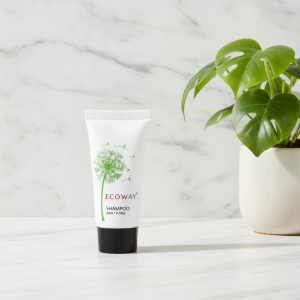
Individual bottles are a familiar option for hotel bathrooms. They allow guests to use a sealed container and provide flexibility in the amount and type of product offered.
Small bottles are commonly considered for boutique properties, premium rooms, and accommodation where individually presented amenities are part of the guest experience.
Their disadvantages include packaging waste, the need for regular replenishment, and the storage space required for large quantities of small containers.
Hotels choosing this format should check bottle quality, closure security, label durability, and whether the packaging protects the product during transport and storage.
Refillable shampoo dispensers
Refillable dispensers allow hotels to provide shampoo through wall-mounted or securely attached containers.
They can reduce the need for individual bottles and may simplify housekeeping because staff can replenish several rooms from larger containers.
However, dispensers require suitable cleaning, maintenance, and refill procedures. Hotels should select systems designed for the intended use and follow the manufacturer’s hygiene instructions.
The installation should also make the dispenser accessible to guests while reducing the risk of leakage, tampering, or product contamination.
Bulk shampoo containers
Bulk shampoo containers are useful for properties that replenish dispensers regularly or manage large numbers of guest rooms.
Buying shampoo in larger formats can reduce the cost of packaging and simplify stock handling.
Before purchasing, confirm that the product is specifically intended for the proposed dispensing system and that the container can be handled safely by housekeeping staff.
Hotels should also consider storage space, container opening methods, shelf life, and the time needed to transfer product into dispensers.
Premium and luxury shampoo
Luxury hotels may select higher-end shampoo products that complement their room rates and brand positioning.
These products may feature more distinctive fragrances, refined packaging, or specialised formulations.
However, premium positioning should be supported by product quality and clear ingredient information rather than packaging alone.
Hotels should request samples before committing to a large order so that staff can assess the product’s fragrance, consistency, usability, and overall presentation.
Shampoo and conditioner combinations
Some accommodation providers offer combined shampoo and conditioner products to simplify the guest amenity range.
These products may be practical for short stays, budget accommodation, and facilities that prioritise straightforward bathroom supplies.
However, combined products may not meet every guest’s preferences. Hotels serving luxury travellers or longer-stay guests may prefer separate shampoo and conditioner options.
The best format depends on the guest profile and the level of amenity service the property intends to provide.
How to Choose the Right Hotel Shampoo Supply
Selecting a suitable product requires balancing guest expectations, operational needs, and purchasing costs.
Understand your guests
Start by considering the people who typically stay at your property.
Business travellers may appreciate practical amenities that are easy to use and reliably replenished. Families may prefer straightforward products with clear labelling. Luxury guests may expect a more refined presentation.
Extended-stay accommodation may also benefit from larger dispensers or products that reduce the need for frequent replenishment.
Review guest feedback and housekeeping observations to identify recurring concerns about bathroom amenities.
Evaluate product quality
Before placing a large order, test the shampoo in realistic conditions.
Assess how easily it dispenses, how it feels during use, whether the fragrance is appropriate, and whether the packaging remains secure during storage.
Check the ingredient list and product information, particularly if the property wants to avoid certain ingredients or communicate specific formulation characteristics.
Avoid making claims such as hypoallergenic, dermatologically tested, or suitable for sensitive skin unless they are supported by appropriate product documentation.
Consider fragrance
Fragrance contributes to the sensory experience of a bathroom amenity, but preferences differ.
A subtle, fresh scent may suit a wide range of guests, while a strong fragrance may be less suitable for shared accommodation or properties serving guests with fragrance sensitivities.
If possible, test several options and choose one that fits the hotel’s overall style without overwhelming the bathroom environment.
Review packaging and usability
Packaging should be easy for guests to open and convenient for housekeeping teams to handle.
Individual bottles should have secure closures, while dispensers should be simple to operate and suitable for the intended installation location.
Clear product labels are important because guests need to distinguish shampoo from conditioner and body wash.
Packaging should also withstand the storage and handling conditions associated with hotel operations.
Compare total operating costs
The purchase price is only one part of the cost of supplying shampoo.
Hotels should also consider delivery fees, storage requirements, product waste, dispenser maintenance, staff time, and the frequency of replenishment.
A product with a slightly higher purchase price may provide better overall value if it is easier to dispense, reduces waste, or requires less frequent replacement.
Benefits of Buying Hotel Shampoo in Bulk
Bulk purchasing can be a practical strategy for accommodation providers that use consistent products across multiple rooms.
Lower purchasing costs
Wholesale suppliers may offer different price levels based on order volume, product format, and contract terms.
Buying larger quantities can reduce the unit price, although the actual savings depend on the supplier and the size of the order.
Compare the cost per usable quantity rather than simply comparing the price of individual containers.
More consistent product availability
Maintaining sufficient stock reduces the risk of running out of shampoo during busy periods.
This is particularly important for hotels with high occupancy, seasonal demand, or limited access to nearby suppliers.
A predictable purchasing schedule also makes it easier for housekeeping teams to maintain consistent room standards.
Simplified procurement
Using a regular supplier can reduce the time spent sourcing different products and managing multiple deliveries.
Hotels may be able to consolidate shampoo purchases with other bathroom amenities, such as conditioner, body wash, soap, and hand wash.
Before consolidating orders, confirm that the supplier can maintain product availability and meet the property’s delivery requirements.
Better stock planning
Bulk orders can support more structured inventory management when purchasing is based on actual usage.
However, ordering too much stock can create storage problems and increase the risk of products expiring before they are used.
A good purchasing plan balances unit savings against realistic consumption, storage capacity, and shelf life.
How to Calculate Hotel Shampoo Requirements
Estimating shampoo consumption helps prevent shortages and unnecessary overstocking.
Start by identifying the number of guest rooms, average occupancy, length of stay, and the amount of shampoo typically used during room servicing.
For individual bottles, calculate the number of bottles required per occupied room-night or per completed stay, depending on your replenishment policy.
For dispensers, estimate the quantity consumed per occupied room-night and multiply it by the expected number of occupied room-nights over the purchasing period.
For example, a hotel expecting 1,500 occupied room-nights in a month should use its historical consumption data to estimate the required shampoo volume. It can then add a reasonable reserve based on delivery lead times and demand variability.
Avoid using a universal consumption figure because guest behaviour, dispenser size, product viscosity, room occupancy, and housekeeping policies differ.
Review actual usage regularly and adjust future orders accordingly.
What to Look for in a Hotel Shampoo Supplier
A dependable supplier should provide suitable products, clear documentation, consistent availability, and reliable delivery.
Product information and documentation
Ask for complete product details, including ingredient information, container sizes, storage instructions, and shelf-life information where applicable.
If your hotel has specific procurement requirements, request relevant safety documentation and evidence supporting any product claims.
Clear documentation helps purchasing teams evaluate products and communicate accurately with guests.
Reliable stock and delivery
Late deliveries can create operational problems, especially during peak occupancy.
Ask about normal delivery times, minimum order quantities, stock availability, and how the supplier handles unexpected shortages.
If the hotel depends on a particular branded product, confirm whether the supplier can maintain consistent supply or offer an acceptable alternative.
Flexible order quantities
Small properties may not need the same order volumes as large hotel groups.
Look for a supplier whose minimum order requirements and delivery arrangements suit your storage capacity and usage levels.
Where possible, discuss repeat orders or scheduled deliveries to reduce the need for emergency purchases.
Product samples
Samples allow the hotel to evaluate shampoo before committing to a large order.
Test the product in guest bathrooms or through a controlled internal review. Assess packaging, fragrance, dispensing, and the overall experience.
A sample review can help prevent expensive purchasing mistakes and reduce the risk of receiving a product that does not suit the property’s standards.
Clear pricing and terms
Ask the supplier to explain unit pricing, freight charges, minimum quantities, payment terms, and any discounts linked to order volume.
Check whether prices can change during the contract period and how product substitutions are handled.
A clear agreement helps purchasing teams plan budgets and compare suppliers fairly.
Sustainable Hotel Shampoo Supply Options
Sustainability is an increasingly important consideration for accommodation providers looking to reduce unnecessary packaging and improve purchasing practices.
The most suitable approach depends on the product, packaging, dispensing system, and the hotel’s waste management arrangements.
Reduce unnecessary packaging
Refillable dispensers can reduce the number of small bottles used in guest rooms.
However, the environmental impact depends on the durability of the dispenser, refill container design, cleaning requirements, and how the products are managed at the end of their useful life.
Hotels should assess the full operating arrangement rather than assuming that one packaging format is always more sustainable.
Consider recycled and recyclable packaging
Some suppliers offer packaging made with recycled materials or designed for recycling.
Before making environmental claims, confirm the packaging specifications and whether the material can actually be processed through the local recycling system.
Recyclability depends on the material, product residue, local facilities, and applicable collection rules.
Evaluate concentrated products
Concentrated shampoo may reduce the amount of packaging or transport required for a given quantity of usable product.
However, the product must be compatible with the hotel’s dispensing arrangements and used according to the manufacturer’s instructions.
Staff training may be necessary to ensure correct dilution, handling, and storage.
Choose suppliers with transparent practices
Ask suppliers about packaging materials, refill systems, product sourcing, and available environmental documentation.
Avoid relying on vague terms such as eco-friendly or green without understanding what they mean in the context of the specific product.
Clear information helps hotels make purchasing decisions that align with their sustainability goals without making unsupported claims to guests.
Common Mistakes to Avoid When Purchasing Hotel Shampoo
One common mistake is choosing shampoo based solely on price. A low-cost product may create additional waste if the packaging leaks, the dispenser performs poorly, or guests dislike the formulation.
Another mistake is ordering too much stock without checking shelf life, storage capacity, and expected consumption. Bulk purchasing only provides value when the products can be used appropriately before their recommended shelf life.
Hotels should also avoid changing shampoo products too frequently without considering the effect on guest expectations and housekeeping procedures.
Poor labelling can create confusion when shampoo, conditioner, and body wash are supplied in similar containers. Clear identification helps guests use the products correctly.
Finally, failing to check supplier reliability can lead to shortages during busy periods. Establishing a suitable reorder point and maintaining an appropriate reserve can help prevent these disruptions.
Conclusion
A reliable hotel shampoo supply helps accommodation providers maintain clean, well-stocked bathrooms while supporting guest comfort and efficient housekeeping.
The right choice depends on the hotel’s positioning, guest expectations, product quality, packaging, storage capacity, and purchasing budget. Individual bottles may suit properties that prioritise presentation, while refillable dispensers and bulk containers can simplify replenishment for hotels with higher usage.
Before selecting a supplier, evaluate product samples, check ingredient information, compare total operating costs, and confirm delivery arrangements. Monitoring actual consumption also helps prevent shortages and unnecessary stock accumulation.
By combining suitable products with careful purchasing and inventory management, hotels can maintain consistent bathroom amenities and create a more comfortable experience for their guests.
Frequently Asked Questions
1. What is the best shampoo for hotels?
The best shampoo depends on the hotel’s guest profile, budget, brand positioning, and dispensing format. Choose a product with suitable performance, clear ingredient information, practical packaging, and reliable availability.
2. Is buying hotel shampoo in bulk cheaper?
Bulk purchasing can reduce the unit cost, depending on order volume and supplier terms. Compare delivery charges, storage needs, product shelf life, and actual consumption before deciding how much to order.
3. Should hotels use individual shampoo bottles or refillable dispensers?
Individual bottles provide a separately packaged product for each guest, while refillable dispensers can reduce packaging and simplify replenishment. The right option depends on guest expectations, hygiene procedures, maintenance requirements, and the hotel’s operating model.
4. How much shampoo does a hotel need each month?
The required quantity depends on occupied room-nights, guest usage, dispenser size, replenishment policies, and delivery lead times. Use historical consumption data to estimate demand and maintain an appropriate reserve.
5. What should I look for in a hotel shampoo supplier?
Look for consistent product quality, complete product documentation, reliable delivery, suitable order quantities, clear pricing, and the ability to provide samples before a large purchase.
6. Can hotels use branded shampoo products?
Yes. Hotels can select existing brands or explore private-label products, depending on supplier capabilities and purchasing requirements. Check minimum order quantities, labelling rules, formulation documentation, and ongoing availability.
7. Are refillable shampoo dispensers suitable for luxury hotels?
They can be suitable when the dispensers, formulation, presentation, and maintenance procedures match the property’s standards. The system should be easy to use, properly maintained, and appropriate for the guest experience the hotel intends to provide.
8. How can hotels reduce shampoo waste?
Hotels can monitor consumption, select suitable dispenser sizes, train housekeeping staff, prevent leakage, and avoid unnecessary replenishment. Reviewing actual usage can help reduce waste without compromising guest comfort.
9. How should hotel shampoo be stored?
Store shampoo according to the manufacturer’s instructions, away from unsuitable temperatures, direct sunlight, and contamination risks. Keep containers properly closed and monitor stock rotation and shelf-life information.
10. What is private-label hotel shampoo?
Private-label hotel shampoo is a product supplied under a hotel’s own brand or a brand developed for its accommodation business. This option may support a consistent guest experience, but minimum order quantities, formulation requirements, packaging, and compliance responsibilities should be confirmed with the supplier.