An air conditioning system can only deliver comfortable, consistent airflow when every part of the system works properly. While homeowners often focus on the air conditioner itself, the ductwork hidden behind walls, above ceilings, and inside roof spaces also plays an important role in indoor comfort and energy efficiency.
Damaged, leaking, poorly insulated, or deteriorating ducts can allow conditioned air to escape before it reaches your living spaces. You may notice uneven temperatures between rooms, weak airflow from vents, excessive dust, or rising energy bills despite regular air conditioner maintenance.
In these situations, air conditioning duct replacement may be worth considering. Replacing worn or unsuitable ductwork can help restore airflow, improve temperature consistency, and support the overall performance of your heating and cooling system.
However, replacement is not always necessary. Some duct problems can be resolved through sealing, insulation repairs, or adjustments to the existing system. Understanding the warning signs, available options, and installation process can help you make a more informed decision.
This guide explains when duct replacement may be necessary, how the process works, what affects the cost, and how to maintain your new ductwork for long-term performance.
What Is Air Conditioning Duct Replacement?
Air conditioning duct replacement involves removing some or all of an existing duct network and installing new ductwork to distribute conditioned air throughout a building.
Ducts connect the air conditioning unit to the supply vents in individual rooms. In many systems, return-air ducts also carry air back to the equipment so it can be filtered, conditioned, and circulated again.
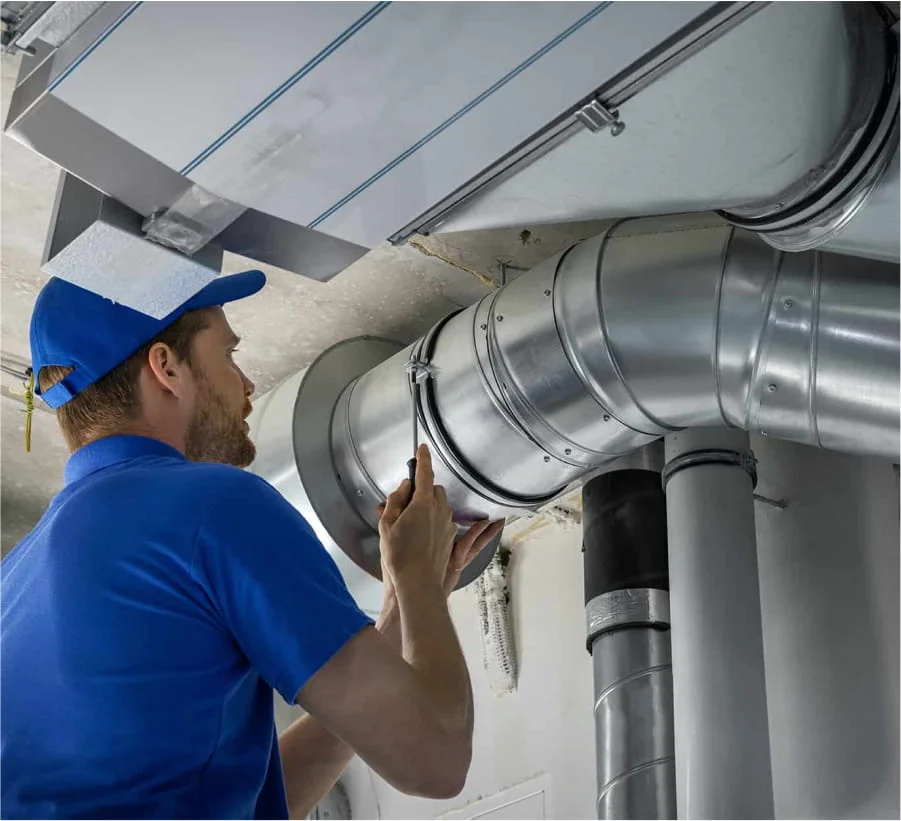
Depending on the building and system design, ductwork may be installed in a roof space, ceiling cavity, underfloor area, or within wall structures.
Over time, duct materials can deteriorate, insulation can become damaged, joints can separate, and poorly designed layouts can restrict airflow. Older duct systems may also be unsuitable for a replacement air conditioning unit or changes made to the building.
A professional assessment helps determine whether the problem requires a complete replacement, repairs to selected sections, or improvements to the duct design.
Replacement may involve flexible ducts, rigid metal ductwork, or a combination of materials. The right option depends on the system requirements, installation space, building layout, and local conditions.
Signs You May Need Air Conditioning Duct Replacement
Ductwork is often out of sight, which makes problems difficult to recognise until they begin affecting comfort or system performance. Several warning signs can indicate that your existing ducts need professional attention.
Uneven temperatures between rooms
If one bedroom feels comfortable while another remains noticeably warm, the problem may involve the ductwork rather than the air conditioner alone.
Air can be distributed unevenly when ducts are undersized, damaged, poorly routed, or leaking. Excessively long duct runs and sharp bends may also restrict airflow to certain rooms.
Before replacing the entire system, a technician should check the duct layout, airflow balance, filters, and air conditioning equipment to identify the actual cause.
Weak airflow from air conditioning vents
Weak airflow may indicate a blockage, collapsed flexible duct, disconnected section, damaged duct lining, or poorly designed duct network.
For example, flexible ductwork that has been compressed in a roof space may prevent sufficient air from reaching the intended room.
A dirty filter, fan problem, or other equipment fault can produce similar symptoms, so duct replacement should only be recommended after a suitable diagnosis.
Unusually high energy bills
Leaking or poorly insulated ducts can waste conditioned air, forcing the system to work harder to maintain the desired indoor temperature.
This can contribute to higher electricity consumption, particularly when substantial leakage occurs in unconditioned roof spaces or other areas outside the living environment.
However, higher bills can also result from weather changes, increased system use, poor equipment efficiency, or maintenance problems. A professional assessment can help determine whether ductwork is contributing to the additional cost.
Visible duct damage
If accessible ductwork has tears, crushed sections, loose connections, deteriorated insulation, or damaged outer coverings, repairs or replacement may be necessary.
Small defects may be repairable, while widespread deterioration can make replacement a more practical long-term option.
Rodent damage, moisture exposure, and accidental damage during roof work can also compromise duct performance.
Persistent dust or unusual odours
Damaged ducts, contaminated internal surfaces, and leaks near dusty roof spaces can contribute to indoor air quality concerns. Musty odours may also indicate moisture problems or contamination elsewhere in the HVAC system.
Nevertheless, dust and odours are not definitive evidence that ductwork needs replacing. Dirty filters, damp building materials, microbial growth, and other indoor sources should also be investigated.
An ageing duct system
Older ductwork may no longer meet the needs of a renovated property or a newly installed air conditioning unit.
If ducts have been repaired repeatedly, insulation has deteriorated, or the system struggles to distribute air effectively, replacement may offer a more reliable solution than continuing to patch individual sections.
Age alone does not determine whether ducts must be replaced. Their condition, design, and performance are more important considerations.
Benefits of Air Conditioning Duct Replacement
Replacing unsuitable ductwork can improve the way conditioned air moves through a property. The benefits depend on the condition of the existing system and the quality of the replacement installation.
Improved airflow distribution
Properly designed ducts help deliver the required airflow to individual rooms.
When replacement addresses undersized ducts, damaged sections, excessive bends, and poorly planned routes, occupants may experience more consistent temperatures and improved comfort.
The system must also be correctly balanced after installation. New ducts will not automatically resolve every airflow problem if the equipment or room layout remains unsuitable.
Reduced air leakage
Damaged joints and poorly connected sections can allow conditioned air to escape into roof spaces, wall cavities, or other unintended areas.
A correctly installed replacement system can reduce these losses through appropriate duct connections, compatible sealing materials, and proper installation practices.
Reduced leakage can help the air conditioner deliver more of its output to the rooms being cooled or heated.
Better insulation performance
Ducts running through hot roof spaces or other unconditioned areas can gain or lose heat as air travels through them.
Replacing deteriorated ductwork provides an opportunity to install suitable insulation and ensure the system meets applicable requirements.
Improved insulation can help maintain the intended supply-air temperature and reduce unnecessary heating or cooling loads.
Greater comfort throughout the property
A well-designed duct system can improve temperature consistency between bedrooms, living areas, and other occupied spaces.
This can be particularly useful in larger homes where long duct runs and uneven airflow have created persistent comfort problems.
The result depends on the entire system, including equipment capacity, duct sizing, room requirements, and control settings.
Opportunity to correct outdated design
Renovations, extensions, and changes to room layouts can leave older ductwork poorly matched to the building.
Replacement allows a qualified contractor to reassess duct routes, outlet locations, return-air pathways, and airflow requirements.
This can help ensure the distribution system suits the property’s current layout rather than continuing to rely on an outdated design.
Repairing Air Conditioning Ducts Versus Replacing Them
Not every duct problem requires a complete replacement. Choosing between repair and replacement depends on the extent of damage, the system’s age and design, and the cost of achieving reliable performance.
When duct repairs may be sufficient
Repairs may be appropriate when damage is localised and the remaining ductwork is in good condition.
Examples include a disconnected joint, a small tear in an otherwise serviceable flexible duct, a loose connection, or a limited section of damaged insulation.
A technician may also be able to correct airflow restrictions by repositioning compressed ductwork or improving an unsuitable connection.
If the existing system is correctly sized and performs well apart from a few defects, targeted repairs may provide good value.
When replacement makes more sense
Replacement may be preferable when the ductwork has widespread deterioration, extensive leakage, repeated failures, or significant design problems.
It may also be appropriate when the existing ducts are incompatible with the new air conditioning equipment or when a renovation requires substantial changes to the duct layout.
Repeated repairs can become expensive when the underlying system is near the end of its useful life or has multiple unrelated defects.
Why an inspection matters
A qualified technician should inspect the ductwork and, where appropriate, assess airflow, leakage, insulation, and equipment performance before recommending replacement.
Ask for an explanation of the identified defects and why the proposed work is necessary. If a complete replacement is recommended, find out whether selected sections could reasonably be retained.
A clear diagnosis helps prevent unnecessary work and makes it easier to compare quotes.
Types of Air Conditioning Ductwork
Different duct materials have different installation requirements, insulation characteristics, and performance considerations.
Flexible ductwork
Flexible ducts are commonly used in residential ducted air conditioning systems because they can be routed through confined roof spaces and around building structures.
They generally consist of an inner air-carrying layer, insulation, and an outer protective covering.
Flexible ducts are convenient, but they must be installed correctly. Excessive compression, sharp bends, sagging, and poorly secured connections can restrict airflow and reduce performance.
When replacing flexible ductwork, the installer should select suitable duct sizes, minimise unnecessary bends, and support the ducts according to the manufacturer’s requirements.
Rigid metal ductwork
Rigid metal ducts are typically made from galvanised steel or other suitable sheet-metal materials.
They can provide a durable distribution network and may be used in residential or commercial applications, depending on the system design.
Rigid ducts require suitable joints, supports, and insulation where necessary. Their installation can also demand more space and careful planning around existing building structures.
Insulated ductwork
Insulation helps reduce unwanted heat transfer between the air inside a duct and the surrounding environment.
Its importance depends on where the duct is installed, the temperature difference between the air and the surrounding space, and applicable building requirements.
Insulation must be appropriate for the application and installed without unnecessary gaps or compression that could compromise its intended performance.
The most suitable duct type depends on the building, system capacity, access constraints, budget, and expected operating conditions.
The Air Conditioning Duct Replacement Process
Understanding the installation process helps you prepare for the work and assess whether a contractor has provided a comprehensive service.
Initial inspection and assessment
The contractor begins by examining the existing ductwork, air conditioning equipment, room layout, and available installation space.
They may identify leaks, insulation damage, airflow restrictions, disconnected ducts, and areas where the existing design is unsuitable.
The assessment should establish whether the work requires full replacement or whether targeted repairs can achieve the desired result.
Duct sizing and system design
Ducts must be sized to deliver the airflow required by the air conditioning system and the individual rooms.
The design may consider equipment capacity, duct length, bends, fittings, outlet locations, return-air requirements, and pressure losses.
Incorrect sizing can lead to noise, insufficient airflow, poor temperature distribution, and unnecessary strain on the equipment.
A professional design helps ensure the new ductwork works with the air conditioning unit rather than simply replacing the old ducts with similar-sized components.
Removal of old ductwork
Where replacement is necessary, the installer removes the affected ducts and checks accessible areas for additional damage.
If rodents, moisture, or contamination have affected the old system, the underlying cause should be addressed before new materials are installed.
The work should also protect existing electrical services, ceilings, insulation, and other building components.
Installation of new ducts
New ductwork is routed through the planned locations and connected to the air conditioning unit and room outlets.
The installer should avoid unnecessary bends, excessive compression, and unsupported sections. Connections must be secured and sealed using materials suitable for the duct system.
Insulation should be installed appropriately, particularly where ducts pass through hot roof spaces or other unconditioned areas.
Testing and airflow balancing
After installation, the system should be checked to confirm that the ducts are connected properly and that airflow is suitable for the design.
The contractor may assess supply airflow, inspect connections for leakage, and adjust dampers where fitted.
Testing can help identify problems before the job is considered complete. Ask for an explanation of any checks performed and whether further adjustments are recommended.
How Much Does Air Conditioning Duct Replacement Cost?
The cost of air conditioning duct replacement varies according to the size of the property, the amount of ductwork required, the system design, and the complexity of installation.
Replacing a few damaged sections generally costs less than removing and installing an entire duct network. Properties with difficult roof access, multiple storeys, extensive duct runs, or restricted working spaces may require additional labour.
Other factors that influence the price include:
- The type, diameter, and quantity of ductwork required.
- The quality and thickness of insulation.
- The number of supply outlets and return-air connections.
- The amount of old ductwork that must be removed.
- Any repairs needed to damaged supports, connections, or surrounding structures.
- Whether airflow balancing or additional system modifications are necessary.
If the existing duct layout is unsuitable, redesigning the system may increase the initial cost but help address persistent performance problems.
When requesting quotes, ask whether removal, disposal, materials, installation, sealing, insulation, testing, and any necessary repairs are included.
Compare the scope of work rather than choosing solely on the lowest price. Two quotes may cover substantially different materials or installation standards.
Can New Ductwork Improve Energy Efficiency?
Replacing leaking or poorly insulated ductwork can improve energy efficiency by reducing losses between the air conditioning equipment and the rooms being conditioned.
For example, if cooled air escapes through damaged ducts into a hot roof space, the system may need to operate longer to maintain the desired indoor temperature. Correcting the leakage can help more of that cooled air reach the intended rooms.
However, the improvement depends on the condition of the original duct system and other factors, including equipment efficiency, thermostat settings, building insulation, window performance, and outdoor temperatures.
New ducts cannot compensate for every inefficiency. An oversized or poorly maintained air conditioner, inadequate building insulation, and uncontrolled air leakage through windows or doors can still affect energy consumption.
For the best results, consider duct replacement as part of a broader assessment of the heating and cooling system.
Choosing the Right Air Conditioning Duct Replacement Contractor
The quality of the installation is just as important as the quality of the materials. Poorly installed ductwork can develop leaks, airflow restrictions, and insulation problems even when new components are used.
Look for a contractor with appropriate qualifications, licensing where required, and experience working with your type of ducted air conditioning system.
Ask whether the contractor will inspect the existing system, calculate the required airflow, and explain why the proposed duct sizes and layout are suitable.
A detailed quote should describe the materials, installation scope, insulation, removal of old ducts, and testing included in the work.
It is also sensible to ask how the contractor will protect the property during installation and whether the work comes with applicable workmanship and product warranties.
Be cautious of promises that guarantee a specific energy saving without inspecting the building and existing system. The results of duct replacement depend on the conditions being corrected and the quality of the installation.
A reliable contractor should explain both the expected benefits and any limitations of the proposed work.
Maintaining Your New Air Conditioning Ductwork
Once new ducts are installed, routine maintenance can help preserve their condition and support efficient system operation.
Replace or clean air filters according to the air conditioning manufacturer’s instructions. Restricted filters can reduce airflow and affect equipment performance, even when the ductwork is in good condition.
Keep supply vents and return-air grilles clear of furniture, curtains, and other obstructions. Restricted air pathways can affect airflow balance throughout the building.
Arrange periodic air conditioning maintenance so a qualified technician can inspect the equipment and identify any developing problems.
If your ducts are accessible, ask the technician to check for loose connections, damaged insulation, sagging flexible sections, and signs of moisture or rodent activity.
Investigate unusual noises, persistent odours, or changes in room temperatures rather than assuming they are normal. These symptoms may indicate an issue with the ductwork or another part of the system.
Regular maintenance cannot prevent every failure, but it can help identify problems before they lead to extensive damage or costly repairs.
Common Air Conditioning Duct Replacement Mistakes to Avoid
One common mistake is replacing ductwork without identifying why the original system performed poorly. If the problem comes from incorrect equipment sizing, blocked filters, or an inadequate return-air pathway, new ducts alone may not resolve it.
Another mistake is choosing duct sizes based only on the dimensions of the old system. Existing ducts may have been incorrectly sized, particularly if the building has been renovated or the air conditioning equipment has changed.
Poor installation can also undermine performance. Excessively bent flexible ducts, unsecured connections, compressed insulation, and inadequate support may reduce airflow or contribute to leakage.
Finally, homeowners sometimes overlook the importance of testing after installation. Confirming that the system operates correctly and distributes air as intended is an important part of completing the job.
Choosing an experienced contractor and requesting a clear installation scope can help reduce these risks.
Conclusion
Air conditioning ductwork plays an important role in delivering comfortable temperatures and supporting efficient system operation. When ducts become damaged, poorly insulated, undersized, or unsuitable for the building, they can contribute to uneven airflow, energy losses, and ongoing comfort problems.
Air conditioning duct replacement may be a practical solution when the existing system has widespread damage or cannot meet the property’s requirements. However, targeted repairs may be sufficient when problems are limited to a few sections.
A professional inspection, appropriate duct design, quality installation, and post-installation testing can help ensure that replacement work addresses the underlying issues.
Before committing to a complete replacement, compare repair and replacement options, obtain detailed quotes, and ask the contractor to explain the expected improvements. With the right approach and ongoing maintenance, new ductwork can help your air conditioning system deliver reliable comfort for years to come.
Frequently Asked Questions
1. When should air conditioning ducts be replaced?
Ducts may need replacement when they have widespread damage, persistent leaks, deteriorated insulation, repeated failures, or a design that no longer suits the air conditioning system. A professional inspection can determine whether repairs are sufficient.
2. How long does air conditioning duct replacement take?
The timeframe depends on the property size, duct layout, access conditions, and amount of work required. Replacing a few sections may take considerably less time than installing a completely new duct network.
3. Does replacing air conditioning ducts improve energy efficiency?
It can improve efficiency when the existing ducts have significant leakage, damaged insulation, or airflow restrictions. The actual benefit depends on the original system condition, building characteristics, and quality of the replacement installation.
4. How much does air conditioning duct replacement cost?
The cost depends on the quantity and type of ductwork, insulation requirements, labour, property access, and any additional repairs. Obtain a detailed quote that specifies the work and materials included.
5. Can I replace air conditioning ducts without replacing the air conditioner?
Yes. Ductwork can often be replaced while retaining the existing air conditioning unit, provided the equipment is in suitable condition and the new ducts are designed to meet its requirements.
6. What type of ductwork is best for air conditioning?
Flexible ductwork is often practical for residential roof spaces, while rigid metal ducts may suit applications requiring a different layout or construction approach. The best option depends on airflow requirements, available space, insulation, and system design.
7. How can I tell if my air conditioning ducts are leaking?
Possible signs include uneven temperatures, weak airflow, damaged or disconnected ducts, and unusually high energy use. These symptoms can also have other causes, so a professional inspection is the best way to confirm duct leakage.
8. How often should air conditioning ductwork be inspected?
There is no single inspection interval suitable for every system. Ductwork can be checked during routine air conditioning maintenance, with additional inspections recommended if you notice damaged ducts, unusual odours, airflow changes, moisture, or signs of pests.
9. Can damaged ductwork affect indoor air quality?
Yes. Leaks near dusty or contaminated spaces may allow unwanted particles to enter the air distribution system. Moisture and contamination can also create concerns. The source should be identified before deciding whether cleaning, repairs, or replacement is necessary.
10. Is professional installation necessary for duct replacement?
Professional installation is strongly recommended because duct sizing, airflow design, insulation, sealing, and system testing affect performance. A qualified contractor can help ensure the new ductwork is suitable for the building and installed according to applicable requirements.