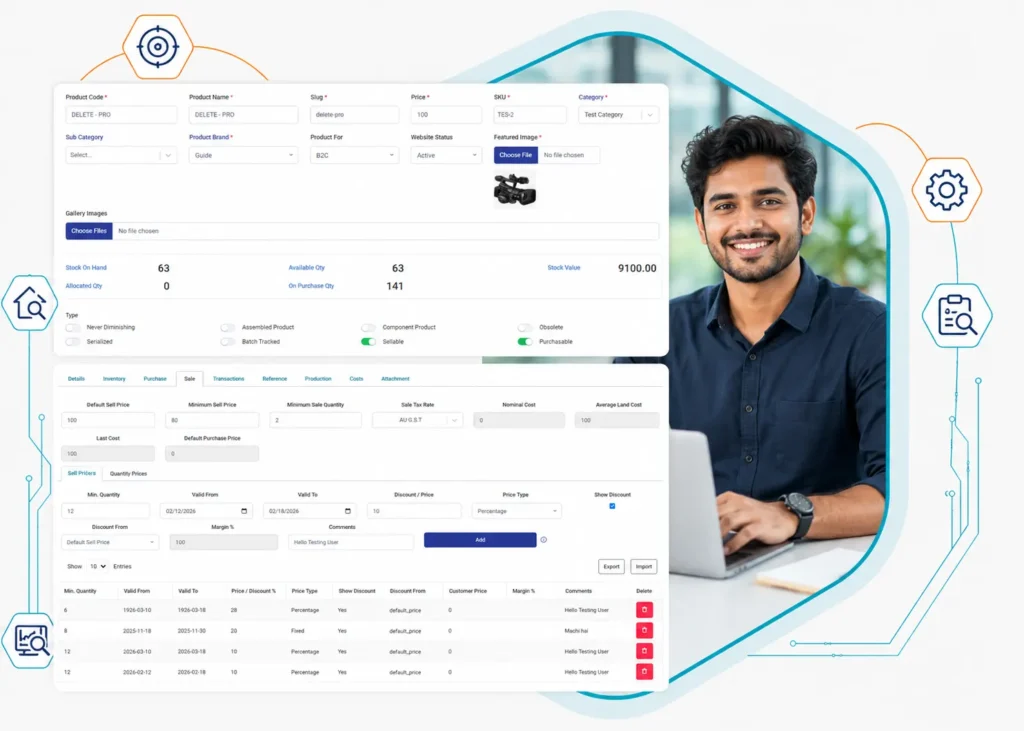
In modern businesses, purchasing is no longer just an operational task. Every supplier quote, purchase order, received item, freight charge, discount, tax, and price adjustment can influence profitability. When purchasing data is scattered across spreadsheets, emails, invoices, and disconnected systems, it becomes difficult to understand the real cost of procurement.
This is where Purchase Cost Software can make a meaningful difference. By bringing purchasing information into a structured system, businesses can move beyond simply recording transactions and start using purchase data to make smarter decisions about suppliers, pricing, inventory, budgeting, and profitability.
As global supply chains continue to face cost volatility and disruption, better purchasing visibility has become increasingly important. A 2025 procurement analysis reported that 78% of procurement professionals were under pressure to reduce operating costs, while 58% had a specific cost-reduction target.
Why Purchase Cost Visibility Matters
The price shown on a supplier quotation is not always the true cost of acquiring an item. Businesses may also need to consider freight, customs duties, taxes, handling, discounts, additional charges, and inventory-related expenses.
For example, a supplier offering a product at a lower unit price may not necessarily be the most economical choice if that supplier has higher shipping charges or longer lead times.
A broader purchase-cost view helps businesses answer questions such as:
- What is the actual cost of each purchased item?
- Which suppliers consistently offer competitive total costs?
- How have purchase prices changed over time?
- Which products are becoming more expensive to source?
- Are freight and additional charges affecting margins?
- Which suppliers provide the best balance of price, quality, and reliability?
These answers can transform purchasing information into practical business intelligence.
What Is Purchase Cost Software?
Purchase Cost Software is a digital solution designed to help businesses record, monitor, analyze, and manage the costs associated with purchasing goods and materials.
Instead of treating every purchase order as an isolated transaction, the system can connect purchasing information with supplier records, inventory, receipts, pricing, and financial data.
Depending on the platform and business requirements, useful capabilities may include:
- Purchase order management
- Supplier price tracking
- Purchase cost history
- Landed-cost calculation
- Purchase price comparison
- Discount and tax tracking
- Freight and additional-cost allocation
- Purchase reporting
- Inventory integration
- Supplier performance analysis
The objective is not simply to automate purchasing. It is to create reliable information that decision-makers can use when evaluating spending and future purchasing strategies.
Turning Raw Purchase Data into Useful Insights
Collecting purchase data is only the first step. The real value comes from understanding what the data means.
Identify Purchase Price Trends
Supplier prices can change because of raw-material costs, exchange rates, transportation expenses, tariffs, market demand, or contractual changes.
Historical purchase-cost information makes it easier to identify these trends.
For instance, if the cost of a particular raw material has increased consistently over several months, management can investigate alternative suppliers, negotiate new terms, adjust purchasing quantities, or reconsider product pricing.
This is more effective than discovering the increase after it has already affected margins.
Compare Suppliers More Effectively
Supplier comparison should not always be based on the lowest quoted price.
Businesses can evaluate suppliers using several factors, including:
- Unit purchase price
- Freight cost
- Delivery performance
- Minimum order requirements
- Discounts
- Payment terms
- Quality history
- Return or rejection rates
- Total landed cost
This approach helps purchasing teams make decisions based on overall value rather than a single number.
IBM notes that procurement cost reduction can involve both direct costs, such as purchase prices and transportation, and indirect costs, including inventory management and administrative expenses.
Improve Inventory Purchasing Decisions
Purchasing and inventory management are closely connected. Buying too much can increase carrying costs and create obsolete stock, while buying too little can lead to stockouts and emergency purchasing.
Industry guidance commonly estimates inventory carrying costs at around 20–30% of inventory value, depending on the business and cost structure.
Purchase cost data can help organizations evaluate whether a buying decision makes sense beyond the immediate supplier price.
For example, purchasing a larger quantity may provide a discount, but the business should also consider storage capacity, expected demand, cash flow, and the risk of the inventory becoming obsolete.
This creates a more balanced approach to purchasing.
Use Purchase Data for Better Supplier Negotiations
Good negotiations require evidence.
Instead of approaching a supplier with a general request for a lower price, procurement teams can use historical purchasing information to understand spending patterns and negotiation opportunities.
They may discover that:
- Annual spending with a supplier has increased significantly.
- Similar products are being purchased at different prices.
- Freight charges have increased faster than product prices.
- Certain products qualify for volume-based discounts.
- Competitor suppliers offer better total costs.
- Payment terms could be improved.
Having this information gives procurement teams a stronger foundation for supplier discussions.
Control Hidden Purchasing Costs
The purchase price is only one part of procurement expenditure.
Additional costs can include:
- Shipping and freight
- Customs duties
- Taxes
- Handling charges
- Inspection costs
- Storage
- Returns
- Quality-related losses
- Administrative processing
When these expenses are recorded separately or remain outside the purchasing system, managers may underestimate the actual cost of an item.
A well-structured Purchase Cost Software solution can help bring these elements together, allowing businesses to evaluate total acquisition cost rather than relying exclusively on the supplier’s quoted price.
Strengthen Budgeting and Forecasting
Historical purchase data can also support more realistic budgeting.
When management understands how purchasing costs have changed over time, it becomes easier to identify recurring patterns and prepare for future requirements.
For example, a company can analyze:
- Monthly purchasing expenditure
- Supplier-wise spending
- Product-wise cost movements
- Seasonal purchasing trends
- Average purchase prices
- Unexpected cost increases
- High-value procurement categories
These insights can help finance and procurement teams coordinate their plans more effectively.
Make Data-Driven Decisions Across Departments
One of the biggest advantages of centralized purchasing information is that it can benefit more than the procurement department.
Finance Teams
Finance teams can use purchase-cost information to improve expense monitoring, budgeting, and profitability analysis.
Inventory Teams
Inventory managers can use purchasing trends to support replenishment decisions and reduce unnecessary stock accumulation.
Sales Teams
Sales teams can benefit from more accurate product-cost information when evaluating margins and pricing strategies.
Management
Business leaders can gain a clearer understanding of where purchasing expenditure is increasing and where efficiency improvements may be possible.
This cross-functional visibility can reduce the disconnect between procurement, finance, inventory, and sales.
Key Metrics Businesses Can Monitor
A purchasing system becomes more valuable when businesses consistently monitor meaningful metrics.
Some useful indicators include:
- Average purchase cost
- Purchase price variance
- Supplier-wise spending
- Cost per purchased unit
- Freight as a percentage of purchase cost
- Purchase order cycle time
- Supplier delivery performance
- Purchase volume by category
- Discount utilization
- Inventory carrying impact
The goal is not to track every possible metric. Instead, businesses should focus on indicators that directly support their financial and operational objectives.
From Historical Records to Strategic Decisions
The real transformation happens when businesses stop treating purchase records as historical documentation and start using them as a source of strategic insight.
Imagine a distributor discovers through purchasing data that one supplier has gradually increased pricing while another supplier offers comparable products at a lower total acquisition cost. That information could support supplier renegotiation or sourcing diversification.
Similarly, a manufacturer might identify that a frequently purchased component is responsible for a growing portion of production costs. Management could then explore alternative materials, suppliers, order quantities, or product specifications.
These decisions are difficult to make confidently without organized purchasing information.
Choosing the Right Purchase Cost Solution
Every business has different purchasing requirements, so software should be evaluated according to operational needs rather than simply the number of features offered.
Important considerations include:
- Ease of use
- Purchase order management
- Supplier data management
- Cost tracking capabilities
- Inventory integration
- Reporting and analytics
- Scalability
- Data accuracy
- Workflow automation
- Integration with existing business systems
Businesses should also consider whether the software can provide a consistent view of purchasing information across locations, departments, suppliers, and product categories.
The Future of Smarter Purchasing
Procurement is increasingly becoming a strategic function. The 2026 CIPS Global State of Procurement & Supply report highlights how procurement and supply chain professionals are moving closer to senior leadership and strategic decision-making.
That shift makes purchasing data more valuable than ever.
Organizations that can understand their purchasing costs can respond more confidently to supplier changes, market volatility, inventory challenges, and margin pressure. Technology provides the foundation, but the real advantage comes from using accurate information to make timely decisions.
Purchase Cost Software can therefore serve as more than a purchasing recordkeeping tool. It can become a valuable source of business intelligence—helping organizations understand what they are spending, why costs are changing, and where better decisions can improve efficiency and profitability.
Make Purchase Data Work Smarter with PlanIT
For businesses looking to gain greater control over purchasing costs, supplier information, inventory, and operational decisions, PlanIT provides inventory and business management solutions designed to bring greater visibility to day-to-day operations.
With the right technology, purchase data can move from scattered records to actionable business insight. Whether your organization is managing manufacturing materials, wholesale inventory, distribution requirements, or multi-supplier purchasing, better visibility can help create a more informed and efficient procurement process.
Connect with PlanIT to explore how smarter purchase-cost management can support your business goals.
- Mobile: +91-9958474631
- Email: sales@plan-it.pro