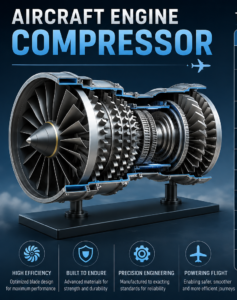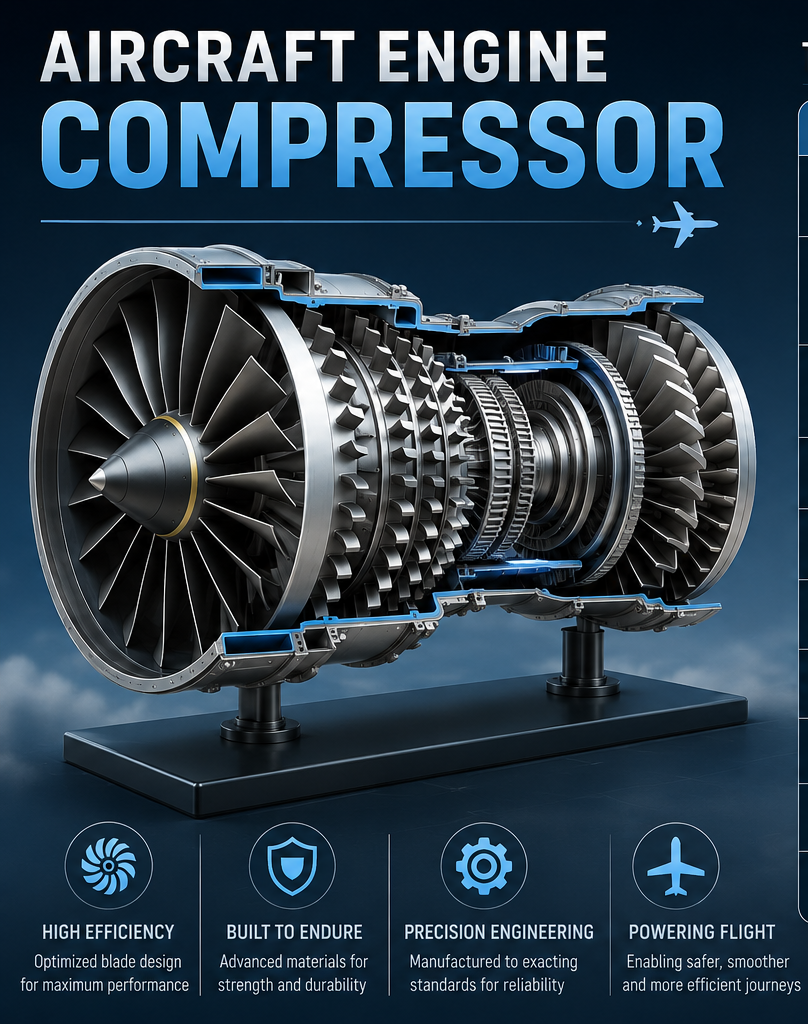
Aircraft Engine Compressor materials have evolved dramatically to withstand extreme centrifugal forces, high temperatures, and severe mechanical stress. Early compressors relied heavily on aluminum and steel alloys for their lightweight and durable structural properties. Today, advanced applications incorporate titanium alloys, nickel-based superalloys, and advanced carbon-fiber composites. These cutting-edge materials reduce overall engine weight while maintaining exceptional structural integrity under harsh operating conditions.
The global aerospace sector is experiencing a transformative wave of technological upgrades and fleet renewals, placing core propulsion components at the epicenter of industry investments. According to comprehensive market intelligence, the Aircraft Engine Compressor Market is valued at US$ 9.88 Billion in 2025 and is projected to scale up to US$ 18.89 Billion by 2034, registering a robust compound annual growth rate (CAGR) of 7.46% from 2026 to 2034.
This robust market expansion is primarily propelled by rising global air passenger traffic, strict environmental regulations curbing carbon emissions, and the intensive commercial and military fleet modernization initiatives undertaken by major airlines and defense agencies worldwide.
Core Market Growth Drivers: Efficiency, Innovation, and Modernization
Modern aircraft engine compressors spanning sophisticated axial-flow and centrifugal systems play a critical role in optimizing engine core pressure ratios, lowering specific fuel consumption, and maximizing overall thermal efficiency. With global airlines striving to meet net-zero carbon goals, aircraft manufacturers are under continuous pressure to integrate advanced materials, such as titanium-matrix composites and ceramic matrix composites (CMCs), alongside additive-manufactured blisks.
These technological advancements significantly reduce component weight while withstanding higher operating temperatures. Furthermore, the massive backlog of single-aisle commercial aircraft orders globally serves as a primary volume driver, as airlines prioritize fuel-efficient narrowbody additions to navigate volatile jet-fuel pricing and manage tight operating margins.
Get a PDF Sample- https://www.theinsightpartners.com/sample/TIPRE00020695
Key Industry Players Leading the Market Landscape
The global Aircraft Engine Compressor Market features a consolidated competitive structure, dominated by established aerospace tier-1 suppliers, propulsion system architects, and component specialists. Leading organizations are leveraging strategic partnerships, mergers, joint ventures, and heavy research-and-development investments to retain market dominance.
The key industry players shaping the market include:
-
Bharat Forge
-
CFM International
-
GE Aerospace
-
Honeywell Aerospace Inc.
-
Melrose Industries plc
-
MTU Aero Engines AG
-
Rolls-Royce Holdings plc
-
Safran SA
-
Turbocam Inc.
-
Collins Aerospace
These industry leaders are continuously innovating high-performance compressor modules, blisks, and casings designed to support next-generation ultra-high-bypass turbofans and hybrid-electric propulsion systems.
Regional Insights and Competitive Dynamics
Geographically, North America continues to command a leading share of the aircraft engine compressor market, underpinned by heavy defense spending, a dense concentration of aerospace original equipment manufacturers (OEMs), and robust manufacturing capabilities in the United States and Canada. Meanwhile, the Asia-Pacific region is poised to record the fastest growth over the forecast period. Surging air travel demand in emerging economies, massive commercial aircraft deliveries to expanding local airlines, and government-backed manufacturing incentives in nations like India and regional hubs are drawing massive component-manufacturing investments.
Concurrently, Europe maintains steady market momentum, supported by stringent European Commission environmental mandates, unified ICAO alignment, and strong cooperative ventures between European propulsion pioneers focused on sustainable aviation technologies.
Future Outlook (2026–2034)
Looking toward the next decade, the future outlook for the Aircraft Engine Compressor Market remains exceptionally optimistic. The forecast period through 2034 will likely witness accelerated adoption of digital twin technologies, artificial intelligence-driven predictive maintenance, and smart manufacturing ecosystems within the aerospace supply chain. As next-generation defense procurement programs ramp up and commercial aviation pushes deeper into hybrid-electric and sustainable aviation fuel (SAF)-compatible architectures, the demand for advanced compressor components will remain high.
Component suppliers that successfully integrate sustainable production practices, reduce lifecycle manufacturing emissions, and enhance high-temperature compressor durability will capture substantial market share, anchoring the long-term vitality of the global aerospace propulsion ecosystem.
Related Reports-
Aircraft Engine Blade Market Trends, Share & Demand by 2034
Aircraft Engine Mro Market Size, Share & Demand by 2034
About The Insight Partners
The Insight Partners is a leading market research and consulting firm delivering actionable insights through in-depth industry analysis and strategic intelligence. The firm supports clients across various industries in making informed decisions by providing comprehensive market forecasts, competitive assessments, and growth opportunities.