Real-World Evidence (RWE) Studies: Applications, Benefits and Data Collection Methods
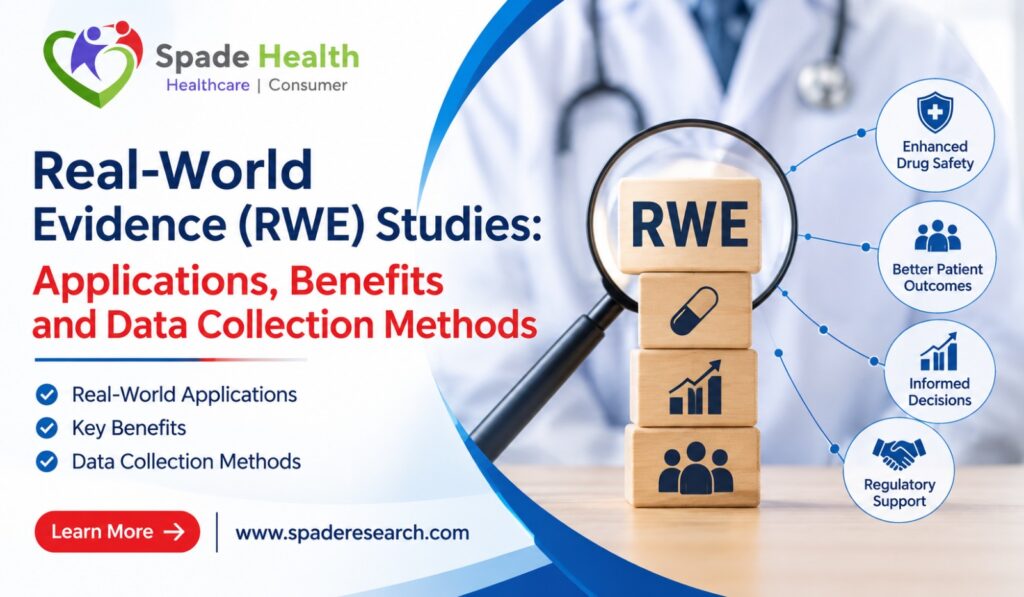
Table of Contents
- Introduction
- What Are Real-World Evidence Studies
- Application of Real-World Evidence Studies in Healthcare
- Key Benefits of Real-World Evidence Studies
- How Spade Health Helps
- Conclusion
The healthcare and pharmaceutical industries are increasingly relying on real-world insights to make informed decisions about treatments, patient outcomes and drug safety. While traditional clinical trials provide controlled evidence about the safety and efficacy of medical products, they may not always reflect how treatments perform in everyday healthcare settings. This is where Real-World Evidence (RWE) studies play an important role.
Real-World Evidence helps researchers, pharmaceutical companies, healthcare professionals and regulatory authorities understand how medical treatments work across diverse patient populations in routine clinical practice. By analysing real-world data collected from hospitals, electronic health records, patient registries and other healthcare sources, organisations can generate valuable insights to support clinical and regulatory decisions.
In this blog, we explore the applications, benefits and major Real-World Evidence Data Collection methods, along with the role of specialised research partners in generating reliable healthcare evidence.
What Are Real-World Evidence (RWE) Studies?
Real-World Evidence (RWE) refers to clinical evidence regarding the usage, safety and effectiveness of medical products, treatments or interventions, generated through the analysis of Real-World Data (RWD).
Real-World Data includes information collected during routine healthcare activities rather than exclusively through traditional randomised controlled clinical trials. It may come from electronic health records, insurance claims, patient registries, hospital databases, patient surveys and wearable devices.
It is important to understand the difference between Real-World Data and Real-World Evidence. RWD represents the raw healthcare information collected from different sources, whereas RWE is the meaningful clinical evidence generated after analysing and interpreting that information.
Real-World Evidence Research complements traditional clinical trials by providing a broader understanding of treatment performance, patient experiences and long-term health outcomes in everyday clinical settings.
Applications of Real-World Evidence Studies in Healthcare
The growing importance of Real-World Evidence Studies in Healthcare has expanded their applications across pharmaceutical research, clinical development, medical devices, and healthcare policy.
Some major applications include:
1. Drug Development and Clinical Research
Pharmaceutical companies use RWE to understand how medicines perform outside controlled clinical trial environments. It helps researchers evaluate treatment effectiveness, patient adherence, long-term outcomes and potential safety concerns.
RWE can also help identify suitable patient populations and inform the design of future clinical studies.
2. Post-Marketing Safety Surveillance
After a medicine receives regulatory approval, monitoring its safety remains essential. RWE studies help identify potential adverse events, rare side effects and long-term safety concerns that may not have been evident during clinical trials.
This information supports pharmacovigilance activities and ongoing product safety monitoring.
3. Regulatory Decision-Making
Regulatory authorities may use appropriate real-world evidence to support specific decisions related to medical products, including safety assessments, post-approval requirements and certain effectiveness questions.
Reliable evidence supported by appropriate study design and data quality can strengthen regulatory submissions.
4. Healthcare Economics and Outcomes Research
RWE provides insights into healthcare resource utilisation, treatment costs, hospitalisation rates and patient outcomes. Pharmaceutical companies and healthcare payers can use these findings to evaluate treatment value and support health technology assessment (HTA).
5. Medical Device Research
Real-world data helps medical device manufacturers understand how devices perform in routine clinical practice. It can support post-market surveillance, product performance evaluation and the identification of potential safety issues.
Key Benefits of Real-World Evidence Studies
Real-World Evidence Studies in Clinical Research offer several advantages by extending the understanding of medical treatments beyond controlled clinical environments.
Key benefits include:
- Broader Patient Representation: RWE can include diverse patient populations, including individuals with multiple health conditions and different demographic backgrounds.
- Long-Term Safety Monitoring: Researchers can assess treatment outcomes and identify potential adverse events over extended periods.
- Improved Treatment Insights: Real-world findings help healthcare professionals understand how treatments perform in routine clinical practice.
- Better Clinical Decision-Making: Evidence from actual patient experiences can support informed treatment decisions and clinical guidelines.
- Cost and Resource Evaluation: RWE helps assess healthcare utilisation, treatment costs and resource requirements
- Support for Drug Development: Findings can inform future research priorities, clinical trial planning and product development strategies.
- Patient-Centred Research: Patient-reported outcomes provide valuable information about quality of life, treatment satisfaction and everyday experiences.
Real-World Evidence Data Collection Methods
Reliable Real-World Evidence Data Collection is essential for producing meaningful and scientifically credible research outcomes. Since real-world information comes from multiple sources, researchers must establish a structured data collection strategy that aligns with the study objectives.
The most common data collection methods include:
1. Electronic Health Records (EHRs) and Electronic Medical Records (EMRs)
EHR and EMR systems contain valuable patient information, including medical history, diagnoses, laboratory results, prescriptions, treatments and clinical outcomes. Researchers analyse this information to understand disease progression and treatment effectiveness.
2. Patient Registries
Patient registries collect standardised information about individuals with specific diseases, medical conditions or treatment experiences. They are particularly useful for studying chronic conditions, rare diseases and long-term treatment outcomes.
3. Healthcare Insurance Claims Data
Insurance claims and billing databases provide information about healthcare services, prescriptions, medical procedures, hospital admissions and treatment costs. This data is useful for healthcare economics and resource utilisation studies.
4. Patient Surveys and Interviews
Patient surveys, interviews and Patient-Reported Outcomes (PROs) help researchers understand treatment experiences, symptoms, quality of life and satisfaction. These methods provide valuable information that may not be available in routine medical records.
5. Wearable Devices and Digital Health Platforms
Smartwatches, mobile applications, biosensors and remote monitoring devices can collect continuous information about physical activity, heart rate, sleep patterns and other health indicators. Such data can support longitudinal research and patient monitoring.
6. Observational Studies
Observational research involves studying patients without assigning treatments through a controlled intervention. Common approaches include prospective cohort studies, retrospective cohort studies, and case-control studies.
These methods help researchers examine treatment patterns, disease progression, outcomes, and associations within real-world healthcare environments.
Challenges in Conducting Real-World Evidence Research
Despite its benefits, Real-World Evidence Research involves several challenges that require careful planning and scientific expertise.
- Data Quality: Incomplete, inaccurate or inconsistent patient records can affect research findings.
- Data Privacy: Healthcare information must be handled according to applicable data protection and privacy requirements.
- Data Integration: Information from different hospitals, databases and digital platforms may use different formats and standards.
- Study Bias: Confounding factors and selection bias can influence the interpretation of observational research.
- Patient Representation: Some datasets may not adequately represent specific demographic or patient populations.
- Regulatory Requirements: Research methods and evidence quality must align with the intended regulatory or clinical purpose.
To overcome these challenges, researchers should establish clear study objectives, select appropriate data sources, implement quality assurance procedures, and apply suitable statistical analysis methods.
How Spade Health Helps?
Spade Health supports healthcare and pharmaceutical organisations with research expertise and evidence-generation capabilities. With over 20 years of experience in healthcare research, the organisation understands the importance of reliable data, structured research methodologies and meaningful insights.
Through its healthcare research and clinical research support, Spade Health can help organisations with key aspects of evidence-generation projects, including:
- Research Planning and Study Design: Developing research approaches aligned with study objectives, target populations and evidence requirements.
- Healthcare Data Collection: Supporting structured data collection through appropriate research methods, patient surveys and healthcare research activities.
- Patient and Healthcare Professional Insights: Gathering relevant perspectives from patients, healthcare professionals and other research participants.
- Clinical Research Support: Supporting research activities that contribute to understanding treatment outcomes, healthcare practices and patient experiences.
- Data Quality and Analysis: Emphasising data consistency, validation and meaningful interpretation to support reliable research findings.
- Healthcare Market Insights: Helping pharmaceutical, medical device and healthcare organisations understand market needs, treatment patterns and patient perspectives.
Whether organisations are planning observational research, evaluating treatment outcomes or exploring healthcare trends, choosing the right research partner is an important step towards generating meaningful evidence.
Conclusion
Real-World Evidence (RWE) studies are transforming how pharmaceutical companies, healthcare organisations and researchers understand medical treatments and patient outcomes. By using data from electronic health records, patient registries, insurance claims, surveys and digital health platforms, these studies provide valuable insights into the effectiveness and safety of treatments in everyday clinical practice.
Although challenges related to data quality, privacy, integration and research bias remain, a well-designed study with appropriate data collection and analysis methods can generate meaningful evidence.
As the demand for patient-centred healthcare and evidence-based decision-making continues to grow, Real-World Evidence Research will remain an important component of pharmaceutical development and clinical research.
Looking for reliable healthcare research and evidence-generation support?
Partner with Spade Health to strengthen your healthcare research initiatives with structured research methodologies, quality-focused data collection, and valuable healthcare insights.