xr:d:DAF4Q0qezh4:18,j:8892771485280603816,t:23123112
Ask anyone who has managed a traditional cleanroom build in the Gulf, and they’ll tell you the same thing: it rarely goes to plan. Deadlines slip, dust gets into places it shouldn’t, and the budget quietly stretches. That is why more facility managers across Kuwait are looking at a different route. Instead of building a controlled environment brick by brick on site, they’re ordering one that’s engineered, tested and delivered in modules.
If you’re weighing up your options, here’s what you should know before you speak to a prefabricated cleanroom supplier in Kuwait City.
What “Prefabricated” Actually Means
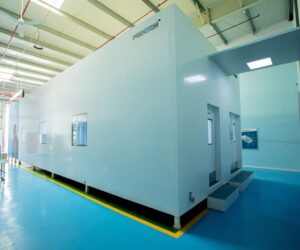
A prefabricated cleanroom is built from factory-made panels, ceiling grids, doors, flooring and air-handling components. Everything is manufactured to precise tolerances off-site, then assembled where you need it. Think of it as a very well-engineered kit rather than a construction project.
The panels are usually insulated metal or composite, with smooth, sealed surfaces that are easy to clean and hard for particles to cling to. Because the parts are made under controlled conditions, the quality is far more consistent than anything you’d get from mixing materials and trades on a dusty building site.
Why It Suits Kuwait
Kuwait’s climate is not kind to sensitive environments. Summer heat is intense, fine dust blows in regularly, and cooling systems work hard for most of the year. A cleanroom has to hold temperature, humidity and air cleanliness steady against all of that.
Prefabricated systems handle this well for a few reasons:
- Tight, sealed construction. Factory-made panels fit together with very few gaps, which limits dust ingress and air leakage.
- Better thermal performance. Insulated panels help your HVAC system keep conditions stable without running flat out.
- Less on-site mess. Traditional building generates dust and debris, which is exactly what you’re trying to keep out.
Speed Matters More Than People Admit
Kuwait’s pharmaceutical, healthcare, food processing, electronics and laboratory sectors are all expanding, and the push for local capability under national development plans only adds to the pressure. When a new production line is waiting on a cleanroom, every week of delay costs money.
Modular construction shortens the timeline noticeably. Panels are produced while your site is being prepared, so the two jobs run in parallel rather than one after the other. Installation is then quicker and cleaner. For businesses that need to start production, validation or testing sooner, that’s often the deciding factor.
Flexibility You Can’t Get With Brick and Mortar
Business needs change. A lab that handles one process today may need to double its footprint in three years, or a manufacturer may add a new product line that demands a higher cleanliness class.
A modular cleanroom can be extended, reconfigured or even relocated with far less disruption than a fixed structure. If you lease your premises, that’s a real advantage: you aren’t leaving a major investment behind when your lease ends.
Compliance Isn’t Optional
Whatever the industry, your cleanroom has to meet recognised cleanliness standards. The ISO 14644 series is the international benchmark for air cleanliness classification, and most serious projects are designed around it. Pharmaceutical and healthcare facilities often need to meet additional good manufacturing practice requirements on top.
A competent supplier will design to your required classification from the start, covering airflow patterns, filtration, pressure cascades, material choices and gowning layouts. They should also support testing and validation once the room is built. If a supplier is vague about standards, treat that as a warning sign.
How to Choose the Right Partner
Not every supplier is equal, and the cheapest quote is rarely the best value. When you’re comparing a prefabricated cleanroom supplier in Kuwait City, ask these questions:
- Do they design for your specific application? A pharmaceutical packaging room and an electronics assembly area have very different needs.
- Can they show completed projects in similar conditions? Regional experience matters because climate and site constraints are real.
- What is included? Panels alone aren’t a cleanroom. Check whether HVAC, HEPA filtration, lighting, doors, pass boxes and controls are part of the scope.
- Who handles installation and validation? One accountable team is far better than three contractors pointing at each other.
- What does after-sales support look like? Filters need replacing, rooms need requalifying, and you’ll want someone who picks up the phone.
Think About Total Cost, Not Just the Price Tag
Prefabricated cleanrooms often look more expensive on paper than a basic build, but that comparison misses a lot. Faster installation means earlier production. Tighter construction means lower energy use. Fewer on-site variables mean fewer expensive surprises. And because the system is modular, future changes cost less.
When you add it all up over several years, the economics usually favour the modular route, particularly for facilities that expect to grow.
A Few Practical Tips Before You Start
- Define your required cleanliness class and process needs before approaching suppliers.
- Share accurate site dimensions, ceiling heights and utility locations early.
- Plan for gowning, material flow and waste routes, not only the room itself.
- Allow time for validation before your planned start date.
- Ask for a clear scope document so quotes can be compared fairly.
Read Also: Building Clean, Building Smart: Why Prefabricated Cleanrooms Make Sense for Sri Lanka
The Bottom Line
Kuwait’s industries are moving quickly, and the facilities supporting them need to keep up. A prefabricated cleanroom gives you speed, consistency and room to grow, all while coping with the region’s demanding conditions. The key is choosing a partner who understands both the technical standards and the realities of working in the Gulf.
Do your homework, ask direct questions and insist on clear answers. A good prefabricated cleanroom supplier in Kuwait City will welcome that scrutiny, because the right project starts with a conversation, not a sales pitch.