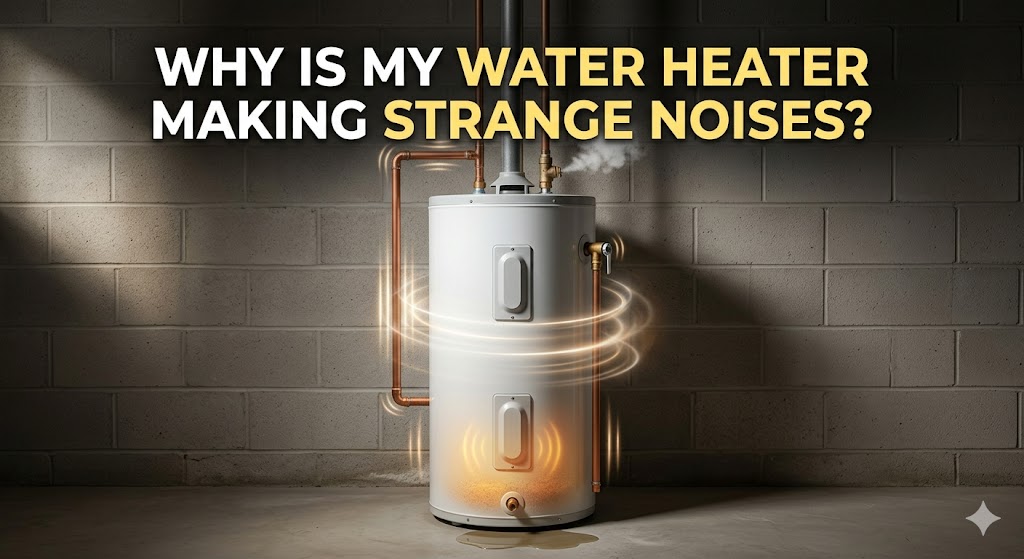
Unless you’ve hidden a small percussion band in your utility room, your appliances should generally go about their day in relative silence. So, when your water heater starts popping, knocking, or screeching, it’s completely normal to feel a bit alarmed.
While a noisy water heater isn’t always an immediate threat, it is your system’s way of crying out for help. Ignoring these auditory warnings can turn a simple fix into a costly disaster. Let’s break down the most common sounds, what they actually mean, and what you need to do about them.
The Auditory Cheat Sheet: Deciphering Your Water Heater
Different sounds point to distinct internal issues. Here is a quick guide to matching the noise to the culprit:
1. Loud Popping or Rumbling
This is the single most common sound homeowners report, and it usually sounds like popcorn popping or a low rumble inside the tank.
-
The Cause: Sediment buildup. Over time, hard water minerals (like calcium and magnesium) settle at the bottom of the tank. As the burner underneath fires up to heat the water, steam bubbles get trapped beneath this crusty layer of scale. When the bubbles finally burst through, they create a distinct popping or rumbling sound.
-
The Fix: Your tank needs to be flushed and cleaned. If left untreated, that sediment layer acts as a barrier, forcing your system to work twice as hard and eventually causing the tank bottom to overheat and crack. If you’re hearing this, it’s time to schedule a professional water heater repair columbia sc to clear out the debris before structural damage occurs.
2. High-Pitched Screeching or Whistling
A high-pitched noise can be incredibly annoying, but it’s also a sign of restricted water flow or dangerous pressure buildup.
-
The Cause: Water is being forced through a tiny opening. This often happens if the cold water inlet valve is partially closed. Alternatively, it could mean your Temperature and Pressure (T&P) relief valve is struggling to handle excessive internal pressure.
-
The Fix: First, check your control valves to ensure they are fully open. If they are, do not attempt to tinker with the pressure valves yourself. Call for an emergency water heater repair near me immediately, as excessive pressure can pose a serious safety risk.
3. Sizzling, Hissing, or Crackling
If your water heater sounds like a steak hitting a hot cast-iron skillet, you are likely dealing with a condensation or a leak issue.
-
The Cause: On gas water heaters, condensation can drip onto the hot burner assembly, creating a sizzling sound. However, if this sound is constant, it usually means you have a fracture in the internal tank, and water is actively leaking onto the electrical components or burner.
-
The Fix: Look around the base of your unit. If you see water pooling, you have a water heater leaking columbia sc situation. A leaking tank cannot safely be patched and requires professional intervention right away.
Can You Fix a Noisy Water Heater Yourself?
Pro Tip: While a basic tank flush is a DIY task for some handy homeowners, working with gas lines, electrical elements, and pressurized scorching-hot water is inherently risky.
If a simple flush doesn’t resolve the noise, or if you notice active leaks and whistling sounds, it’s always best to call a professional. Trying to cut corners might save a few dollars today, but an improperly handled repair can ruin the appliance completely.
Repair vs. Replacement: When Is It Time to Say Goodbye?
If your system is relatively young (under 8 years old), investing in an affordable plumber for water heater repair is usually the smartest path forward. A professional can easily swap out a failing heating element, replace a faulty anode rod, or flush out stubborn sediment to restore peace to your home.
However, if your water heater is more than a decade old and continues to make loud, metallic knocking sounds despite being flushed, the metal has likely deteriorated. In this scenario, pouring money into temporary repairs is just delaying the inevitable. Proactively arranging a water heater replacement in columbia sc will provide you with an energy-efficient upgrade and save you from the absolute chaos of an unexpected basement flood.
Listen to your home! If your water heater is trying to tell you something, don’t wait until you’re stuck taking freezing-cold showers to answer the call.