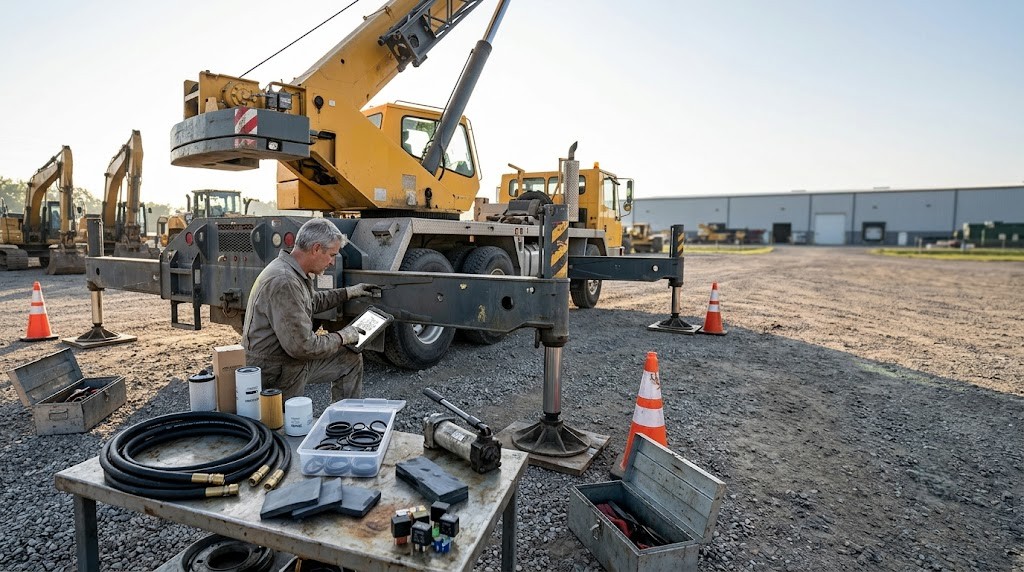
Grove TMS cranes are among the most dependable machines on any job site, serving on highway projects, bridge repairs, and commercial builds. They are tough by design, but even the strongest machines have limits. Over time, components wear out and require replacement. When a crane goes offline, the entire project loses momentum.
Finding the right Grove crane parts quickly makes the difference between a minor delay and a costly shutdown. But buying components wisely requires more than a phone call. You need to understand your machine, know the market, and avoid mistakes that waste time and money. This guide covers what you need to keep your TMS crane working.
Start With What You Actually Own
Before contacting any supplier, get your facts straight. Grove manufactured the TMS line across several decades, and there is meaningful variation between models. A TMS 2250 is not the same machine as a TMS 8000.
Pin down the serial number first. You will typically find it stamped on a plate near the cab or along the chassis. Then track the exact part number for the component you need.
Do not guess based on appearance, even if the replacement looks like a direct match. If corrosion has made the part number unreadable, consult the manual. Many older Grove manuals are available online or through dealer networks.
Grove parts are indexed by serial number and model designation, so accurate identification makes ordering far smoother. A few minutes of research upfront spares you return shipping, restocking fees, and extra downtime.
Deciding Between OEM and Aftermarket
Few debates in the heavy equipment world are as enduring as this one. Should you buy original equipment manufacturer parts, or does aftermarket make more sense?
OEM components come directly from Grove or its certified partners. They fit precisely, meet factory specifications, and carry warranty coverage. The trade-off is higher pricing, but you gain guaranteed compatibility.
Aftermarket parts are produced by independent manufacturers. They typically cost less, and many meet standards rivaling OEM quality. The market also includes low-budget imitations that cut corners.
Use the part’s function as your guide. For safety-critical components like load moment indicators, main hydraulic pumps, or hoist brakes, invest in OEM. Crew safety is not the place to chase savings.
For routine maintenance items like filters, belts, and standard hoses, reputable alternatives work well. As long as specs match your machine, these Grove parts are a practical and cost-effective choice. Always verify specifications before buying.
Pay Attention to TMS-Specific Wear Points
These truck-mounted cranes endure a punishing combination of forces. Road vibration, weather exposure, and heavy lifting cycles accelerate wear on particular systems.
The outrigger assembly deserves close monitoring. Pads, beams, and hydraulic cylinders bear enormous loads during every setup. Cylinder seals degrade over time, and keeping spare seals in stock prevents extended downtime.
The swing drive is another area to watch. This mechanism rotates the crane cab through precision gears and bearings. Grinding noises or sluggish rotation often signal early failure. Addressing it promptly prevents costly housing damage.
Extendable booms require regular inspection as well. Grove crane parts like cables, sheaves, and wear pads deteriorate with repeated use. The pads keep boom sections aligned, and when they thin out, metal contacts metal directly. Inspect them routinely and keep replacements ready.
Build a Strategic Spare Parts Stockpile
Reactive purchasing always costs more than proactive planning. TMS cranes operate in harsh conditions, and certain components degrade predictably. Keeping essential items on hand before trouble strikes is simply sound operations.
Fluids and filtration should come first. Maintain a supply of hydraulic filters, oil filters, fuel filters, hydraulic oil, engine oil, and grease. These materials cycle through the machine faster than any other consumable.
Hydraulic hoses and fittings are another category worth stocking. They deteriorate from abrasion, heat, and age, failing at the worst moment. If shelf space is limited, build a relationship with a local hose shop that can respond quickly.
Your electrical system deserves equal attention. Fuses, relays, and limit switches are inexpensive yet critical. When a crane struggles to start or the boom will not extend, a blown fuse or bad relay is often the cause.
Choosing Where to Buy
Several sourcing channels exist for TMS crane operators, each with distinct advantages and trade-offs.
Authorized dealers provide the most dependable access. They maintain complete catalogs, technical support, and genuine inventory. For complex or model-specific needs, start here. Expect higher pricing and possible extended lead times.
Independent suppliers offer a strong alternative. Many specialize in cranes and stock components for older TMS models that dealers no longer carry. A knowledgeable supplier can identify the right part from a description. Cultivate a relationship with one or two such companies for urgent situations.
Salvage yards are worth considering for major assemblies. Used cabs, axles, and boom sections represent significant savings. Inspect every component carefully, request maintenance records, and never buy critical safety items without a mechanic’s assessment.
Mistakes That Drain Your Budget
Certain purchasing errors recur across the industry. Recognizing them early protects your schedule and your finances.
Choosing parts based solely on price is the most frequent trap. A cheap hydraulic valve that fails in weeks costs more than a quality unit that lasts years. Factor in installation labor and the downtime penalty of premature failure.
Lead times deserve as much attention as pricing. If a part requires six weeks for delivery, investigate faster options. Sometimes paying more for expedited shipping or sourcing locally gets your crane back in service much sooner.
Verify the return policy before ordering. Mid-year production changes can create fitment issues even when part numbers match. Ensure your supplier handles returns without excessive complications.
Grove crane parts orders should also include every gasket, O-ring, and seal needed for installation. A new pump sitting idle because someone forgot a two-dollar seal is a frustrating and entirely preventable delay.
Documentation Makes Everything Easier
Every purchase generates paperwork, and that documentation holds lasting value. Record serial numbers, dates, part numbers, and supplier details for each transaction.
Photography strengthens your records considerably. Capture images of the component before installation and photograph its tag. Store these files digitally where your team can retrieve them quickly.
Good documentation supports warranty claims if a component fails early. It also simplifies future reordering. Instead of re-researching specifications, you reference your previous notes.
Grove parts purchased through documented channels are easier to track and reorder over time. The small administrative effort pays for itself during subsequent repair cycles.
Conclusion
Grove TMS cranes are engineered for long service lives, but they require informed care to reach that potential. Securing the right components means knowing your machine, weighing OEM against aftermarket based on each part’s role, and building relationships with dependable suppliers. Keeping essential inventory eliminates emergency orders and keeps projects moving.
Treat your crane as the investment it represents. Maintain thorough records, avoid shortcuts on critical components, and your TMS will keep performing well for years.