In 2026, medical imaging has transitioned from a routine diagnostic step into a high-precision science. With the integration of artificial intelligence and ultra-low-dose radiation technology, the quality of a CT scan can vary significantly from one facility to another. For patients in a fast-paced urban environment like Bangalore, finding a nearby ct scan centre is often the priority, but proximity should never come at the cost of diagnostic accuracy or safety.
Selecting the right diagnostic facility is a critical decision that impacts your treatment plan. A high-quality scan provides your doctor with a clear roadmap, while a suboptimal scan might lead to missed findings or the need for a repeat procedure. This guide outlines the modern benchmarks you should look for when choosing a diagnostic partner, ensuring you receive world-class care right in your neighborhood.
1. Advanced Imaging Technology: Beyond the Slice Count
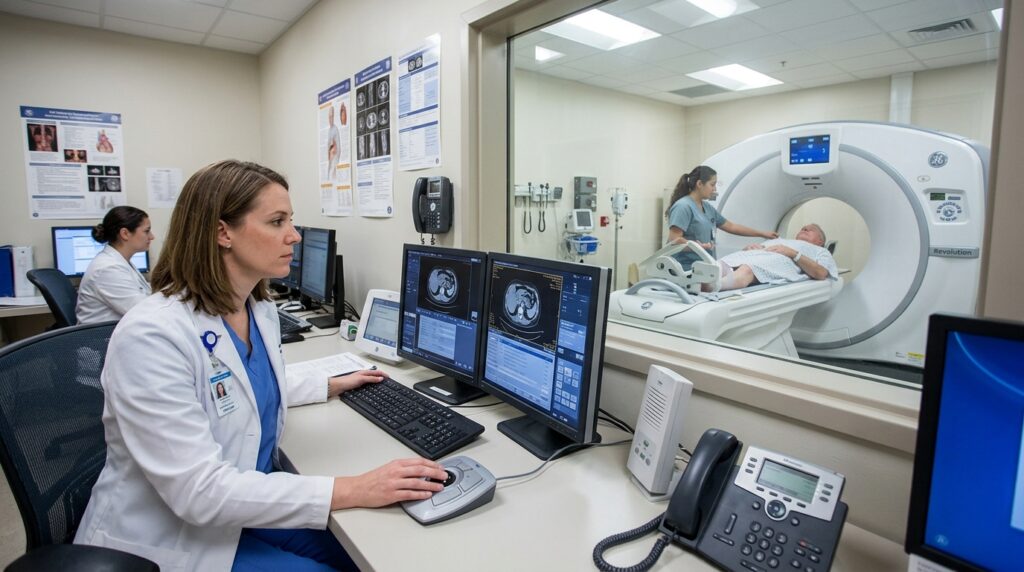
While “slice count” was the primary marketing term for years, 2026 technology focuses on what those slices can actually do. A modern nearby ct scan centre should ideally house a 128-slice or 256-slice scanner for complex cases like cardiac or neuroimaging. These machines provide high-resolution images in seconds, which is crucial for patients who may struggle to hold their breath or stay still, such as children or the elderly.
Beyond the hardware, look for facilities utilizing Deep Learning Reconstruction (DLR). This AI-driven technology is now a standard in top-tier labs, allowing for the generation of crystal-clear images even with significantly reduced radiation. These systems can “denoise” images, ensuring that even the smallest lesions are visible without the graininess often seen in older 16-slice or 32-slice machines.
| Technology Feature | Why It Matters for Patients | Recommended Standard (2026) |
| :— | :— | :— |
| Slice Count | Higher slices reduce scan time and improve 3D detail. | 64 to 128-slice (standard) |
| AI Reconstruction | Improves image clarity and compensates for patient movement. | Deep Learning Reconstruction (DLR) |
| Photon-Counting | The latest tech for ultra-high resolution at lower doses. | Available in premium centers |
| Scan Speed | Essential for trauma and emergency cardiac cases. | Sub-second rotation speeds |
2. Accreditations and Regulatory Compliance
In India’s competitive diagnostic landscape, accreditations serve as the most reliable indicator of quality. When searching for a nearby ct scan centre, your first check should be for NABL (National Accreditation Board for Testing and Calibration Laboratories) and NABH (National Accreditation Board for Hospitals & Healthcare Providers) certifications. These aren’t just plaques on a wall; they signify that the lab undergoes rigorous external audits for equipment calibration, staff training, and reporting accuracy.
Furthermore, compliance with the AERB (Atomic Energy Regulatory Board) is mandatory for any facility operating X-ray-based equipment. This ensures that the room shielding and machine maintenance meet national safety standards to prevent unnecessary radiation leakage. A center that is transparent about its accreditation status is one that prioritizes patient safety over profit margins.
- NABL (ISO 15189): Ensures the technical competence of the medical laboratory and accuracy of results.
- NABH MIS: Specific standards for Medical Imaging Services that focus on patient care and safety.
- AERB Approval: Confirms the facility meets stringent radiation protection guidelines for public and staff safety.
- ISO 27001: Increasingly important for protecting your digital health data and scan images from cyber threats.
3. Radiation Safety and Low-Dose Protocols
Radiation exposure is a common concern for patients undergoing multiple scans. In 2026, the industry standard follows the ALARA (As Low As Reasonably Achievable) principle. Leading diagnostic centers now use pediatric-specific protocols and organ-based dose modulation, which automatically reduces radiation levels when scanning sensitive areas like the thyroid or breasts.
Ask the center if they provide a “Dose Report” with your scan. High-end facilities now integrate software that tracks and records the exact amount of radiation delivered during each session. This level of transparency is essential for patients with chronic conditions who may require periodic imaging. AI-enhanced low-dose CT (LDCT) is particularly effective for lung cancer screenings and routine abdominal checks, providing diagnostic-grade images with a fraction of the traditional radiation.
Key Safety Checklist for Patients:
- Dose Tracking: Does the center record and report your radiation dose?
- Lead Shielding: Do they provide protective gear for the areas of the body not being scanned?
- Pediatric Settings: Are there specific low-dose adjustments for children?
- Pregnancy Screening: Do they have a strict protocol for checking pregnancy status before the scan?
4. Expertise of the Radiologists and Reporting Team
The most advanced scanner in the world is only as good as the doctor interpreting the images. When choosing a nearby ct scan centre, inquire about the credentials of the on-site radiologists. In 2026, sub-specialty reporting is the gold standard—where a neuroradiologist reads your brain scan and a musculoskeletal expert interprets your joint imaging.
Speed is also a factor, especially in emergency scenarios like a suspected stroke. Many top centers in Bangalore now utilize teleradiology networks to ensure that a specialist is available 24/7, even during night shifts or holidays. This allows for a “Preliminary Report” within minutes, which can be life-saving. Ensure the center has a clear protocol for escalating critical findings directly to your referring physician immediately.
| Reporting Factor | Modern Expectation (2026) | Patient Benefit |
| :— | :— | :— |
| Sub-Specialization | Doctors trained in specific organ systems. | Higher accuracy in detecting rare or subtle conditions. |
| Turnaround Time (TAT) | 2 to 4 hours for routine; <30 mins for emergency. | Faster commencement of treatment or surgery. |
| AI-Assistance | AI “second-look” for nodules or fractures. | Reduced human error and improved detection rates. |
| Digital Access | Cloud-based viewing for patients and doctors. | No need to carry physical films to follow-up visits. |
5. Digital Accessibility and Turnaround Time
The era of waiting 24 hours for a printed film is over. A high-quality nearby ct scan centre today should offer a fully digital experience. This includes online appointment booking through an app, SMS alerts for report status, and a secure portal where you can download both the high-resolution DICOM images and the signed PDF report.
Digital accessibility is not just a convenience; it is a clinical necessity. If you need a second opinion or are visiting a specialist in a different part of the city, having your scans in the cloud allows any doctor to view them instantly on a tablet or computer. Check if the center’s reports are integrated with national digital health platforms (like ABDM in India), which ensures your medical history is seamlessly available whenever you need it.
Convenience Features to Look For:
- Real-time Booking: Can you see available slots and book instantly online?
- Report Portals: Do they provide a secure link to view and share your images?
- WhatsApp/SMS Integration: Are you notified the moment your report is ready?
- Electronic Health Record (EHR) Compatibility: Can the reports be easily uploaded to your primary health app?
6. Patient Comfort and Value-Added Services
A medical scan can be an anxiety-inducing experience. The best diagnostic centers invest in “Patient Experience” (PX) to make the process as stress-free as possible. This includes a clean, well-ventilated waiting area, friendly staff who explain the procedure clearly, and specialized rooms with calming aesthetics. For scans requiring “contrast,” the facility must have a dedicated observation area and a medical team equipped to handle rare allergic reactions.
Proximity is also about more than just distance—it’s about the total time spent. Look for a center with ample parking, wheelchair accessibility, and efficient administrative processes that minimize wait times. In 2026, many centers also offer “Home Sample Collection” for the blood tests (like Creatinine) required before a contrast CT, saving you an extra trip to the lab.
What Defines a Premium Patient Experience?
- Clear Preparation Instructions: Providing a detailed guide on fasting or medication before you arrive.
- Contrast Safety: On-site doctors and emergency kits to manage any reactions to the dye.
- Staff Professionalism: Technicians who are patient, especially with those who are claustrophobic.
- Post-Scan Care: Availability of a recovery room and refreshments if you’ve been fasting for the scan.
Conclusion
Choosing the right nearby ct scan centre is about balancing technical excellence with personal convenience. In 2026, you should settle for nothing less than a facility that combines AI-enhanced imaging, strict NABL/NABH safety protocols, and a patient-first digital experience. By focusing on these six pillars—technology, accreditation, safety, expertise, accessibility, and comfort—you ensure that your diagnostic journey is accurate, safe, and efficient.
Remember that while price is a factor, the value of a high-fidelity report from a trusted center far outweighs the small savings of a budget lab. Always verify the center’s current ratings and ask your primary physician for recommendations based on their experience with the lab’s reporting quality. Your health deserves the precision that only a top-tier diagnostic partner can provide.