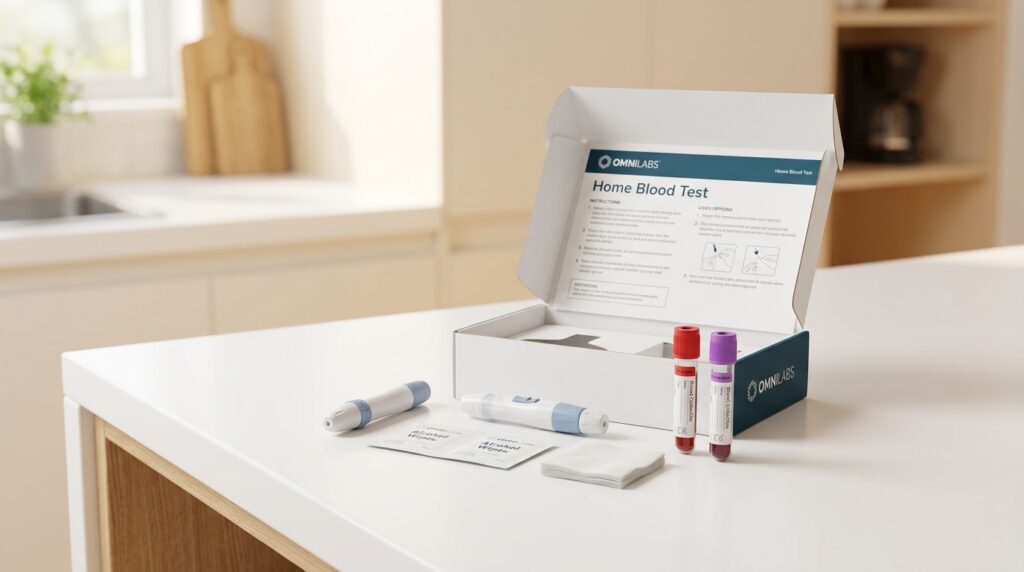
The landscape of diagnostic healthcare has undergone a radical transformation by mid-2026. In cities like Bangalore, the “home-first” model of diagnostics is no longer just a luxury for the elderly; it is the primary gateway to preventive wellness for a tech-savvy population. With the Indian diagnostic market projected to reach ₹1.1 lakh crore this year, the sheer number of providers offering home sample collection has exploded.
However, convenience should never come at the cost of clinical accuracy. In 2026, regulatory bodies like NABL have tightened the strings on how samples are handled outside the laboratory. A single error in how a sample is collected, stored, or transported can lead to “pre-analytical errors”—which studies suggest still account for nearly 70% of all laboratory mistakes. Whether you are booking a routine blood sugar test or a complex genomic panel, choosing a professional service requires a rigorous quality audit.
This guide provides a comprehensive quality checklist to help you navigate the 2026 diagnostic landscape, ensuring that the results you receive are as reliable as those from a premium hospital wing.
1. Regulatory Accreditation: The 2026 Gold Standards
When selecting a provider for home sample collection, the first item on your checklist must be their accreditation status. In 2026, the benchmark for excellence is no longer just a general lab license. Look for laboratories that strictly adhere to the updated NABL 112B guidance document, which was revised in late 2025 specifically to address the integrity of samples collected at external sites.
Professional services should also be compliant with ISO 15189:2022 (and the 2025 updates), which specifically covers the quality and competence of medical laboratories. These standards ensure that every step of the process—from the moment the needle enters your arm to the final digital signature on your report—follows a validated, risk-managed protocol. In a city like Bangalore, where many standalone labs operate, choosing an accredited partner ensures they are audited for technical proficiency rather than just marketing reach.
| Quality Parameter | What to Look For | Why It Matters |
| :— | :— | :— |
| NABL Accreditation | Current certificate number for the specific tests ordered. | Ensures the lab meets national standards for technical competence. |
| ISO 15189 Compliance | Documentation of quality management systems for collection. | Validates that pre-analytical risks are managed systematically. |
| Document NABL 112B | Evidence of “Collection Centre” recognition. | Proves the provider follows 2026 guidelines for sample handling. |
| Biocompatibility | Use of ISO 10993-1:2025 certified collection devices. | Minimizes the risk of sample contamination from tube materials. |
2. Phlebotomist Expertise: The Human Element of Accuracy
The individual who enters your home is the most critical link in the diagnostic chain. By 2026, professional phlebotomists are expected to hold a Certificate in Phlebotomy Technology (CPT) and undergo continuous skill-upgradation. This expertise is especially vital for “difficult draws”—such as pediatric patients or the elderly, whose veins may be fragile or dehydrated.
A professional service ensures its staff is trained in the “Order of Draw.” This is the specific sequence in which blood collection tubes must be filled to prevent cross-contamination of additives (like EDTA or Heparin) between tubes. Furthermore, in 2026, soft skills are a mandatory part of the syllabus; a high-quality phlebotomist should be able to explain the procedure, verify your identity against two forms of ID, and manage post-procedure care to prevent hematomas or bruising.
- Credential Verification: Ask if the phlebotomist is certified by the Healthcare Sector Skill Council (HSSC) or an equivalent body.
- Hygiene Protocols: Ensure the technician uses a fresh pair of gloves, alcohol swabs, and safety-engineered sharps in your presence.
- Patient Identification: A professional must verify your full name and DOB before beginning, ensuring the sample is linked to the correct digital record.
- Geriatric Care: For seniors, check if the provider uses specialized techniques like smaller-gauge “butterfly” needles to accommodate thinner skin and fragile veins.
3. Cold Chain Integrity: Protecting Samples from the Heat
In a tropical climate like Bangalore, the “last mile” of sample transport is where quality is often compromised. Once blood is drawn, biological markers can degrade rapidly if exposed to fluctuating temperatures. By 2026, leading diagnostic services have moved away from simple ice packs to “SmartCoolers”—specialized transport boxes equipped with IoT sensors for real-time temperature monitoring.
For most routine tests, the cold chain must be maintained between 2°C and 8°C throughout the transit. If a phlebotomist is stuck in Bangalore’s notorious traffic, a professional service will have a system to alert the central lab if the transport box temperature exceeds these limits. This digital traceability is a hallmark of a professional service in 2026, providing you with the assurance that the “blood on the slide” is exactly the same as the “blood in the vein.”
- Digital Traceability: Check if the service provides a time-stamped log of the sample’s temperature during transit.
- Passive vs. Active Cooling: Prefer active cooling systems or high-grade phase change materials (PCM) over standard ice.
- Real-time Tracking: Professional apps now allow you to track the phlebotomist’s journey, ensuring the sample reaches the lab within the validated stability window.
- Stability Verification: Ensure the lab has a policy to reject samples if the cold chain is breached, rather than processing compromised blood.
4. Pre-Analytical Protocols: Why Your Preparation Matters
A high-quality home sample collection service starts long before the phlebotomist arrives. In 2026, personalized preparation guides are a standard feature. For instance, recent meta-analyses have clarified that while many tests no longer require fasting (like HbA1c), lipid profiles and glucose tests still demand a strict 8–12 hour fast to reduce metabolic variability.
Professional providers will send you automated reminders about hydration, fasting, and medication. For example, drinking plenty of water is encouraged as it makes veins more visible and supports a smoother draw. They should also inquire about your “diurnal variation”—the time of day you are being tested—as certain hormones and proteins fluctuate significantly between morning and evening.
| Preparation Step | Requirement in 2026 | Benefit to Result |
| :— | :— | :— |
| Fasting Status | 8–12 hours for glucose and lipids. | Eliminates interference from recent food intake. |
| Hydration | 2–3 glasses of water 1 hour before. | Increases blood volume and eases venipuncture. |
| Medication Log | Declare all supplements and medicines. | Helps pathologists interpret anomalies caused by drug interaction. |
| Timed Collection | Morning draws for cortisol or testosterone. | Accounts for natural body rhythms (circadian variations). |
5. Digital Security and Reporting: The 2026 Privacy Shield
In 2026, healthcare data is a prime target for cyber threats. When choosing a home sample collection service, evaluate their digital infrastructure. Are they compliant with the 2026 HIPAA Security Rule revisions? Do they use encrypted links for report delivery? A professional service will integrate with India’s Ayushman Bharat Digital Mission (ABDM), allowing your reports to be securely stored in your personal health locker.
Furthermore, look for services that utilize AI-driven Laboratory Information Management Systems (LIMS). These systems flag abnormal results for immediate pathologist review and ensure that your data is never siloed. Transparency in the reporting process—including clear reference ranges that account for age and gender—is essential for accurate self-monitoring or physician consultation.
- Multi-Factor Authentication (MFA): Ensure that accessing your reports requires secure verification.
- Data Encryption: Reports should be delivered via secure portals or encrypted PDFs, not plain-text emails or unsecure WhatsApp messages.
- Audit Trails: Professional labs maintain a log of who accessed your data and when, providing a “forensic readiness” in case of disputes.
- AI Integration: Ask if the lab uses AI to detect “delta checks”—comparing your current results to historical data to spot sudden, suspicious shifts.
6. Turnaround Time (TAT) and Reporting Benchmarks
Finally, the efficiency of a diagnostic service is measured by its Turnaround Time (TAT). In a fast-paced city, getting your results within 6 to 24 hours is the industry standard for routine tests in 2026. However, “fast” should not mean “rushed.” A professional service balances speed with accuracy by automating the analytical phase while maintaining human oversight for the pre-analytical collection.
Root cause analyses in 2026 suggest that delays are often caused by poor sample transport or man-power shortages. A quality provider will be transparent about their TAT for different categories of tests—stat/emergency, routine, and specialized. They should also provide a clear path for doctor consultations or follow-up tests if your results fall outside the normal range.
- Routine TAT: Expect reports for CBC, Blood Sugar, and Thyroid within 6–12 hours.
- Specialized TAT: Genomic or molecular tests may take 3–5 days; ensure this is communicated upfront.
- Automated Alerts: High-quality services send SMS or app notifications the moment a sample is “received at lab,” “processing,” and “ready for download.”
- Critical Value Notification: If a result is life-threateningly high or low, the lab must have a protocol to call you and your physician immediately.
By using this 2026 quality checklist, you can move beyond the “convenience” of home sample collection and ensure that your healthcare decisions are based on the highest standards of diagnostic integrity. Professionalism in this field is defined by the invisible steps—the cold chain, the order of draw, and the digital encryption—that protect your health and your data.