torn rotator cuff
A sudden, sharp pain in your shoulder while lifting something heavy, or a persistent, dull ache that keeps you awake at night, can be deeply alarming. Shoulder injuries are among the most common musculoskeletal complaints worldwide, and a torn rotator cuff is frequently the root cause.
If you suspect you have damaged these crucial tendons, knowing how to respond immediately and what long-term care pathways exist can mean the difference between a full recovery and chronic shoulder instability.
In this comprehensive guide, we will walk you through what a rotator cuff tear is, the essential immediate steps to take, evidence-based treatment options, and how to safely rebuild shoulder strength.
What is a Torn Rotator Cuff?
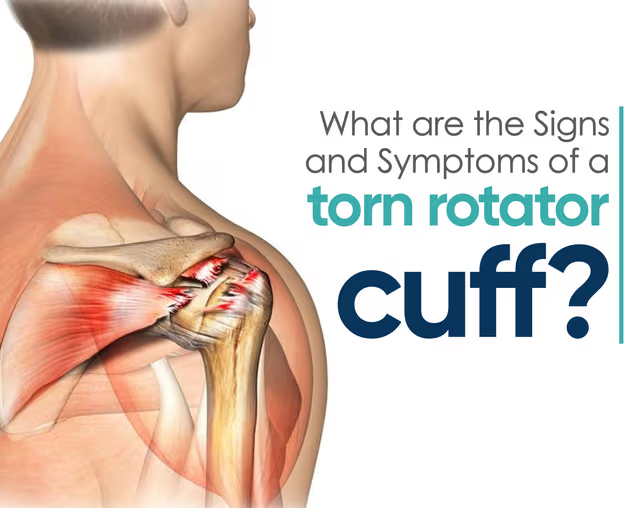
A torn rotator cuff occurs when one or more of the four muscles and their associated tendons that stabilize the shoulder joint become partially or completely frayed or detached from the head of the humerus (upper arm bone).
The rotator cuff consists of four key muscles:
- Supraspinatus: Helps lift the arm away from the body (most commonly injured).
- Infraspinatus: Facilitates outward arm rotation.
- Teres Minor: Assists with external rotation and stabilization.
- Subscapularis: Enables inward arm rotation.
Tears typically fall into two main categories: partial-thickness tears (fraying or damage that does not fully sever the tendon) and full-thickness tears (a complete split through the tendon tissue). These can be triggered by sudden trauma, like a fall, or develop gradually through repetitive overhead movements and age-related wear and tear.
Immediate First-Aid Steps: What to Do First
When shoulder pain strikes unexpectedly or worsens after an injury, taking immediate, deliberate action helps limit tissue damage and manages inflammation.
1. Protect and Rest
Stop any physical activity that involves lifting, pushing, or reaching overhead. Immobilize the arm in a comfortable position, using a simple sling if movement causes severe sharp pain.
2. Apply Ice Therapy
Apply an ice pack wrapped in a cloth to the affected shoulder for 15 to 20 minutes every 2 to 3 hours during the first 48 hours. Cold therapy reduces blood flow to the site, controlling swelling and dulling acute pain signals.
3. Seek Professional Diagnosis
Self-diagnosis is insufficient for complex shoulder mechanics. Schedule an evaluation with a primary care doctor, physical therapist, or orthopedic specialist. A clinical exam accompanied by imaging such as an ultrasound or an MRI is necessary to confirm a tear and assess its exact size and depth.
Treatment Options: Non-Surgical vs. Surgical Routes
Contrary to popular belief, having a torn rotator cuff does not automatically mean you need surgery. Up to 80% of patients with partial tears and non-traumatic full tears experience significant relief and restored function through conservative, non-invasive management.
Non-Surgical Conservative Therapies
For smaller or degenerative tears, conservative treatment is typically the first line of defense:
- Targeted Physical Therapy: Exercises designed by a physical therapist focus on strengthening the surrounding deltoid and scapular muscles to compensate for the damaged rotator cuff tendons.
- Activity Modification: Learning how to adjust daily movements, sleep positions, and ergonomic setups to avoid impinging the shoulder joint.
- Anti-Inflammatory Medications: Short-term use of NSAIDs under medical supervision helps keep inflammation manageable enough to permit rehabilitation exercises.
- Corticosteroid or Regenerative Injections: Injections into the subacromial space can significantly reduce local bursitis and pain, creating a window of comfort for physical therapy.
Surgical Intervention
Surgery is usually considered when conservative measures fail after 3 to 6 months, or immediately in cases of acute, large traumatic tears in active individuals.
- Arthroscopic Repair: A minimally invasive procedure where a surgeon uses tiny incisions, a camera, and micro-tools to reattach the torn tendon to the bone.
- Open or Mini-Open Repair: Used for large, complex, or multi-tendon tears requiring direct access to the joint.
- Tendon Transfer or Joint Replacement: Reserved for massive, irreversible tears or severe cuff tear arthropathy.
Daily Life Adjustments and Prevention Guidelines
Living with a recovering shoulder requires conscious behavioral shifts to avoid secondary injuries:
- Sleeping Positions: Avoid sleeping directly on the injured shoulder or with your arm stretched above your head. Sleeping on your back with a pillow supporting the elbow of the affected arm is generally the most comfortable position.
- Ergonomic Workspaces: Keep your keyboard and mouse close to your body so your elbows remain bent at a 90-degree angle, reducing strain on the shoulder girdle.
- Gradual Rehabilitation: Never rush heavy overhead lifting or throwing movements until your physical therapist verifies that joint mechanics and eccentric strength are fully restored.
Frequently Asked Questions
Can a torn rotator cuff heal on its own without surgery?
Because tendons have a limited blood supply, severe full-thickness tears rarely reattach to the bone on their own. However, many partial tears and chronic degenerative tears can become functionally asymptomatic. Through physical therapy, adjacent muscles adapt to stabilize the joint, allowing you to live pain-free without surgery.
What happens if you ignore a torn rotator cuff?
Ignoring a significant tear can lead to progressive tendon retraction, muscle atrophy (where the inactive muscle transforms into fatty tissue), and chronic joint degeneration known as cuff tear arthropathy. Early clinical evaluation is critical.
How long does recovery take after rotator cuff surgery?
Complete recovery is a gradual process. Most patients wear a sling for 4 to 6 weeks post-surgery. Active physical therapy begins after initial healing, with full return to heavy lifting, sports, or overhead work typically taking 6 to 9 months.
How can I tell if my shoulder pain is a torn rotator cuff or bicep tendinitis?
While both conditions cause anterior and lateral shoulder pain, a rotator cuff tear specifically causes severe weakness when lifting your arm out to the side or rotating it outward. Bicep tendinitis often presents as localized tenderness right in the front groove of the shoulder. An MRI or ultrasound provides a clear diagnosis.
Conclusion
Navigating a torn rotator cuff requires patience, timely medical guidance, and a structured rehabilitation plan. Whether your path to recovery involves dedicated physical therapy or a surgical repair, taking quick action at the first sign of injury ensures the highest likelihood of restoring your shoulder’s full range of motion and strength.