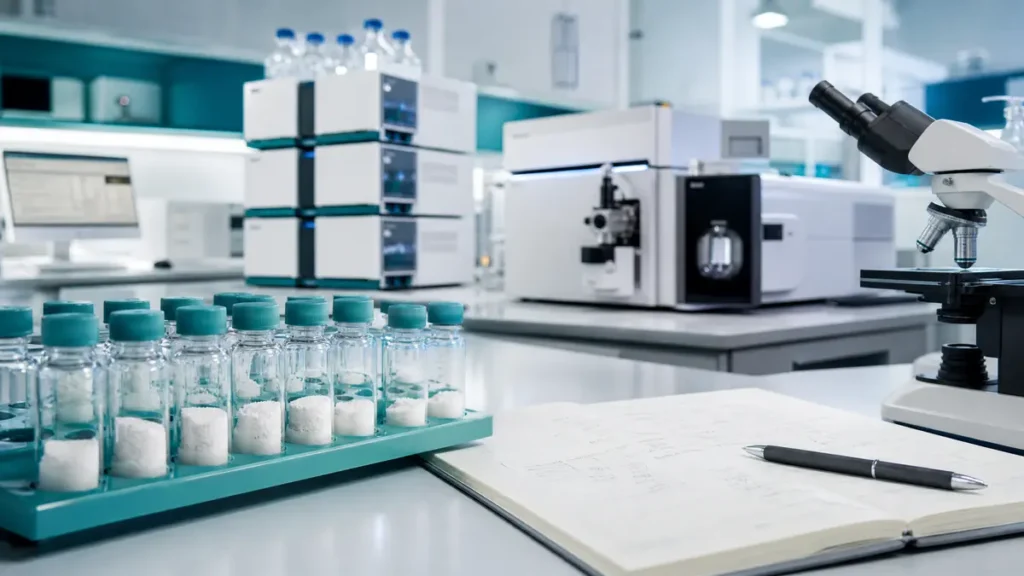
Modern biomedical laboratories rely on precise molecular tools to map cellular pathways and test emerging therapeutic hypotheses. Sourcing premium research peptides allows scientists to isolate specific biological mechanisms without introducing confounding variables into sensitive experiments. These short amino acid chains serve as foundational reagents across academic institutions, biotech startups, and pharmaceutical facilities throughout the United States. Understanding how these compounds are synthesized, verified for purity, and applied in controlled settings helps researchers maintain experimental reproducibility and rigorous scientific standards.
Defining Peptides in a Scientific Context
Peptides are short polymers formed when two or more amino acids link together through covalent peptide bonds. Chemically, they share the exact same building blocks as proteins, yet they differ significantly in size, structural complexity, and biological behavior. Most biochemists classify chains containing between 2 and 50 amino acids as peptides, whereas longer, folded chains that adopt intricate three-dimensional structures are categorized as proteins.
Because of their smaller size, peptides typically lack the rigid tertiary folding required for complex enzymatic catalysis. Instead, they act primarily as high-specificity signaling molecules, hormones, neurotransmitters, and structural fragments. Inside living organisms, endogenous peptides bind to specific cell-surface receptors to trigger precise physiological responses, such as regulating blood glucose, modulating immune activity, or transmitting pain signals across synapses.
What Distinguishes Research-Grade Compounds from Clinical Therapeutics?
The distinction between laboratory reagents and clinical medications lies in regulatory oversight, manufacturing standards, and intended use rather than fundamental chemistry. Research peptides are synthesized exclusively for in vitro laboratory testing, biochemical assays, and preclinical animal studies. In the United States, suppliers label these compounds strictly for research use only, meaning they are not approved by the Food and Drug Administration for human consumption, diagnostic procedures, or clinical treatment.
Pharmaceutical-grade peptides, by contrast, undergo Current Good Manufacturing Practice (cGMP) production, extensive clinical trials, and sterile formulation for patient administration. Laboratory reagents skip human clinical validation and sterile fill-finish processes to remain cost-effective for exploratory science. However, reputable chemical suppliers still enforce strict analytical quality controls to ensure that experimental data remains reliable and free from synthesis byproducts.
How Scientists Synthesize Research Peptides
Decades ago, isolating specific peptides required extracting trace amounts from animal tissues or bacterial cultures, a slow process that often yielded impure mixtures. Today, automated chemical synthesis enables laboratories to order custom sequences tailored to exact experimental specifications.
Solid-Phase Peptide Synthesis (SPPS)
Solid-phase peptide synthesis, pioneered by Robert Bruce Merrifield in 1963, remains the industry standard for producing custom sequences. In this method, the first amino acid is chemically anchored to an insoluble microscopic polymer resin bead. Technicians then add subsequent amino acids one by one in a repeating cycle of deprotection, washing, and coupling reactions.
To prevent amino acids from reacting at the wrong sites, chemists attach temporary chemical shields known as protecting groups to the reactive side chains and the N-terminus. Once a new peptide bond forms, a mild chemical wash removes the N-terminal protecting group, exposing the site for the next amino acid in the sequence. Because the growing chain stays attached to the solid resin bead, excess reagents and soluble byproducts can be washed away cleanly after every step.
Cleavage, Purification, and Lyophilization
After the final amino acid is coupled, chemists use a strong acid—most commonly trifluoroacetic acid (TFA)—to cleave the completed peptide from the solid resin and strip away the remaining side-chain protecting groups. The crude peptide mixture is then dissolved and passed through High-Performance Liquid Chromatography (HPLC) columns. HPLC separates the target sequence from truncated chains, deletion sequences, and chemical impurities based on subtle differences in hydrophobicity.
Once isolated, the purified liquid fraction undergoes lyophilization, or freeze-drying. Removing water under low temperature and vacuum pressure transforms the peptide into a stable, fluffy white powder. Lyophilized peptides resist microbial growth and hydrolytic degradation far better than liquid solutions, allowing laboratories to ship and store them safely before reconstitution.
Key Laboratory Applications of Research Peptides
Across academic and industrial laboratories, synthetic peptides serve as versatile investigative tools. Their ability to mimic natural protein domains makes them indispensable for probing molecular interactions that would otherwise be too large or unstable to study directly.
Receptor Binding and Signal Transduction Assays
Many cellular signaling cascades begin when a peptide ligand binds to a G-protein-coupled receptor (GPCR) or an enzyme-linked receptor on the cell membrane. Researchers use synthetic agonists and antagonists to stimulate or block these receptors in cultured cell lines. By measuring downstream outputs—such as cyclic AMP accumulation, calcium flux, or protein phosphorylation—scientists can map signaling pathways and determine receptor affinity.
Researchers also introduce targeted amino acid substitutions into a native sequence, a technique called alanine scanning. By replacing individual residues one at a time with alanine and observing changes in binding strength, scientists pinpoint the exact chemical groups responsible for biological activity.
Antibody Generation and Epitope Mapping
Generating monoclonal or polyclonal antibodies against a large, intact protein can be expensive and technically difficult. Instead, immunologists frequently synthesize a short 10- to 20-amino-acid segment representing an exposed surface region of the target protein. When conjugated to a larger carrier protein like keyhole limpet hemocyanin (KLH), this synthetic peptide stimulates an immune response in host animals, producing antibodies that recognize the full-length native protein.
Conversely, overlapping libraries of short peptides allow researchers to perform epitope mapping. By testing which specific fragments bind to an existing antibody, scientists identify the exact molecular footprint recognized by diagnostic reagents or therapeutic biologics.
Enzyme Substrate Profiling and Inhibitor Screening
Proteases, kinases, and phosphatases regulate virtually every cellular process by modifying other proteins. To measure the activity of these enzymes in cell lysates or purified biochemical assays, researchers design short peptide substrates containing specific recognition motifs. Many of these substrates incorporate fluorescent tags or quencher molecules that emit light only after an enzyme cleaves or phosphorylates the sequence.
High-throughput screening facilities use these fluorogenic peptide substrates to test thousands of small-molecule drug candidates simultaneously. If a test compound prevents the enzyme from cleaving the peptide substrate, the resulting drop in fluorescence flags that compound as a potential therapeutic inhibitor.
Structural Biology and Biomaterial Design
Biophysicists use synthetic peptides to investigate how amino acid sequences fold into alpha-helices, beta-sheets, and amyloid fibrils. Techniques such as nuclear magnetic resonance (NMR) spectroscopy, circular dichroism, and X-ray crystallography rely on highly pure, isotopically labeled peptides to resolve atomic-level structures.
In bioengineering, self-assembling peptides serve as building blocks for synthetic hydrogels and tissue-engineering scaffolds. Under specific pH or salt conditions, amphiphilic sequences spontaneously organize into nanofiber networks that mimic the extracellular matrix, supporting three-dimensional cell culture growth in regenerative medicine research.
Analytical Methods for Verifying Peptide Quality
Experimental accuracy depends entirely on knowing the exact identity and concentration of the reagents added to an assay. Even minor synthesis impurities can trigger false positives in sensitive cell-based screens or skew enzyme kinetic measurements. Consequently, analytical verification is a non-negotiable step before starting any laboratory protocol.
Analytical HPLC and Mass Spectrometry
Reputable suppliers include a Certificate of Analysis (COA) with every batch, backed by two primary analytical techniques:
-
Analytical High-Performance Liquid Chromatography (HPLC): Evaluates chemical purity by separating components in a sample and measuring their ultraviolet absorbance, typically at 214 nm or 220 nm where peptide bonds absorb light. A single sharp peak indicates high purity, whereas secondary peaks reveal truncated fragments or oxidized byproducts.
-
Mass Spectrometry (MS): Confirms molecular identity by ionizing the sample and measuring its exact mass-to-charge ratio. Electrospray ionization (ESI-MS) and matrix-assisted laser desorption/ionization (MALDI-TOF) verify that the observed molecular weight matches the theoretical mass calculated from the intended amino acid sequence.
Understanding Purity Grades and Salt Forms
Not every experiment requires ultra-pure material, so laboratories select purity tiers matched to their downstream applications. In addition, standard HPLC purification leaves residual trifluoroacetate counterions bound to positively charged amino acid side chains. Because TFA can be cytotoxic to sensitive mammalian cell cultures, researchers often request acetate or hydrochloride salt exchange before running in vivo or live-cell assays.
Matching Peptide Purity Tiers to Laboratory Applications
The table below outlines standard purity grades used in scientific research, helping laboratory managers balance analytical rigor against synthesis costs for different experimental workflows.
| Purity Grade | Typical Purity Range | Primary Verification Methods | Recommended Laboratory Applications |
| Crude / Desalted | 50% – 75% | MALDI-TOF Mass Spectrometry | High-throughput screening libraries, preliminary ELISA plate coating, and initial epitope scanning |
| Immunological Grade | 80% – 85% | Analytical HPLC and Mass Spectrometry | Polyclonal and monoclonal antibody production, affinity purification columns, and basic antigen testing |
| Biochemical Grade | 90% – 95% | Analytical HPLC and ESI/MALDI Mass Spectrometry | Enzyme kinetic assays, receptor-ligand binding studies, cell signaling experiments, and bioassays |
| Structural / Quantitative Grade | Greater than 98% | Dual-wavelength Analytical HPLC, Mass Spectrometry, and Amino Acid Analysis | X-ray crystallography, NMR spectroscopy, quantitative mass spectrometry standards, and sensitive in vivo preclinical models |
Selecting the appropriate tier prevents researchers from overspending on preliminary screens while protecting critical quantitative assays from trace contaminant interference.
Best Practices for Storage, Handling, and Reconstitution
Peptides are substantially more fragile than small organic molecules. Exposure to moisture, temperature fluctuations, atmospheric oxygen, and bacterial enzymes can rapidly degrade a sample, leading to inconsistent experimental results over time.
Proper Storage of Lyophilized Powders
Upon arrival, lyophilized peptides should be stored immediately in a tightly sealed container at -20°C or -80°C, protected from direct light. Before opening a chilled vial, technicians must allow it to warm to room temperature inside a desiccator. Opening a cold vial directly in ambient laboratory air causes atmospheric moisture to condense on the hygroscopic powder, accelerating hydrolysis and microbial contamination.
Reconstitution and Aliquoting Protocols
When dissolving lyophilized powder into a stock solution, researchers should first consult the sequence’s overall net charge:
-
Neutral or balanced sequences: Dissolve readily in sterile, distilled water or standard physiological buffers such as phosphate-buffered saline (PBS).
-
Acidic sequences (high aspartic or glutamic acid content): Dissolve best in a small volume of dilute basic buffer, such as ammonium bicarbonate, before diluting to the final working volume with neutral buffer.
-
Basic sequences (high arginine, lysine, or histidine content): Dissolve efficiently in dilute acetic acid (1% to 10%) prior to buffer dilution.
-
Hydrophobic sequences (rich in leucine, isoleucine, valine, or phenylalanine): Often require a small volume of an organic co-solvent like dimethyl sulfoxide (DMSO) or acetonitrile to achieve complete solubility before aqueous dilution.
Once reconstituted, stock solutions should never undergo repeated freeze-thaw cycles, which shear peptide chains and promote aggregation. Instead, researchers divide the stock into single-use aliquots in low-binding polypropylene tubes and freeze them at -80°C. Sequences containing cysteine, methionine, or tryptophan are particularly prone to oxidation and benefit from degassed buffers and nitrogen gas blanketing prior to storage.
Regulatory and Ethical Compliance in the United States
In the United States, the procurement and handling of research peptides operate within a clear regulatory framework designed to separate laboratory investigation from clinical medicine. Chemical vendors supply these materials strictly under research-use-only designations, and institutional purchasing departments typically verify laboratory credentials before fulfilling orders.
Within academic institutions, hospitals, and private biotech firms, internal oversight bodies govern how these compounds are used. Institutional Biosafety Committees (IBCs) review protocols involving biologically active toxins or viral-derived sequences, while Institutional Animal Care and Use Committees (IACUCs) evaluate and approve any preclinical protocols involving vertebrate animals. Maintaining detailed lot logs, Certificates of Analysis, and proper chemical hygiene records ensures compliance with federal safety guidelines and institutional audit standards.
Conclusion
Research peptides bridge the gap between small-molecule chemistry and complex protein biology, giving scientists precise control over cellular signaling, enzyme activity, and immune recognition. Achieving reproducible data requires more than ordering a specific amino acid sequence; it depends on selecting the right purity grade, verifying analytical documentation through HPLC and mass spectrometry, and following strict reconstitution and cold-storage protocols. By treating peptide handling with the same rigor applied to instrument calibration, laboratories can minimize experimental variability and generate reliable, high-impact scientific findings.
Frequently Asked Questions
What is the difference between a peptide and a protein?
The primary difference is chain length and structural complexity. Peptides typically contain between 2 and 50 amino acids linked in a relatively simple linear or cyclic chain, whereas proteins consist of more than 50 amino acids folded into stable, complex three-dimensional structures that perform intricate mechanical or enzymatic functions.
Why are research peptides supplied as a lyophilized powder rather than a liquid?
Lyophilization removes water through freeze-drying, which prevents hydrolytic breakdown, oxidation, and bacterial growth. In dry powder form, peptides remain stable for months or years at -20°C, whereas liquid solutions can degrade within days or weeks.
What does TFA removal or salt exchange mean on a peptide specification sheet?
Standard purification uses trifluoroacetic acid (TFA), leaving residual TFA salts attached to the peptide. Because TFA can be toxic to living cells and alter enzyme activity, laboratories often request a salt exchange to replace TFA with biocompatible acetate or hydrochloride counterions for cell culture or animal studies.
How do researchers verify that a custom peptide has the correct sequence?
Laboratories rely on mass spectrometry (such as MALDI-TOF or ESI-MS) to confirm that the molecular weight of the synthesized product matches the exact theoretical mass of the requested amino acid sequence, paired with analytical HPLC to confirm chemical purity.
Can research peptides be used in human clinical studies or personal supplementation?
No. Compounds labeled for research use only are manufactured exclusively for in vitro laboratory testing and approved preclinical animal research. They do not undergo human sterility testing, clinical safety trials, or FDA manufacturing oversight required for human administration.