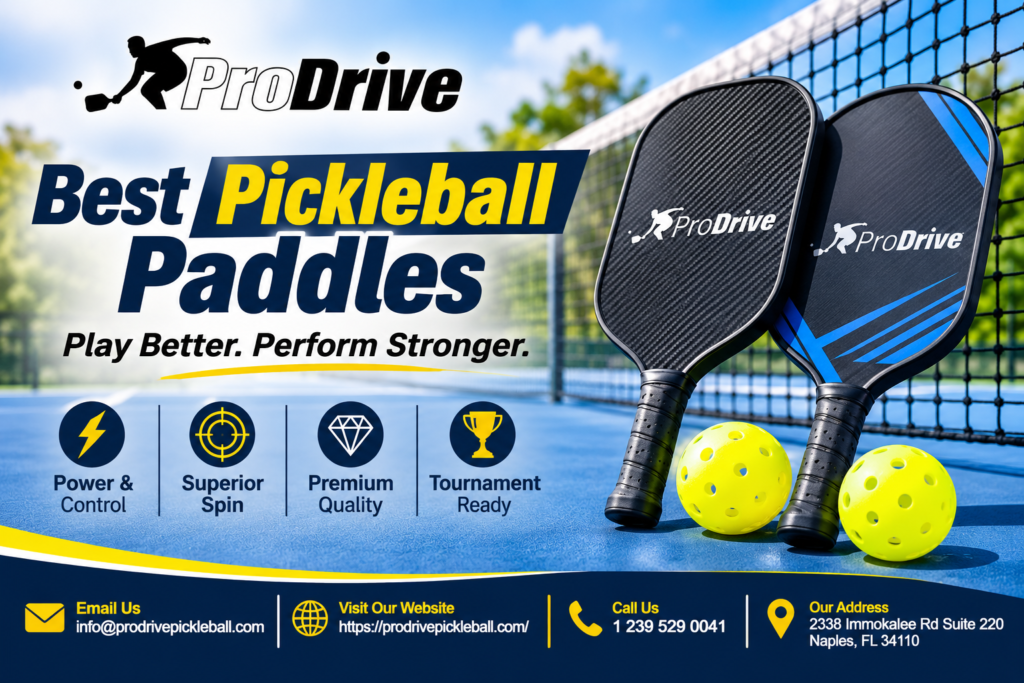
Pickleball is growing rapidly, and having the right equipment can make a noticeable difference in how you play. Whether you’re learning your first dink, improving your serve, or competing in tournaments, choosing the right paddle can help you develop better control, generate more power, and play with greater confidence.
However, with so many paddle materials, core technologies, shapes, and thickness options available, finding the right one isn’t always easy. The best pickleball paddles aren’t necessarily the most expensive ones. They’re the paddles that match your playing style, skill level, and performance expectations.
In this guide, we’ll explore the essential features to consider, explain different paddle technologies, and help you find a paddle that supports your goals on the court.
What Makes the Best Pickleball Paddles?
A quality pickleball paddle combines several important features to deliver consistent performance. Before purchasing one, consider the following factors:
1. Paddle Surface Material
The paddle surface directly influences ball contact, feel, and spin potential.
Popular materials include:
- Raw carbon fiber: Known for its textured surface, consistent ball response, and potential to generate spin.
- Fiberglass: Offers a lively feel and can provide additional power.
- Graphite: Lightweight and responsive, making it suitable for players who value quick reactions.
- Aramid and Kevlar: Advanced materials valued for their strength, durability, and distinctive playing characteristics.
For players looking for a balance of performance and responsiveness, carbon fiber pickleball paddles are worth considering. Advanced surface technologies can also help players develop more confident shot placement.
2. Core Thickness and Construction
The paddle core influences how the ball feels when it makes contact with the surface.
Common thickness options include:
- 13mm–14mm: Often preferred by players looking for a quicker, firmer response and additional power.
- 16mm: A popular all-around option offering a balance of control, stability, and power.
- 19mm: Designed for players who prefer a thicker construction and a softer, more controlled feel, depending on the paddle’s overall design.
Polypropylene honeycomb cores are widely used because they offer a combination of durability, vibration absorption, and control.
Some advanced paddles also feature multi-layer construction, combining different materials to create a distinctive balance of responsiveness and stability.
3. Weight and Grip Comfort
Paddle weight affects maneuverability, reaction speed, and fatigue.
A lightweight paddle can help players react quickly during fast exchanges at the kitchen line. A heavier paddle may provide additional stability and momentum during powerful shots.
Grip comfort is equally important. Consider:
- Handle length and circumference.
- Grip material and sweat absorption.
- Comfortable wrist positioning.
- Overall paddle balance.
Choosing the right weight and grip can make extended playing sessions more comfortable.
Best Pickleball Paddles for Different Playing Styles
Not every player needs the same paddle. Your ideal choice depends on the shots you play most frequently.
Best Pickleball Paddles for Beginners
Beginners should prioritize comfort, forgiveness, and consistency.
Look for:
- A forgiving sweet spot.
- Comfortable grip dimensions.
- Balanced weight distribution.
- A responsive polymer honeycomb core.
A beginner-friendly paddle makes it easier to learn fundamental techniques, including serves, returns, volleys, and dinks.
Best Pickleball Paddles for Power
Power-oriented players generally prefer paddles that provide a firmer response and efficient energy transfer.
Consider:
- A thinner core construction.
- A suitable paddle weight.
- A responsive hitting surface.
- A design that supports aggressive drives and overhead shots.
Remember that paddle construction alone doesn’t determine power. Swing mechanics, contact position, and timing remain essential.
Best Pickleball Paddles for Control and Spin
Players who enjoy strategic rallies often prioritize touch, accuracy, and spin.
Raw carbon fiber surfaces are particularly popular among players seeking textured paddle faces.
Look for:
- Consistent surface texture.
- A stable core.
- Comfortable handling.
- A shape that provides a suitable sweet spot.
These characteristics can support controlled dinks, accurate resets, and strategically placed shots.
Why Advanced Paddle Materials Matter
Modern paddle technology has introduced several construction methods that offer players more choices.
One interesting development is multi-layer core construction.
For example, a triple-layer core can combine different material layers to create a particular playing feel. Depending on the materials and engineering, this construction may help balance responsiveness, stability, and vibration management.
Aramid and carbon fiber are also gaining attention among players interested in advanced paddle materials.
When comparing premium pickleball paddles, don’t focus exclusively on marketing terms. Examine the actual construction, surface material, weight, thickness, and performance characteristics.
How to Choose the Right Pickleball Paddle
Before making your purchase, ask yourself these five questions:
- What is my skill level? Beginners generally benefit from forgiveness, while experienced players may prioritize specialized performance.
- What is my playing style? Identify whether power, control, spin, or all-court versatility matters most.
- Which core thickness suits me? Compare different thicknesses based on feel and responsiveness.
- Is the paddle comfortable? Check grip size, weight, and handle length.
- Is it tournament suitable? If you participate in sanctioned competitions, verify the exact paddle model on the current USA Pickleball approved paddle list.
Testing different paddles whenever possible is one of the most effective ways to understand your preferences.
Why Consider ProDrive Pickleball?
Finding the right paddle becomes easier when you understand the technology behind its construction.
ProDrive Pickleball focuses on performance-oriented equipment featuring advanced materials, including carbon fiber and Aramid, with paddle options designed around power, control, and spin.
Players exploring premium paddle technology can discover different collections, including:
- ProDrive Apex: Explore performance-focused paddle options.
- ProDrive Encounter: Discover advanced paddle construction and material combinations.
- ProDrive Maverick: Explore a hybrid construction featuring carbon fiber and Aramid materials.
The ProDrive Maverick, for example, features a 16mm triple-layer polypropylene and Aramid honeycomb core with a Toray 700 raw carbon fiber and Kevlar surface. Its published specifications include an approximate weight of 8 ounces.
These construction details give players useful information when comparing equipment for different playing preferences.
Whether you’re upgrading from an entry-level paddle or looking for advanced materials, explore the available options at ProDrive Pickleball and compare their specifications before deciding.
Conclusion: Find the Paddle That Elevates Your Game
Choosing among the best pickleball paddles requires more than comparing prices or selecting a popular brand. Surface material, core construction, thickness, weight, grip comfort, and playing style all contribute to the overall experience.
Beginners may prefer forgiving, balanced designs, while experienced players may prioritize carbon fiber surfaces, advanced core construction, and specialized performance characteristics.
The right paddle should complement your technique, support your strengths, and help you enjoy every match.
Ready to upgrade your game? Explore the performance-driven paddle collections at ProDrive Pickleball and find equipment designed to match your playing ambitions.