Nanotechnology has transformed scientific research by introducing materials with unique physical, chemical, and optical properties. Among these innovations, quantum dots have emerged as one of the most versatile nanomaterials, finding applications in biotechnology, medicine, electronics, environmental science, and advanced imaging. While traditional quantum dots are often synthesized in hydrophobic solvents, many biological and medical applications require nanoparticles that can function effectively in aqueous environments. This has led to the development of water soluble quantum dots, which combine the remarkable optical characteristics of quantum dots with compatibility for water-based systems.
Researchers increasingly rely on water soluble quantum dots for applications such as bioimaging, biosensing, drug delivery, diagnostics, and molecular labeling. Their excellent fluorescence, stability, and ability to be functionalized with biomolecules make them indispensable tools in modern laboratories.
This guide explores the properties, advantages, applications, and important considerations when selecting water-soluble quantum dots for research and development.
What Are Water Soluble Quantum Dots?
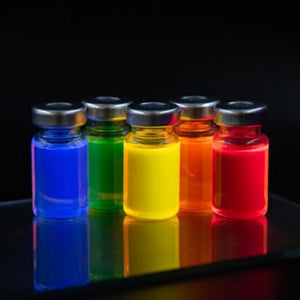
Quantum dots are semiconductor nanoparticles typically measuring between 2 and 10 nanometers in diameter. Their size-dependent optical properties allow them to emit different colors of light depending on particle size, making them highly valuable in imaging and sensing technologies.
Water soluble quantum dots are specially engineered to remain stable and dispersed in aqueous solutions. Their surfaces are modified with hydrophilic coatings or functional molecules that prevent aggregation and improve compatibility with biological environments.
Unlike hydrophobic quantum dots, which require organic solvents, water-soluble versions can interact directly with cells, proteins, DNA, antibodies, and other biological molecules, greatly expanding their usefulness in life science research.
Unique Properties of Water Soluble Quantum Dots
One of the defining features of water-soluble quantum dots is their exceptional fluorescence. They produce bright, stable light emissions with narrow emission spectra and broad excitation ranges, allowing multiple fluorescent colors to be observed simultaneously.
Their high photostability enables longer imaging sessions without significant signal loss, making them superior to many traditional fluorescent dyes.
These nanoparticles also possess large surface areas that can be functionalized with various biomolecules, including antibodies, peptides, nucleic acids, and proteins. This flexibility allows researchers to design highly targeted imaging and detection systems.
Additionally, water solubility improves compatibility with biological samples while minimizing aggregation during experiments.
Advantages Over Traditional Fluorescent Dyes
Traditional fluorescent dyes have long been used for biological labeling, but they often suffer from photobleaching and limited brightness.
Water-soluble quantum dots provide several significant advantages.
They exhibit higher fluorescence intensity, allowing researchers to detect smaller quantities of biological targets.
Their superior resistance to photobleaching enables long-term observation during live-cell imaging and extended laboratory experiments.
Quantum dots can also be excited using a single light source while emitting multiple distinct colors, simplifying multiplex imaging and reducing equipment complexity.
These advantages continue driving their adoption across numerous scientific disciplines.
Surface Functionalization Enhances Performance
Surface modification plays a critical role in the performance of water-soluble quantum dots.
Manufacturers often coat nanoparticles with polymers, silica, polyethylene glycol (PEG), or specialized ligands that improve water dispersibility and reduce nonspecific interactions.
Additional functional groups such as carboxyl, amino, streptavidin, or biotin can be incorporated to enable highly specific binding with biological molecules.
This functionalization allows researchers to customize nanoparticles for targeted imaging, biosensing, immunoassays, and molecular diagnostics.
The ability to tailor surface chemistry greatly expands experimental possibilities.
Applications in Biomedical Imaging
Biomedical imaging is one of the most important applications of water soluble quantum dots.
Researchers use these nanoparticles to visualize cells, tissues, proteins, and molecular interactions with exceptional sensitivity and resolution.
Because quantum dots emit bright and stable fluorescence, they provide clearer images during long observation periods compared to conventional dyes.
Their multiplex imaging capabilities enable simultaneous visualization of multiple biological targets within the same sample.
These characteristics support research in cancer biology, neuroscience, immunology, and regenerative medicine.
Biosensing and Molecular Detection
Water-soluble quantum dots have become powerful tools for biosensing technologies.
Researchers integrate them into sensors capable of detecting proteins, DNA, RNA, pathogens, toxins, and disease biomarkers with remarkable sensitivity.
Changes in fluorescence intensity or wavelength provide measurable signals indicating the presence of specific biological targets.
Their high sensitivity allows early detection of diseases and supports the development of rapid diagnostic technologies.
These biosensing platforms continue advancing healthcare diagnostics and laboratory research.
Drug Delivery Research
Targeted drug delivery remains an important area of nanomedicine.
Scientists investigate water-soluble quantum dots as multifunctional carriers capable of transporting therapeutic compounds while simultaneously enabling imaging of treatment distribution.
Their fluorescence allows researchers to monitor nanoparticle movement inside biological systems in real time.
Although much of this work remains in experimental stages, quantum dot-based delivery systems hold promise for improving treatment precision while reducing side effects.
Continued research is expanding their potential in personalized medicine.
Environmental and Industrial Applications
The usefulness of water-soluble quantum dots extends beyond biomedical research.
Environmental scientists employ these nanoparticles to detect heavy metals, pollutants, and harmful chemicals in water supplies.
Industrial researchers use them in advanced sensing technologies, quality control systems, and next-generation electronic devices.
Their optical properties also contribute to innovations in security labeling, anti-counterfeiting technologies, and high-performance display systems.
As manufacturing techniques improve, industrial applications continue to expand.
Important Factors When Selecting Water Soluble Quantum Dots
Researchers should carefully evaluate several factors before purchasing water-soluble quantum dots.
Particle size influences fluorescence color, tissue penetration, and imaging performance.
Surface chemistry determines compatibility with biological molecules and experimental conditions.
Other important considerations include quantum yield, particle concentration, stability, purity, shelf life, and functionalization options.
Reviewing product characterization data such as absorption spectra, emission spectra, particle size analysis, and quality certifications helps ensure consistent experimental results.
Selecting high-quality materials supports reproducible and reliable research.
Proper Storage and Handling
Maintaining nanoparticle stability requires proper storage and handling.
Most water-soluble quantum dots should be stored under refrigerated conditions according to manufacturer recommendations.
Exposure to excessive heat, repeated freeze-thaw cycles, or contamination can reduce particle stability and fluorescence performance.
Gentle mixing helps maintain uniform particle dispersion while minimizing aggregation.
Following recommended handling procedures preserves product quality and improves experimental consistency.
The Future of Water Soluble Quantum Dots
Research involving water-soluble quantum dots continues to expand rapidly.
Scientists are developing safer, more environmentally friendly formulations while improving brightness, stability, and targeting capabilities.
Emerging applications include wearable biosensors, personalized diagnostics, precision medicine, advanced imaging systems, and quantum computing technologies.
Continued advances in nanotechnology are expected to further enhance the performance and accessibility of these remarkable materials.
As scientific understanding grows, water-soluble quantum dots will remain central to innovation across medicine, biotechnology, environmental science, and materials research.
Conclusion
Water soluble quantum dots have become indispensable tools in modern nanotechnology due to their exceptional fluorescence, stability, and compatibility with biological systems. Their unique optical properties, customizable surface chemistry, and broad range of applications make them valuable for biomedical imaging, diagnostics, biosensing, drug delivery research, and numerous industrial technologies.
Selecting high-quality nanoparticles with appropriate particle size, surface functionalization, stability, and characterization data is essential for achieving reliable experimental results.
If you’re seeking premium nanomaterials designed for advanced scientific applications, NN Crystal US Corporation offers high-quality water-soluble quantum dots manufactured to meet the demands of today’s research community. Their commitment to innovation, consistency, and scientific excellence makes them a trusted partner for laboratories worldwide.
Contact NN Crystal US Corporation today to learn more about their advanced quantum dot solutions and discover the right nanomaterials for your next research breakthrough.