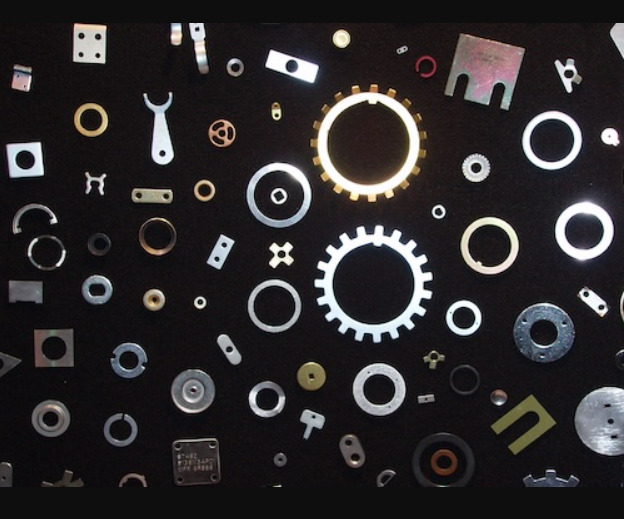
Metal stamping is a practical manufacturing method used to create consistent components for machinery, equipment, automotive systems, electrical products, and many other applications. When standard parts do not meet a project’s requirements, customized manufacturing can provide components with specific dimensions, shapes, and material characteristics. custom industrial metal stamping can produce brackets, clips, plates, spacers, and other formed parts for specialized applications. Similarly, custom metal washers manufacturing can create washers designed around particular fastening and assembly requirements. Together, these processes can support projects that require repeatable, application-specific metal components.
Producing Components for Industrial Equipment
Industrial machinery often contains many small metal components that support larger assemblies. These parts may need specific dimensions to fit within limited spaces or connect different sections of equipment.
custom industrial metal stamping can be used to manufacture:
- Mounting brackets
- Retaining clips
- Support plates
- Spacers
- Covers
- Small formed components
Supporting Equipment Assembly
Custom stamped components can be designed according to the dimensions of the machinery. This allows manufacturers to create parts that fit a particular assembly rather than adjusting the equipment around an available standard component.
For example, a custom bracket may be required to hold a component at a specific angle, while a formed plate may need particular openings for bolts or cables.
Creating Application-Specific Washers
Washers are commonly used with bolts, screws, and other fasteners. While standard washers work for many applications, some assemblies require dimensions that are not readily available.
This is where custom metal washers manufacturing can be useful.
Custom washers can be produced according to requirements such as:
- Inner diameter
- Outer diameter
- Material thickness
- Overall shape
- Dimensional tolerances
- Material specifications
Why Custom Dimensions Matter
A washer that is too small may not distribute fastening pressure effectively, while one that is too large may interfere with surrounding components. The thickness can also matter when the washer is being used as a spacer or when a specific assembly height is required.
Automotive Component Applications
Automotive systems contain thousands of individual components, including numerous small stamped metal parts. These components can be used for mounting, fastening, spacing, shielding, and structural support.
Potential applications include:
- Mounting brackets
- Engine-related hardware
- Body and panel components
- Retaining clips
- Fastening supports
- Custom washers
Supporting Repeatable Production
Automotive manufacturing often requires large quantities of identical components. Once suitable tooling has been developed, stamping can support repeat production of parts with consistent dimensions.
This consistency can be useful when components are installed through repetitive or partially automated assembly processes.
Electrical and Electronic Equipment
Electrical equipment often requires small metal components for mounting, spacing, shielding, and fastening. These parts may need to fit into compact enclosures or around other components.
custom industrial metal stamping can be applied to produce parts such as:
- Mounting tabs
- Small brackets
- Retaining clips
- Shielding components
- Support plates
- Connector-related hardware
Working With Compact Designs
Electronic assemblies frequently have limited available space. A custom stamped component can be designed with specific dimensions and openings to fit within the available area.
This can help manufacturers avoid using unnecessarily large parts and make better use of the available space.
Construction and Hardware Applications
Construction projects use many fastening systems where washers and other metal components are required. Depending on the application, a custom component may be needed because of unusual dimensions or installation conditions.
custom metal washers manufacturing can support applications involving:
- Structural fastening
- Equipment installation
- Metal assemblies
- Mounting systems
- Hardware connections
- Specialized construction components
Washers can help distribute pressure from nuts and bolts over a larger surface area. They may also help protect surfaces from direct contact with fasteners.
Creating Components for Specialized Machinery
Specialized machinery is often designed around specific operating requirements. As a result, some replacement or production components may not be available as standard products.
Custom stamping can provide a way to manufacture these components according to engineering drawings.
Common Custom Requirements
A manufacturer may require:
Specific dimensions:
The component needs to fit a particular machine or assembly.
Special openings:
Holes or cutouts may be necessary for fasteners, wiring, or other parts.
Defined thickness:
The material thickness may affect strength, weight, or spacing.
Specific material:
The operating environment may determine the appropriate metal.
Consistent tolerances:
Repeated components may need to remain within defined dimensional limits.
These factors can be considered before production begins.
Supporting Custom Washer Applications
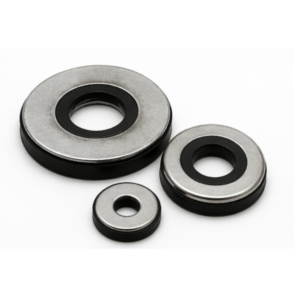
Not all washers are simply flat circular discs. Depending on their purpose, they may have unusual shapes, profiles, or dimensions.
For example, a custom washer may be required to fit around a particular bolt while covering a larger surface area than a standard washer.
Possible Uses
- Load distribution: Increasing the contact area around a fastener.
- Spacing: Maintaining a specific distance between components.
- Surface protection: Reducing direct contact between a fastener and another material.
- Alignment: Helping position components during assembly.
- Specialized fastening: Supporting non-standard connection requirements.
The exact design should be based on the requirements of the assembly rather than simply modifying a standard washer.
Aerospace and Defense-Related Applications
Precision metal components can also be used in aerospace and defense-related manufacturing. These applications may require careful control over dimensions, materials, and production processes.
Small stamped components can be used for:
- Equipment mounting
- Fastening systems
- Brackets
- Spacers
- Retaining components
- Protective parts
For such applications, manufacturing requirements may be more demanding because individual components can become part of larger and highly engineered assemblies.
Medical and Laboratory Equipment
Medical and laboratory equipment may contain small metal components that need to fit accurately within compact assemblies. Depending on the product and its requirements, stamped components can support mounting, fastening, spacing, and structural functions.
Examples can include:
- Small brackets
- Retaining pieces
- Washers
- Mounting plates
- Spacers
- Protective components
Material selection is particularly important for equipment that may experience frequent cleaning, moisture, or exposure to specific environments.
Improving Manufacturing Efficiency
Custom stamping can also be useful when a manufacturer needs to produce a large number of similar components.
After the appropriate tooling is developed, the process can support repeat production while maintaining consistent part geometry.
Benefits may include:
- Repeatable component dimensions
- Efficient high-volume production
- Reduced manual production requirements
- Consistent shapes and openings
- Easier integration into assembly processes
However, stamping is not automatically suitable for every part. The material, geometry, production quantity, tolerance requirements, and tooling costs should be considered before selecting the process.
Material Selection for Custom Components
The choice of metal can influence the performance and production characteristics of a stamped component. Different applications may require different combinations of strength, corrosion resistance, weight, formability, and durability.
Materials may be selected according to:
- Operating environment
- Required component strength
- Part thickness
- Corrosion exposure
- Forming requirements
- Expected service life
For washers, material selection can also affect how the component behaves under pressure from a fastener.
Quality Control and Dimensional Accuracy
Custom components need to match their intended specifications. Even small differences in diameter, thickness, hole size, or overall shape can affect assembly.
Quality checks may include:
- Measuring critical dimensions.
- Checking material thickness.
- Inspecting edges and surfaces.
- Verifying part geometry.
- Reviewing production consistency.
- Inspecting tooling when required.
For repeated production, maintaining consistent specifications can help reduce assembly issues and improve overall manufacturing reliability.
In-House Production and Custom Requirements
Keeping manufacturing processes in-house can provide greater control over production, inspection, and communication. It can also make it easier to discuss changes to drawings, dimensions, materials, or quantities during a project.
custom industrial metal stamping can therefore be valuable for manufacturers that need specialized components rather than standard parts.
Likewise, custom metal washers manufacturing can support customers requiring washers made according to specific drawings and application requirements. The appropriate production method should always be selected based on the part design, material, quantity, and required tolerances.
Conclusion
JTD Stamping focuses on producing precision-cut and formed metal products, including washers manufactured according to customer specifications. Its in-house approach allows components to be produced without outsourcing while maintaining control over manufacturing and quality. The uses of custom industrial metal stamping extend across machinery, automotive, electrical, construction, aerospace, and specialized equipment applications. Meanwhile, custom metal washers manufacturing can provide application-specific solutions for fastening, spacing, load distribution, and surface protection. Careful attention to materials, dimensions, tooling, tolerances, and quality checks helps ensure that custom metal components meet their intended requirements.