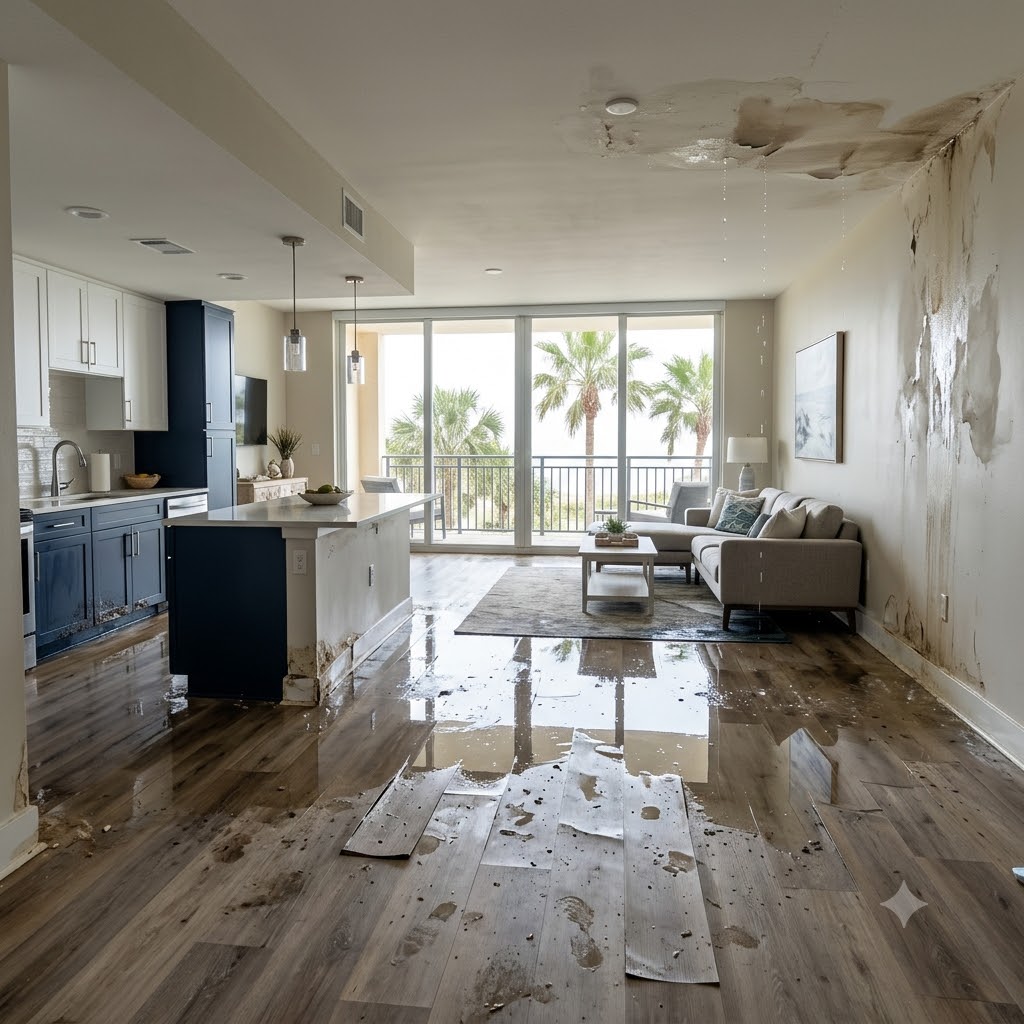
Water damage can create expensive problems for condominium owners. A leaking pipe, overflowing appliance, damaged water heater, or sudden plumbing failure can affect flooring, cabinets, walls, furniture, and personal belongings. In a condominium building, water can also travel between units, creating disputes about repair responsibilities and insurance coverage.
Understanding condo insurance water damage in Southwest Florida helps owners prepare for unexpected incidents and determine which policy might respond when property is damaged. The answer depends on the source of the water, the type of property affected, the condominium association’s master policy, and the exclusions and limits in the individual owner’s policy.
Reviewing these details before an incident occurs makes it easier to respond appropriately when water damage threatens your home.
What Causes Water Damage in Condominiums?
Condominium water damage can originate inside your unit, elsewhere in the building, or from an external source.
Common causes include:
- Burst or leaking plumbing pipes.
- Washing machine supply hose failures.
- Dishwasher and refrigerator water line leaks.
- Overflowing sinks, bathtubs, and toilets.
- Roof leaks and damaged building components.
- Water intrusion following severe weather.
- Leaks from neighboring units.
The source matters because insurance policies treat different types of water damage differently. A sudden plumbing failure might qualify for coverage under certain circumstances, while long-term seepage, neglected maintenance, or flooding could be excluded.
Flood damage generally requires separate flood insurance. A standard condominium insurance policy typically does not cover damage caused by flooding from external sources. Depending on the property and policy, separate flood insurance may be necessary to protect against this risk.
Do not assume that every water-related loss is covered simply because the damage was unexpected. The policy wording and circumstances determine whether a claim qualifies.
Understand Your Condo Association’s Master Policy
Condominium associations typically maintain a master insurance policy for certain shared property and building components. However, the precise responsibilities covered by that policy depend on the association’s governing documents and insurance arrangements.
Two common types of master policies are walls-in and all-in coverage. A walls-in policy generally provides more limited coverage for the building interior, potentially leaving unit owners responsible for certain interior finishes and improvements. An all-in policy generally covers more interior components, such as certain fixtures and finishes, subject to the policy terms and association documents. The exact definitions and coverage boundaries vary by policy.
Some master policies cover portions of the building structure, while individual unit owners remain responsible for specified interior finishes, improvements, fixtures, and personal belongings.
For example, a pipe leak might damage a shared wall, the flooring inside your unit, and furniture in your living room. Different policies could apply to different portions of the loss.
Review your condominium association’s insurance documents and governing rules to understand the division of responsibilities.
Ask whether the master policy covers original building components, interior improvements, and damage involving multiple units. Understanding these distinctions helps you evaluate the individual coverage you need.
Consider Loss Assessment Coverage
Loss assessment coverage can be particularly important for condominium owners. If the association experiences a covered loss and assesses unit owners to help pay for eligible expenses, this coverage may help pay your share of the assessment, subject to policy terms, limits, exclusions, and deductibles.
For example, if a covered water damage incident affects shared building areas and the association passes eligible costs on to owners, loss assessment coverage may provide financial protection. However, not every assessment qualifies, so review your policy to understand the applicable conditions and limits.
What Individual Condo Insurance Can Cover
An individual condominium policy often provides several types of protection, subject to its terms, limits, and exclusions.
Interior Fixtures and Improvements
Depending on the policy and association’s responsibilities, coverage might apply to eligible interior components such as cabinets, flooring, countertops, and other improvements.
The exact division between the owner’s policy and the association’s master policy varies. Confirm how your policy defines covered property.
Personal Belongings
Furniture, clothing, electronics, and other possessions might be covered when damaged by a covered water-related event.
Maintain an inventory of valuable belongings and retain receipts or photographs where practical. This documentation helps establish ownership and value if you need to submit a claim.
Additional Living Expenses
If a covered loss makes your condominium temporarily uninhabitable, your policy might provide additional living expense coverage.
This protection can help with eligible increases in living costs, such as temporary accommodation, subject to policy conditions and limits.
Ask your insurer what expenses qualify and how long coverage applies.
Personal Liability
Water damage can affect neighboring units, particularly when a leak originates inside your condominium. Depending on the circumstances, personal liability coverage might respond if you are legally responsible for covered damage to someone else’s property.
Coverage is not automatic for every leak or maintenance issue. The policy’s terms and the facts surrounding the incident determine whether protection applies.
Water Damage That Might Not Be Covered
Certain water-related losses are commonly subject to exclusions or separate coverage requirements.
Flooding: Standard condominium insurance generally does not cover every form of external flooding. Separate flood insurance might be necessary, depending on the risk and the available policy.
Gradual leaks: Damage caused by continuous seepage, repeated leakage, or neglected maintenance might be excluded under the policy.
Wear and tear: Deteriorated plumbing, corroded components, and aging equipment do not automatically qualify for coverage.
Mold: Mold-related damage can involve special exclusions, limitations, or conditions. Coverage depends on the policy and the circumstances that caused the growth.
Review these provisions carefully instead of relying on assumptions about what insurance will pay.
What to Do After Discovering Water Damage
Taking prompt action helps limit further damage and supports accurate claim documentation.
- Stop the water source if safe –Shut off the appropriate supply or contact emergency plumbing assistance.
- Protect people and property –Avoid standing water near electrical equipment and do not enter unsafe areas.
- Notify the association –Report damage involving shared building systems or potentially affected neighboring units.
- Document the incident –Photograph visible damage, affected belongings, and the apparent source of the water.
- Contact your insurer –Report the loss promptly and ask about documentation and mitigation requirements.
- Keep records –Save receipts for emergency services, temporary accommodation, and other relevant expenses.
Owners should also understand their duty to mitigate damage. This generally means taking reasonable and safe steps to prevent further damage after a loss, such as arranging emergency repairs or removing standing water when appropriate. Prompt mitigation can help limit additional damage and support the claims process. Follow your policy requirements and retain records of the actions taken.
Avoid discarding damaged belongings before documenting them, unless immediate disposal is necessary for safety or sanitation.
Reduce Water Damage Risks in Your Condo
Regular inspections can help identify problems before they become expensive losses.
Check visible plumbing connections, appliance hoses, under-sink cabinets, and water heater areas for signs of moisture. Replace aging hoses and address small leaks promptly.
As a practical maintenance guideline, inspect washing machine supply hoses regularly and consider replacing them every three to five years, or sooner if the manufacturer recommends it or signs of deterioration appear. Water heater replacement timing varies by model, water quality, maintenance, and condition. Have the unit inspected periodically, follow the manufacturer’s maintenance guidance, and consider replacement when it approaches the end of its expected service life or shows signs of corrosion or leakage.
If permitted and appropriate for your unit, consider water leak detectors near appliances and other vulnerable areas. Learn where the relevant shutoff valves are located and understand the building’s emergency reporting procedures.
Ask the condominium association about roof maintenance, shared plumbing inspections, and procedures for reporting leaks from neighboring units.
Protect Your Condominium With the Right Coverage
Water damage insurance requires an understanding of both your individual policy and the condominium association’s master coverage. Knowing which property is insured, which exclusions apply, and how deductibles work helps you prepare for unexpected repairs.
Review your policy before a loss occurs, confirm whether additional flood protection is appropriate, and discuss any coverage gaps with a qualified insurance professional. Taking these steps helps you protect your belongings, understand your financial responsibilities, and respond more confidently when water damage affects your Southwest Florida condominium.
For additional guidance, review condominium insurance coverage in Southwest Florida and discuss your coverage needs with a qualified insurance professional.