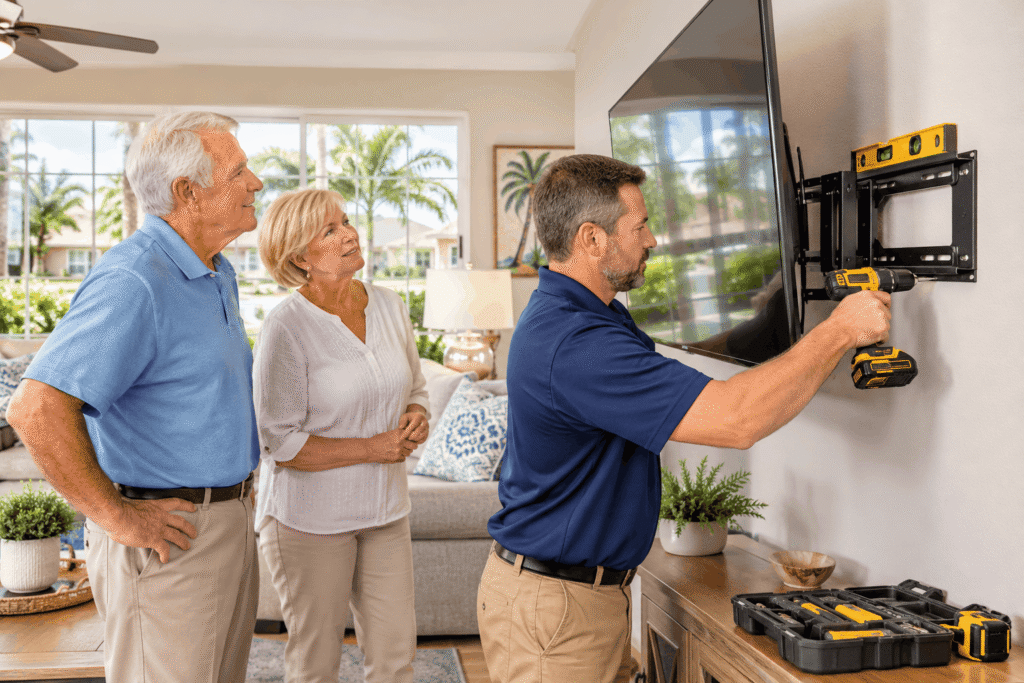
A new television can turn a quiet living room into the heart of the home. But many people find that the hardest part isn’t choosing the TV. It’s figuring out how to get it safely onto the wall. That’s why TV Mounting Services in The Villages, FL have become a common request among homeowners settling into Central Florida’s best-known retirement community.
Picture a couple who just moved into The Villages, FL, from up north. They bought a 65-inch screen for movie nights, unboxed it with excitement, and then stared at the wall. Where are the studs? Will the drywall hold? What about all those cables?
That moment of hesitation is far more common than most people admit.
Why TV Mounting Is More Than Drilling a Few Holes
Hanging a TV looks simple on home improvement shows. In real life, it involves a mix of carpentry, basic electrical awareness, and a good eye for comfort.
Modern flat-screens are thinner than older models, but larger screens still carry real weight. A mounted TV puts constant stress on the wall, the bracket, and the hardware. If any of those pieces is wrong for the job, the whole setup can loosen over time.
Wall construction also plays a big role. Many homes in The Villages have interior drywall over wood or metal framing, while exterior walls are often concrete block. Each surface needs different anchors and drilling methods. A bracket that works well on wood studs may fail on metal ones.
Then there’s the question of the mount itself. Fixed mounts keep the TV flat against the wall. Tilting mounts help reduce glare. Full-motion arms let viewers swing the screen toward a kitchen or reading chair. Choosing the wrong one can mean years of awkward viewing.
Common Challenges Homeowners Run Into
Florida sunshine is lovely, but it’s tough on screen visibility. Large windows and sliding doors to the lanai often create harsh glare during the afternoon. Placement and tilt angle make a noticeable difference here.
Fireplace mounting is another popular request, and it’s often a tricky one. A TV placed too high can lead to neck strain, especially for viewers who watch from a low sofa or recliner. Heat from a working fireplace can also shorten the life of the electronics.
Cable clutter is the third big frustration. Dangling cords look messy and can become a tripping hazard. Hiding them inside the wall requires care around insulation, fire blocks, and electrical lines. Some homeowners choose surface-mounted cord covers instead, which avoid cutting into the wall altogether.
The Real Benefits of Professional Mounting
The biggest benefit is peace of mind. A properly mounted TV stays put, even with grandchildren running through the house or a curious pet brushing past the stand.
Comfort is a close second. Installers who do this work daily know that the center of the screen should usually sit close to eye level when seated. That small detail can make evening shows far more relaxing.
There’s also the matter of protecting the home. Patching misplaced holes, repairing cracked drywall, or fixing a damaged wall cavity can cost more than the original installation. Getting it right the first time saves time and money.
For many older adults, safety is the deciding factor. Climbing ladders and lifting a heavy, awkward screen carries real risk. Handing that job to someone with the right tools and a second set of hands simply makes sense.
How This Plays Out in Everyday Homes
Consider a retired teacher who wants a TV in her bedroom, mounted on a full-motion arm so she can angle it toward the bed or her reading chair. The arm needs secure framing behind it, because extended arms put extra leverage on the wall.
Or think of a homeowner who spends most evenings on a screened lanai. Outdoor TVs need weather-rated mounts, careful outlet placement, and protection from humidity and afternoon storms. Standard indoor hardware won’t hold up long in that environment.
Manufactured and mobile homes present their own set of concerns. Walls in these homes are often thinner, and framing can be spaced differently than in site-built houses. Homeowners in nearby Marion County sometimes pair a mounting project with broader work, which is where Mobile Home Repair Services in Ocala, FL come into the picture, especially when walls need reinforcement before anything heavy goes up.
Even a simple living room project can grow. A homeowner might start by asking for a TV on the wall and end up adding a soundbar bracket, a floating shelf for a streaming box, and a new outlet behind the screen.
Choosing the Right Help
Residents tend to look for a few things when hiring someone for this kind of work. Clear communication, proper insurance, and a willingness to explain options all matter. A good installer will check the wall, discuss viewing height, and suggest the right mount instead of using whatever is in the truck.
Local handyman companies often handle these jobs alongside other small home tasks. Providers such as Early Bird Handyman are one example of the many local businesses that take on mounting, minor repairs, and general home upkeep across the region.
It’s also worth asking whether the installer will bring the hardware or use what came with the TV. Included screws are sometimes fine, but they aren’t always suited to every wall type.
Homeowners who live in manufactured homes may want to confirm that the person they hire understands that construction style. Some people find it easier to work with providers who also handle Mobile Home Repair Services in Ocala, FL, since they’re familiar with lighter framing and paneled walls.
Final Thoughts
A mounted TV can open up floor space, cut down on clutter, and make a room feel more finished. The difference between a great result and a frustrating one usually comes down to planning, proper hardware, and attention to the wall behind the screen.
For anyone weighing TV Mounting Services in The Villages, FL, a little research upfront goes a long way. Knowing the wall type, the TV’s weight, and how the room is actually used will lead to a setup that looks good and stays safe for years.
FAQs
How much does it usually cost to mount a TV?
Pricing depends on screen size, wall type, mount style, and whether cables are hidden in the wall. Basic installs cost less, while fireplace mounting or in-wall wiring typically adds to the total.
Can a TV be mounted on a concrete block wall?
Yes. Concrete block walls need masonry anchors and a hammer drill. When done correctly, block walls can provide very strong support.
How high should a TV be mounted?
A common guideline is to place the center of the screen near eye level when seated. For most living rooms, that lands around 40 to 45 inches from the floor to the screen’s center.
Is it safe to mount a TV in a mobile home?
It can be, but the wall framing must be located and sometimes reinforced first. Lighter construction means extra care is needed with heavier screens or full-motion mounts.
Do outdoor TVs need special mounts?
Yes. Outdoor setups should use weather-resistant mounts and hardware that resist rust. The TV itself should also be rated for outdoor or covered patio use.