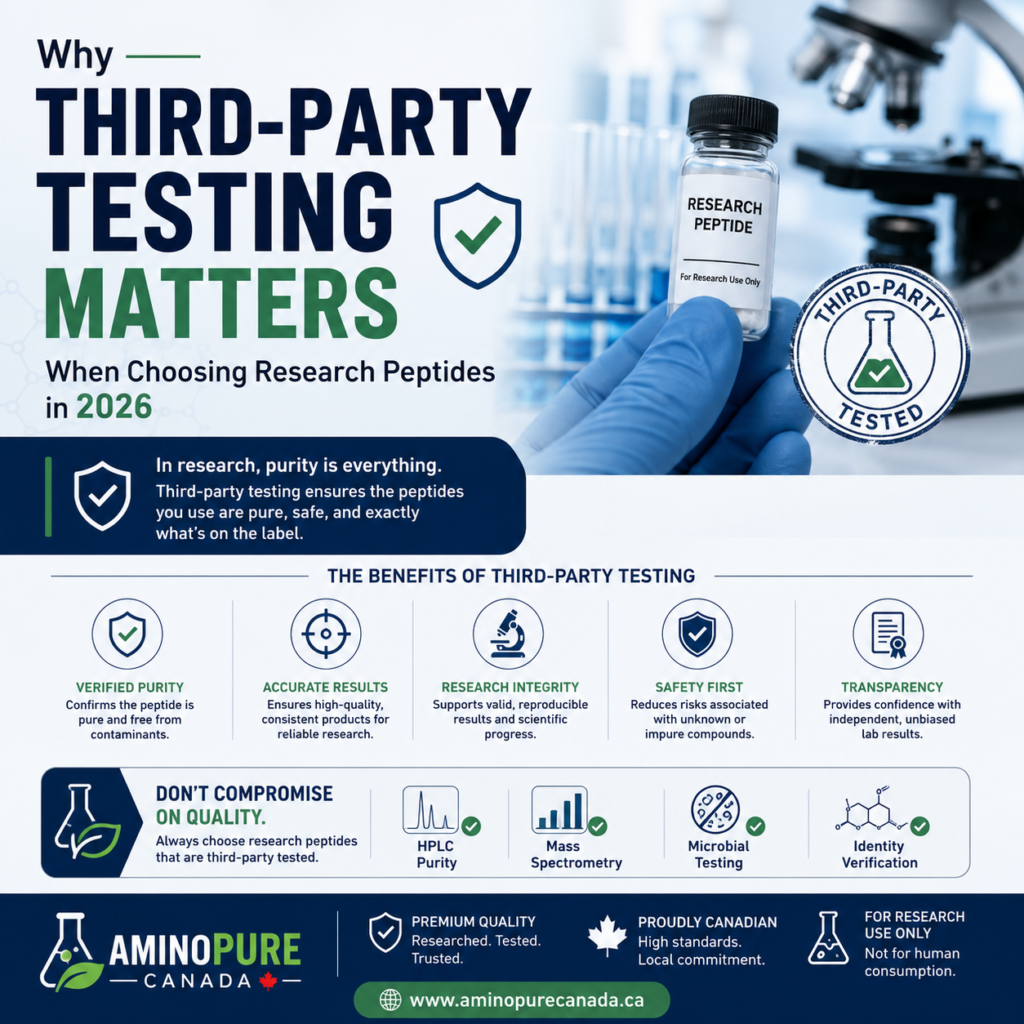
Scientific research relies on precision, consistency, and dependable laboratory materials. As the demand for research-grade peptides continues to grow, researchers are paying closer attention to one critical factor before making a purchase—third-party testing.
Independent testing has become a benchmark for quality assurance in the peptide industry. Rather than relying solely on a manufacturer’s internal quality checks, third-party laboratories provide unbiased verification of product purity, identity, and consistency. This additional level of transparency helps researchers confidently select products that meet the standards required for accurate and reproducible laboratory studies.
In this guide, we’ll explore why third-party testing matters, what it involves, and how it helps researchers choose high-quality research peptides in 2026.
What Is Third-Party Testing?
Third-party testing is the process of sending a product to an independent laboratory for analysis. The laboratory has no connection to the manufacturer or supplier, ensuring objective and unbiased results.
These laboratories use advanced analytical techniques to verify important product characteristics, including:
- Product identity
- Purity levels
- Batch consistency
- Chemical composition
- Product integrity
The results are typically documented in a Certificate of Analysis (COA), providing researchers with confidence in the quality of the research materials they purchase.
Why Is Third-Party Testing Important?
Quality is essential in laboratory research. Even small variations in research materials can affect experimental outcomes and reduce reproducibility.
Third-party testing helps researchers by:
- Confirming product purity
- Verifying product identity
- Supporting consistent laboratory results
- Increasing supplier transparency
- Reducing the risk of low-quality materials
Independent verification allows laboratories to make informed purchasing decisions based on documented quality standards rather than marketing claims.
How Third-Party Testing Improves Research Quality
Reliable research depends on dependable materials. Third-party testing supports scientific integrity in several ways.
1. Confirms Product Purity
Purity is one of the most important indicators of peptide quality. Independent laboratories verify purity using analytical techniques such as High-Performance Liquid Chromatography (HPLC).
Higher purity helps reduce contaminants that could interfere with laboratory experiments.
2. Verifies Product Identity
Third-party testing confirms that the peptide received matches the intended product. Accurate identification helps researchers work with confidence and minimizes the possibility of errors.
3. Ensures Batch-to-Batch Consistency
Consistency between production batches is critical for long-term research projects. Independent testing verifies that each batch meets the same quality standards, supporting reproducible results.
4. Supports Transparency
Suppliers who openly provide third-party testing reports demonstrate a commitment to transparency and quality. This builds trust among researchers and institutions.
Understanding Certificates of Analysis (COA)
A Certificate of Analysis (COA) is an official document summarizing the results of quality testing performed on a product.
A typical COA may include:
- Product name
- Batch number
- Purity percentage
- Testing methods
- Analytical results
- Date of testing
Researchers should always review a COA before purchasing research peptides whenever possible.
What Should Researchers Look for When Buying Research Peptides?
Choosing the right supplier is just as important as choosing the right peptide.
Before placing an order, consider the following:
High Purity Standards
Look for products supported by analytical testing and documented purity results.
Third-Party Laboratory Verification
Independent testing provides unbiased confirmation of quality.
Certificate of Analysis
Request or review COA documentation whenever available.
Transparent Product Information
Reliable suppliers clearly describe product specifications, storage guidelines, and testing procedures.
Supplier Reputation
Research suppliers with a strong reputation for quality, customer support, and consistency.
Common Mistakes to Avoid
Researchers should avoid:
- Purchasing products without purity documentation
- Ignoring third-party testing reports
- Choosing suppliers based only on price
- Buying from unverified sources
- Overlooking storage recommendations
- Failing to review product specifications
Avoiding these mistakes helps maintain laboratory accuracy and research integrity.
Why Choose Amino Pure Canada?
Researchers across Canada trust Amino Pure Canada for premium research-grade products supported by quality, transparency, and professional service.
Premium Research-Grade Peptides
Products are carefully selected to meet laboratory research standards.
Third-Party Tested Products
Independent verification provides additional confidence in product quality and consistency.
Certificate of Analysis Available
Many products include documentation supporting analytical testing and purity.
Fast Shipping Across Canada
Reliable nationwide delivery helps laboratories receive research materials quickly.
Wide Selection of Research Peptides
Access a broad range of high-quality laboratory compounds from one trusted source.
Secure Ordering Experience
Safe online purchasing with responsive customer support.
Commitment to Quality
Amino Pure Canada is dedicated to supplying dependable research materials that support scientific excellence.
Best Practices for Researchers
To maximize research quality:
- Purchase only research-grade peptides.
- Verify third-party testing whenever possible.
- Review Certificates of Analysis.
- Store products according to manufacturer recommendations.
- Work with trusted Canadian suppliers.
- Keep detailed laboratory records for consistency.
These best practices help improve reproducibility and support reliable scientific outcomes.
The Future of Quality Assurance in Peptide Research
As biotechnology and pharmaceutical research continue to advance, quality assurance will play an even greater role in the peptide industry.
Researchers increasingly expect:
- Greater supplier transparency
- More comprehensive analytical testing
- Improved manufacturing standards
- Enhanced batch consistency
- Better documentation and traceability
Third-party testing will remain one of the most trusted methods for verifying product quality and supporting reliable laboratory research.
Conclusion
Third-party testing has become an essential component of quality assurance in modern peptide research. By providing independent verification of purity, identity, and consistency, it helps researchers make informed purchasing decisions and supports accurate, reproducible laboratory results.
Choosing suppliers that prioritize transparency and quality—such as Amino Pure Canada—gives researchers greater confidence in the materials they use, allowing them to focus on advancing scientific discovery with reliable research-grade peptides.