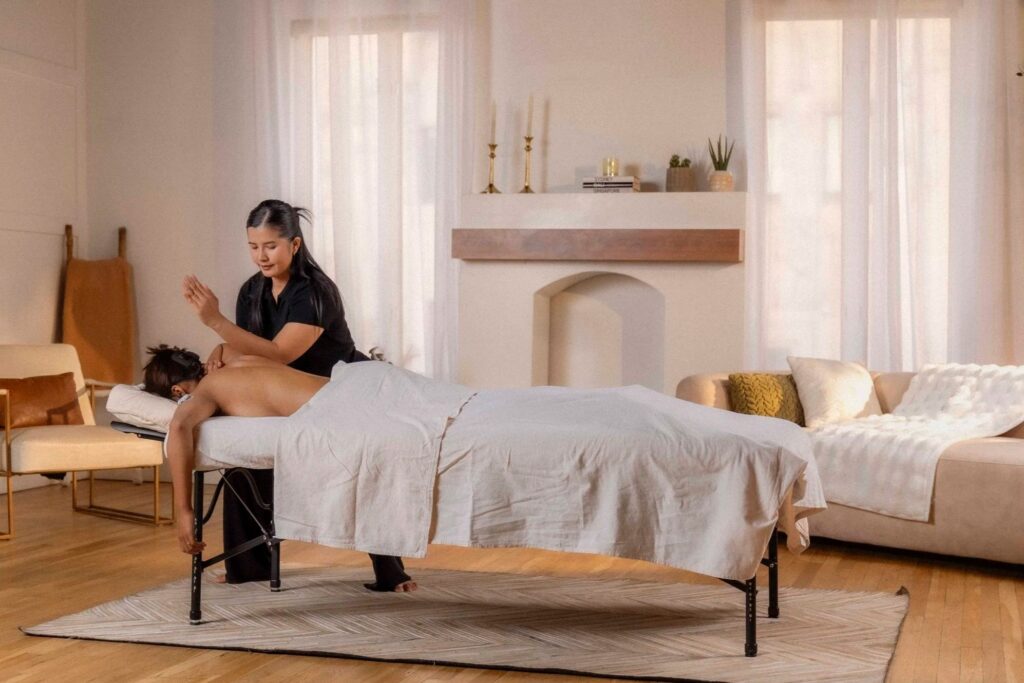
Active lifestyles place real demands on the body. Training, running, cycling, hiking, sports, and long workdays can leave muscles tight and movement less comfortable. Massage can help ease tension and encourage recovery.
What Is Thai Massage?
Thai massage combines pressure, assisted stretching, and guided movement. Sessions can include work on the legs, feet, hips, back, and shoulders. Traditional Thai bodywork is commonly performed on a mat, giving the therapist room to guide the body through different positions.
For active clients, this approach can help when stiffness limits movement. Pressure and stretching work together to encourage mobility for active recovery goals. Sen Flow Body provides mobile Thai bodywork in Phoenix and the greater East Valley. Thai sessions use a mat, with about a 10-by-10-foot area needed for mat work and stretching. The therapist brings equipment to the client’s home, hotel, or private space.
What Is Deep Tissue Massage?
Deep tissue massage focuses on deeper muscle layers and areas of tension. Therapists use firm, controlled pressure to work on specific muscles. It can suit active adults who experience tightness after demanding training or repeated movement.
A session may focus on the calves, glutes, hamstrings, shoulders, or back. Pressure should remain manageable, so clear communication matters. If a technique feels too intense, tell the therapist and request an adjustment. Sen Flow Body also provides deep tissue work through its mobile table massage service.
Thai Massage vs Deep Tissue Massage: Which Is Better for Active People?
The better option depends on your main goal. If stiffness and limited mobility are your concerns, Thai massage can be a strong choice. If you want focused work on specific areas of muscular tension, deep tissue massage may suit you better.
Consider these points:
- Thai massage combines pressure, movement, and assisted stretching. It can suit mobility-focused goals.
- Deep tissue massage uses focused pressure on deeper muscle layers. It can suit targeted muscle work.
- Thai massage is commonly performed on a mat, while deep tissue massage is generally performed on a table.
Your training schedule also matters. A gentler session may fit better near a demanding workout. Tell your therapist about recent exercise and sore areas.
How Does Thai Massage Compare With Swedish Massage?
The Thai massage vs Swedish massage comparison comes down to the type of bodywork you want. Swedish massage uses flowing strokes and light to moderate pressure, with an emphasis on relaxation and general muscle comfort. Thai massage adds assisted stretching and movement, making it more active.
For active clients, Thai massage vs Swedish massage can favor mobility work over pure relaxation. Swedish massage may fit someone who wants a calmer session after a busy week. Neither style is always better.
When Should Active People Choose Thai Massage?
Thai massage can work well when mobility is your main concern. It may suit clients who feel stiff through the hips, legs, shoulders, or back after regular physical activity. Alternatively, you can schedule a session to support ongoing mobility.
Before the session, share recent workouts, tight areas, and movement limits. Clear details help the therapist tailor the session.
When Is Deep Tissue Massage a Better Choice?
Deep tissue massage may fit when one or two areas need focused attention. A runner with tight calves, a cyclist with tense hips, or a gym-goer with upper-back tension may prefer targeted pressure.
Deeper pressure is not always better. A massage should not become a test of pain tolerance. Sharp or excessive discomfort is a reason to speak up and request a change in technique.
How Can You Choose the Right Massage?
A quick comparison can help:
- Choose Thai massage for assisted stretching, movement, and mobility-focused work.
- Choose deep tissue massage for focused pressure on areas with muscular tension.
- Choose Swedish massage for relaxation and flowing strokes.
The Thai massage vs deep tissue massage decision also depends on timing. Think about what your body needs today rather than choosing only by the massage name. Your therapist can adjust pressure and focus after hearing about your activity level. Sen Flow Body brings massage equipment to homes, hotels, and private spaces across Phoenix and nearby East Valley communities. Thai sessions need a 10 by 10 foot area, while table massage needs an 8 by 10 foot space.
What Should You Tell Your Massage Therapist?
Share your recent training, areas of tension, pressure preference, and any movement that causes discomfort. Mention whether your goal is mobility, focused muscle work, or relaxation.
The Thai massage vs Swedish massage comparison becomes clearer after you define your goal. Someone seeking movement and stretching may prefer Thai work, while someone seeking calm bodywork may prefer Swedish techniques.
Final Thought
There is no single winner in the Thai massage vs deep tissue massage debate. Active people have different bodies, training loads, recovery needs, and pressure preferences. Thai massage can suit mobility-focused goals, while deep tissue massage can provide targeted work for muscular tension.
Compare your needs, communicate clearly, and choose the style matching your body and activity.