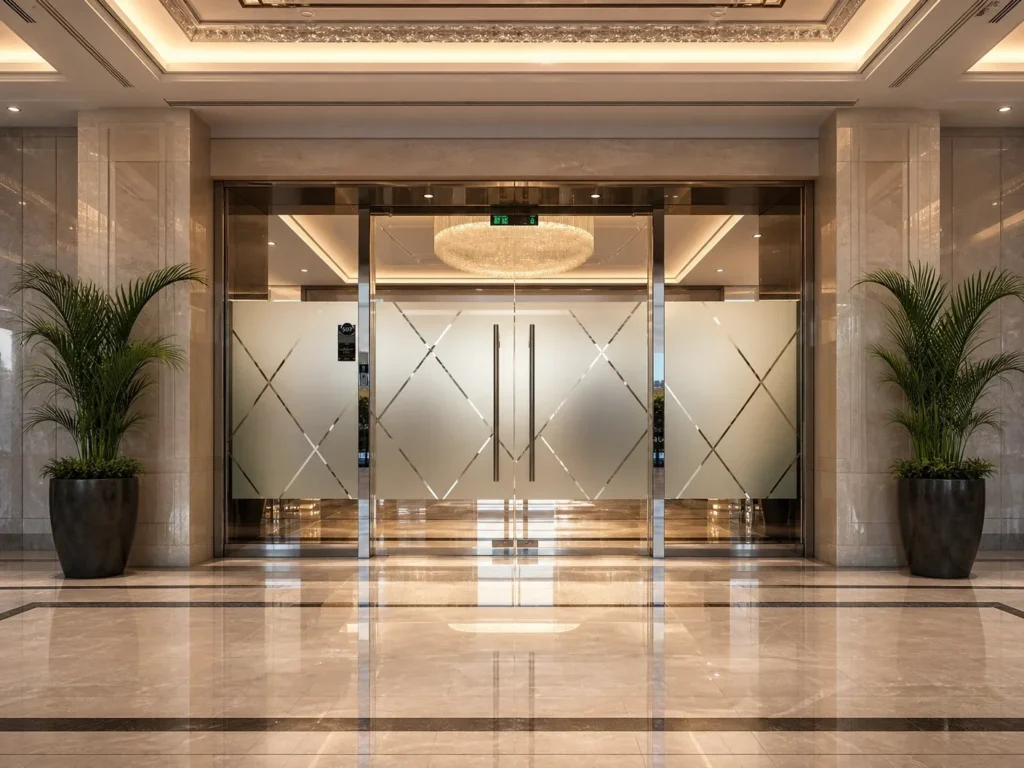
Glass has become an important part of modern commercial interiors. Offices, clinics, shops, hotels, restaurants, and showrooms often use glass doors, partitions, and windows to bring in daylight and create a more open environment. But complete visibility is not always practical.
A meeting room may need more privacy, a reception area may benefit from subtle branding, and a storefront may need visual decoration without blocking the entire window. These requirements do not always mean the existing glass needs to be replaced. A carefully planned Frosted Sticker can change the way a glass surface looks and functions while keeping the original panel in place.
Start With the Purpose of the Glass
The right treatment begins with understanding why the glass needs to be changed.
An office partition might only need privacy around eye level. A boardroom may require broader coverage because confidential discussions take place there. A reception door could need a company logo, while a retail window may require graphics that remain visible to people outside.
These situations call for different approaches. Choosing a design only because it looks attractive can lead to unnecessary coverage or a finish that does not suit the way the space is used.
Before making a decision, consider the position of the glass, viewing angles, amount of natural light, room function, and surrounding interior.
Turn Glass Into Part of the Brand
Glass surfaces are often overlooked when businesses plan their interior branding. Yet entrance doors, reception panels, meeting-room partitions, and storefront windows can all become part of the visual identity of a business.
Branding does not have to cover an entire panel. A company name, logo, pattern, or selected graphic can be placed where visitors are most likely to notice it while keeping the surrounding glass relatively open.
For businesses that want artwork, logos, text, or brand elements incorporated into the surface, printed glass graphics offer more flexibility. They can combine visual identity with a translucent finish, making the glass useful for both presentation and practical screening.
This can be particularly effective in reception areas, showrooms, office entrances, and customer-facing spaces.
Privacy Does Not Always Require Full Coverage
One common mistake is assuming that an entire glass panel needs to be covered whenever privacy is required.
In many workplaces, the main concern is direct visibility at seated or standing eye level. A privacy band may be enough. In other rooms, more extensive coverage may be appropriate.
Partial treatment can therefore provide a useful middle ground. It reduces unwanted views while keeping parts of the glass clear and allowing the space to retain its open character.
The position of desks, chairs, computer screens, corridors, and entrances should also be considered. Privacy should be planned around how people actually use the room, not just around the dimensions of the glass.
Create a Softer Transition Between Clear and Frosted Areas
Some interiors do not suit a strong dividing line between transparent and covered glass.
A fade-effect glass design creates a gradual change from clear to frosted. Instead of stopping suddenly at one point, the frosted area becomes progressively lighter.
This can work well in executive offices, meeting rooms, consultation spaces, reception areas, and contemporary workplaces. It can provide visual screening while keeping the glass from appearing too heavy.
The direction and amount of the fade can also be considered according to the shape of the panel and the amount of privacy required. For larger connected panels, the design can be planned so the transition remains consistent across the installation.
When More Office Privacy Is Necessary
Certain areas naturally require greater visual separation.
Boardrooms may be used for confidential discussions. HR offices can contain sensitive employee information. Interview rooms, executive cabins, and consultation spaces may also need to prevent people outside from seeing directly inside.
In these situations, office glass privacy film can be positioned according to the actual privacy requirement. Full coverage can be considered where stronger screening is needed, while eye-level sections may be sufficient for areas where some openness is preferred.
The advantage of planning coverage around the room is that different spaces do not have to look exactly the same. A meeting room beside a busy corridor may need a different treatment from an internal office.
Keep Natural Light Where Possible
Privacy and natural light do not necessarily have to be opposing goals.
Frosted film has a translucent appearance, so it can reduce direct visibility while still allowing daylight through the glass. This is particularly useful in offices where businesses want private rooms without making them feel closed off.
A well-planned design can leave selected areas clear while screening the sections that create the most visibility problems.
For example, a meeting-room partition may have stronger coverage across the central viewing area while leaving upper sections clearer. The exact arrangement depends on the room, furniture placement, and privacy requirement.
Make Branding and Privacy Work Together
Businesses do not always have to choose between branding and privacy.
A reception door can display a company logo while reducing visibility into the office. A meeting-room partition can carry a subtle brand pattern while providing screening. A showroom window can feature custom graphics while leaving important product areas visible.
Combining these functions can make better use of existing glass.
The important point is to keep the design appropriate to the space. Too many graphics can make a small area feel crowded, while a carefully positioned logo or pattern can make the glass feel like a natural part of the interior.
Choose a Design That Matches the Business
Different commercial environments have different visual requirements.
A corporate office may prefer simple lines, subtle branding, and controlled privacy. A clinic may place greater importance on comfort and visual separation. A showroom or retail store may have more freedom to use graphics and decorative elements.
The surrounding furniture, wall finishes, lighting, signage, and existing branding should therefore be considered before the design is finalised.
A good treatment should not look disconnected from the rest of the interior. It should complement the space and serve a clear purpose.
Measure the Glass Before Production
Accurate measurements are important when planning a custom glass treatment.
The width and height of each panel should be checked, along with door handles, frames, hinges, joins, and other features that could affect the layout. Businesses should also consider whether the glass is mainly viewed from inside, outside, or both directions.
This information helps determine where logos, privacy areas, patterns, and other graphics should be positioned.
For multiple adjoining panels, consistency also matters. A design that continues across several sections should be aligned carefully so the finished result does not appear uneven.
Consider Installation and the Finished Edges
The quality of the final appearance depends on more than the design itself.
Glass should be properly prepared before the material is applied. Accurate positioning is important around door edges, frames, corners, handles, and adjoining panels.
A small alignment issue can be noticeable on a large glass surface, particularly in reception areas or meeting rooms where people view the panels from close range.
For commercial projects, businesses should therefore consider both the artwork and how the finished material will be applied to the glass.
Existing Glass Can Often Be Updated
Commercial interiors change over time. A business may move into a new office, add meeting rooms, update its branding, or discover that a previously open area needs more privacy.
Replacing complete glass panels is not always necessary for these changes.
A surface treatment can provide a way to update existing doors, partitions, windows, and other suitable glass areas without changing the underlying structure. This can be useful when a business wants a visual improvement while keeping the existing layout.
For Dubai businesses, this approach can suit offices, clinics, retail stores, hotels, restaurants, showrooms, and other commercial environments where glass is already part of the interior.
Questions to Ask Before Choosing a Glass Treatment
Before approving a design, it is useful to answer a few practical questions:
- Where is privacy actually needed?
- How much of the glass should remain clear?
- Does the space need branding as well as screening?
- Will natural light need to pass through?
- Is the design suitable for the surrounding interior?
- Are there several glass panels that need to follow the same pattern?
- Does the design need professional installation?
Answering these questions can make the final choice much easier and can prevent unnecessary coverage or an unsuitable layout.
Frequently Asked Questions
1. Can frosted film provide privacy while keeping natural light?
Yes. Frosted film is translucent rather than completely opaque, so it can reduce direct visibility while still allowing daylight through the glass. The actual privacy level depends on the material, coverage, lighting, and distance from the glass.
2. Does the whole glass panel need to be covered?
No. Coverage can be limited to the areas where privacy or branding is needed. Eye-level bands, partial designs, fade effects, and other layouts can leave selected portions of the glass clear.
3. Can company logos and graphics be added to the glass?
Yes. Custom glass graphics can incorporate company logos, names, patterns, artwork, and other visual elements. The layout can be planned around the dimensions and purpose of the glass.
4. Where are privacy treatments commonly used in offices?
Meeting rooms, boardrooms, executive offices, HR areas, interview rooms, consultation spaces, and glass partitions are common applications. The suitable coverage depends on what needs to remain outside direct view.
5. Can existing glass be treated without replacing it?
In many suitable applications, yes. A surface-applied film or vinyl can be installed on existing glass, allowing businesses to change its appearance or visibility without replacing the complete panel. The glass surface should be assessed before installation.
Conclusion
Commercial glass can do much more than divide one space from another. With the right treatment, it can support privacy, branding, decoration, and better use of an existing interior without removing the openness that glass provides.
The most practical approach is to begin with the purpose of the space. A meeting room may need privacy, a reception area may need branding, and a showroom may need visual graphics. Once these requirements are clear, the amount of coverage, design style, and placement can be planned around the actual environment.
For businesses considering an update to their glass doors, partitions, windows, or reception areas, thoughtful planning can make a noticeable difference. The result should not simply look good—it should make the glass more useful for the people who work in, visit, and move through the space.