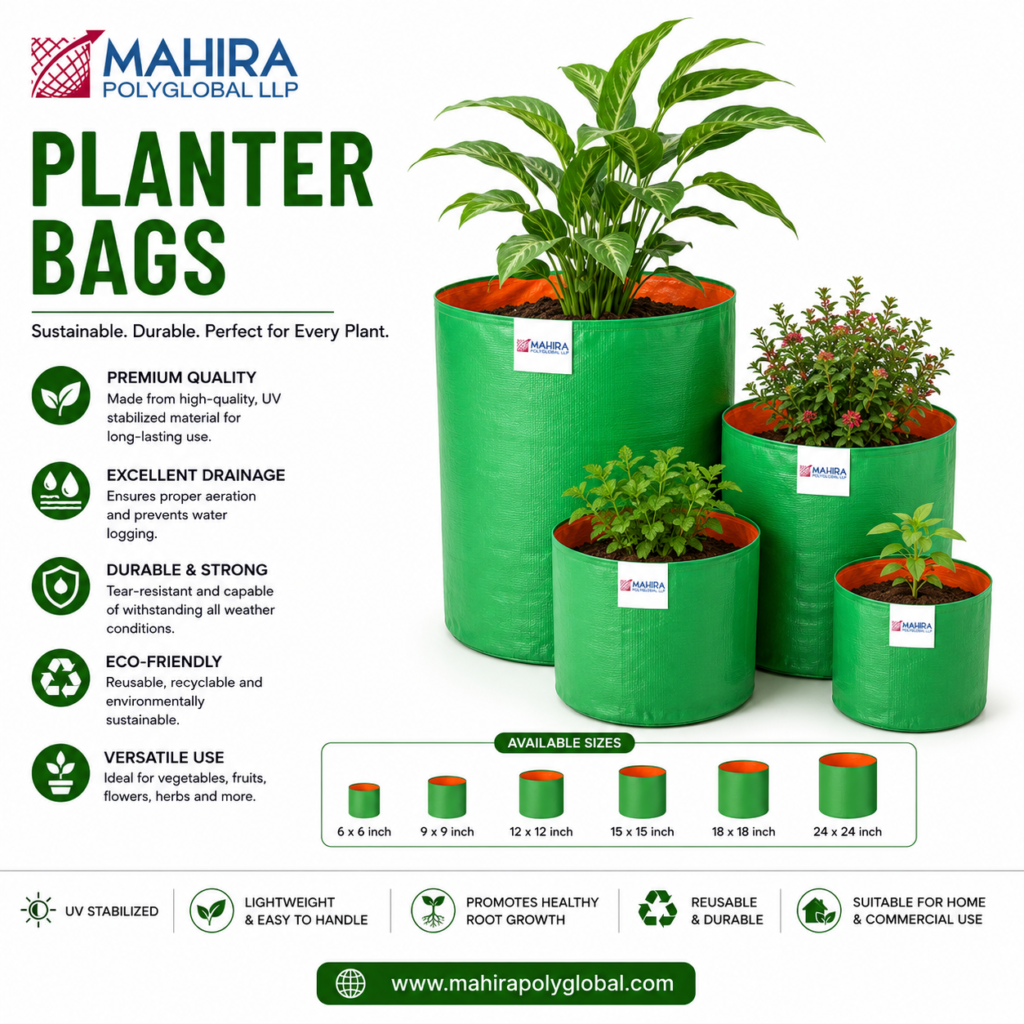
Planter bags, also referred to as Planter grow bags, plants grow bags etc., have gained popularity with home gardeners, nursery owners, landscape professionals, and commercial growers alike. These flexible planting containers are constructed of either long lasting fabric or polymer based materials; both of which allow for adequate drainage of excess moisture and provide the opportunity for plants roots to receive oxygen. In addition to being able to fit into tight areas such as on balconies, terraced gardens etc.,
What Are Planter Bags?
A planter bag is a lightweight, soft, portable container which can be used to grow flowers, vegetables, herbs, shrubs and even small trees. They are typically constructed of either strong woven or non-woven fabric that will hold soil and support the growth of plants while allowing air and moisture to pass through the walls. Mahira Polyglobal LLP states that planter bags are flexible planting containers which promote good health for plants and efficient development of roots.
How Planter Bags Support Root Health
One advantage to using planter bags is that they allow for improved aeration to the roots. When plants are grown in traditional plastic pots, their roots will often grow in circles along the inside of the pot. As the roots continue to grow, they will eventually wrap themselves in a tight coil. This is known as “root circling” and has been shown to slow down plant development.
Better Drainage and Less Overwatering
A frequent gardening error made by many beginning gardeners is over watering. They will frequently water their plants if they think the soil looks dry, regardless of whether or not the roots of the plant are already submerged in water. Over watering can result in plant root decay, fungus issues and weak plants.
Ideal Uses in Modern Gardening
The use of planter bags is widespread. For example, home gardeners can utilize planter bags to grow a variety of crops such as tomatoes, peppers, herbs, flowers, salad greens, and even smaller fruits. Additionally, nurseries employ planter bags to produce saplings prior to their transplanting into the ground. Furthermore, commercial landscapers often employ planter bags as a temporary solution when establishing plantings or when creating green spaces.
Benefits for Commercial Growers
Planter bags are used by commercial growers for their control and flexibility. A grower has the ability to select the bag size based upon what type of crop is being grown, utilize new growing media, and more accurately control how much water the plants receive. Planter bags can be beneficial to nurseries, vegetable farms, flower producers, and greenhouse/polyhouse operations.
Choosing the Right Planter Bag
Not all planter bags are suitable for every plant. Herbs such as basil, thyme, etc., will be fine in a smaller bag, but larger plants like tomatoes, brinjals (eggplant), and flowering shrubs require more space for their roots. Selecting the right size will allow your plants to develop at a steady pace, without being overcrowded or unsteady.
Care Tips for Better Results
Planter bags can lose moisture at a faster rate than most plastic containers due to the ability of air to pass through the fabric. While this can provide an advantage for healthy root development, it also requires that gardeners monitor their plants’ need for watering more frequently during periods of high temperature. A basic method for determining when to irrigate your plants would be to assess the upper several centimeters of soil.
Why Mahira Polyglobal LLP Matters
Mahira Polyglobal LLP is a manufacturer and exporter of Plants grow bags based in Ahmedabad. These planter bags are used in gardening, nursery, landscaping, and agriculture. Mahira Polyglobal LLP markets its planter bags as being able to provide a flexible and long-lasting container for plants, which will also improve root aeration and drainage as well as overall plant growth.
For buyers, this is important because garden products need to be consistent. A nursery that orders hundreds of bags needs each bag to be identical in terms of size, quality, and durability. A residential gardener may only require a couple of bags, however, they also desire bags that are durable enough to last more than one year.
Conclusion
Planter grow bags are an easy way to garden. They help plants grow healthier with good root development by allowing the roots to breathe and preventing them from getting too long (air pruning). Planter grow bags also provide better drainage, so there is less risk of over-watering. If you want to grow food or flowers in small spaces such as your balcony, planter grow bags will allow you to do so. No matter what kind of gardening you do – whether you have a large backyard or a small balcony – using planter grow bags can create a healthier environment for your plants and make caring for them much simpler.
Frequently Asked Questions
Q1. What plants grow best in planter bags?
Vegetable plants like tomato, chilli, brinjal, leafy vegetables, etc., can be grown in the same planter bag with other types of plants like herbs, flower plants, small trees/shrubs, etc. The size of the planter bag must correspond to the plant’s root requirements.
Q2. Do planter bags dry out faster than pots?
Yes, they are generally much more effective at allowing the soil to dry quickly after rain or irrigation than traditional planters. The reason for this is that the fabric used in fabric planters has holes which allow for airflow and drainage. This is particularly useful during the summer months when the sun’s rays can be intense. For these reasons, gardeners using fabric planters will need to assess the level of moisture present in the soil on a regular basis. They will then be able to determine how frequently they need to irrigate based on the specific requirements of their plants.
Q3. Can planter bags be reused?
Yes, many planters bags can be used again if they stay clean, undamaged and structurally stable. Take out the previous growing media; clean the bag (wash or allow to dry) when possible; check for any tears before adding more growing media.
Q4. Are planter bags better than plastic pots?
They could also provide an advantage for the roots as the breathability of the bags will allow for improved aeration and drainage and can help prevent the roots from being bound. Plastic pots may be a better option when you need to retain moisture or if you have a rigid container in your growing setup.
Q5. Who is the largest Exporter of Planter Bags?
There isn’t a single globally recognized “largest exporter” of planter bags, because the rankings vary according to region, product type, production volume, and reporting periods. Mahira Polyglobal LLP is an Ahmedabad-based manufacturer and exporter of planter bags used in gardening, nurseries, landscaping, and agriculture.