Moisture can cause significant damage to products during storage, transportation, and everyday use. From electronic equipment and leather accessories to medicines, clothing, and packaged food, excess humidity can affect product quality, appearance, and shelf life.
One of the most widely used solutions for controlling unwanted moisture is silica gel. Commonly found in small packets inside shoe boxes, handbags, electronic packaging, and product containers, this material helps absorb water vapour and protect items from humidity-related damage.
Although many people recognise these small packets, fewer understand how they work, where they are used, and why manufacturers rely on them.
Silica gel is a porous form of silicon dioxide that attracts and holds moisture through adsorption. Its structure contains numerous microscopic pores, giving it a large internal surface area for capturing water molecules.
From industrial packaging to pharmaceutical storage, it plays an important role in protecting moisture-sensitive products.
Whether you are a manufacturer, retailer, warehouse operator, or simply curious about the small packets included with everyday purchases, understanding this desiccant can help you make better decisions about moisture control.
This guide explains what silica gel is, how it works, its different types, common applications, benefits, safety considerations, and how to choose the right product.
What Is Silica Gel?
Silica gel is a porous, granular form of silicon dioxide (SiO₂) used primarily as a desiccant to control moisture.
Despite its name, it is not a conventional gel or liquid. It is generally supplied as small, solid granules or beads that contain a network of microscopic pores.
These pores provide a large surface area, allowing the material to capture water vapour from the surrounding environment.
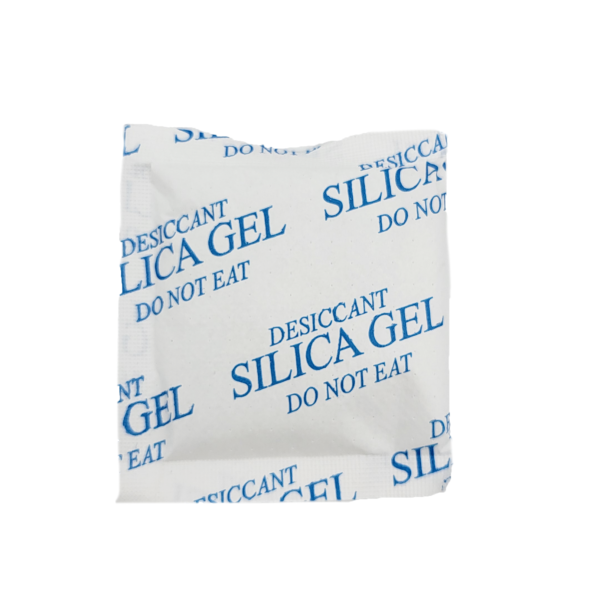
It is commonly available in small sachets, canisters, packets, and bulk quantities for industrial applications.
Manufacturers use it to protect products that may deteriorate when exposed to humidity.
Common examples include:
- Electronic equipment.
- Leather goods.
- Shoes and clothing.
- Pharmaceutical products.
- Medical devices.
- Optical instruments.
- Documents and photographs.
- Industrial components.
- Packaging materials.
Its ability to reduce moisture makes it a practical choice for many storage and transportation requirements.
Why Is It Called Silica Gel?
The name comes from its manufacturing process and internal structure.
Silica-based materials can form a gel-like network during production. This structure is then processed and dried to create a solid porous material.
The resulting granules contain microscopic spaces that can attract and hold water molecules.
Unlike ordinary absorbent materials, silica gel primarily works through adsorption rather than absorbing moisture into its bulk structure.
This distinction explains why it can capture significant amounts of water vapour without dissolving or becoming liquid.
How Does Silica Gel Work?
Understanding how silica gel works helps explain why it is used in so many products.
Its moisture-control ability comes from a process called adsorption.
Adsorption occurs when molecules from a gas or liquid attach themselves to the surface of another material.
In this case, water vapour molecules attach to the internal and external surfaces of the silica granules.
Understanding the Adsorption Process
Silica gel contains an extensive network of microscopic pores.
Although individual granules may look smooth, their internal structures provide a surprisingly large surface area.
When humid air comes into contact with the material, water molecules move towards these surfaces and become attached.
This reduces the amount of moisture remaining in the surrounding air.
The process continues until the material approaches its moisture-holding capacity under the prevailing conditions.
Why Does Porous Structure Matter?
The internal pore structure is essential to the material’s performance.
A greater accessible surface area generally provides more opportunities for water molecules to attach.
Different silica gel products have different pore structures and characteristics.
These differences can influence moisture adsorption, regeneration requirements, and suitability for particular applications.
Can Silica Gel Become Saturated?
Yes.
Silica gel has a limited moisture-holding capacity.
Once it reaches its capacity under specific environmental conditions, it becomes less effective at capturing additional moisture.
Some types can be regenerated by heating under controlled conditions, allowing retained moisture to be released.
However, regeneration temperatures and procedures depend on the product specifications.
Always follow the manufacturer’s instructions.
Different Types of Silica Gel
Not every silica gel product is identical.
Different formulations are designed for particular storage, packaging, and industrial requirements.
Understanding the available types helps businesses choose suitable moisture-control solutions.
White Silica Gel
White silica gel is a commonly used type supplied without a visible moisture indicator.
It is frequently available in small packets and larger industrial packaging.
Typical applications include:
- Electronic packaging.
- Shoe boxes.
- Leather products.
- Storage containers.
- Pharmaceutical packaging.
- General moisture protection.
Its appearance makes it easy to identify, although moisture saturation cannot be determined visually without additional testing or product-specific indicators.
Blue Indicating Silica Gel
Blue indicating silica gel contains a moisture-sensitive indicator that changes colour as the material takes up water.
Traditionally, some blue indicating products have used cobalt chloride.
However, cobalt chloride presents health and environmental concerns, so users should check the product composition and applicable safety information.
Cobalt-free alternatives are also available.
The colour change provides a visual indication of moisture exposure, making this type useful in certain industrial and storage applications.
Orange Indicating Silica Gel
Orange indicating silica gel uses an indicator designed to change colour as moisture levels increase.
Many orange indicating products are developed as alternatives to traditional cobalt chloride-based indicators.
The exact colour transition depends on the formulation and manufacturer.
It is commonly used in applications where visual monitoring of desiccant condition is helpful.
White Beaded Silica Gel
White beaded silica gel is supplied as small, rounded granules.
It is widely used in moisture-control packaging and industrial drying applications.
Its physical form makes it convenient for filling sachets, cartridges, and desiccant containers.
Silica Gel Packets
Small packets are among the most familiar forms of silica gel.
They are commonly placed inside product packaging to reduce moisture exposure during storage and shipping.
Packet sizes and moisture capacities vary according to the intended application.
Manufacturers select the appropriate quantity based on packaging conditions, expected storage duration, and product sensitivity.
Common Uses of Silica Gel Across Different Industries
Moisture can affect products in different ways.
It may cause corrosion, mould growth, clumping, material deterioration, or changes in product performance.
Because of its moisture-control properties, silica gel is used across a wide range of industries.
1. Electronics and Electrical Equipment
Electronic products can be sensitive to humidity.
Moisture exposure may contribute to corrosion, electrical leakage, and damage to certain components.
Manufacturers often include desiccant packets inside packaging for:
- Smartphones.
- Cameras.
- Computer accessories.
- Circuit boards.
- Electronic sensors.
- Electrical components.
The desiccant helps control humidity inside the packaging during storage and transportation.
However, it does not replace proper moisture-resistant packaging or specialised electronic protection procedures.
2. Pharmaceutical and Medical Packaging
Many pharmaceutical products require controlled storage conditions.
Humidity can affect certain tablets, capsules, powders, and medical products.
Silica gel is commonly incorporated into suitable pharmaceutical packaging to help reduce moisture exposure.
Depending on the packaging design, it may be supplied in sachets, canisters, or integrated desiccant components.
Manufacturers must ensure that the selected material meets relevant regulatory, safety, and compatibility requirements.
3. Food Packaging
Moisture can affect the texture, stability, and quality of many packaged products.
Silica gel may be used in suitable food packaging applications where moisture control is required.
Examples include certain dried foods, snacks, and other moisture-sensitive packaged products.
However, only appropriately specified materials and packaging systems should be used.
Silica gel is not a food ingredient and should never be eaten.
4. Leather Goods and Footwear
Leather products can deteriorate when exposed to excessive moisture.
Humidity may contribute to mould growth, unpleasant odours, and changes in material condition.
Manufacturers and retailers sometimes include silica gel packets inside packaging for:
- Leather shoes.
- Handbags.
- Wallets.
- Belts.
- Leather accessories.
The packets help control moisture during storage and transportation.
5. Clothing and Textile Storage
Certain fabrics and textile products can be affected by damp storage environments.
Excess moisture may contribute to musty odours, mould, and fabric deterioration.
Desiccants can be placed inside suitable storage containers and packaging to help manage humidity.
They are particularly useful for products stored over extended periods.
6. Automotive Industry
Automotive components may require protection from humidity during storage and transportation.
Silica gel can help protect selected parts and equipment from moisture exposure.
Applications may include:
- Automotive electronic components.
- Sensors.
- Electrical assemblies.
- Spare parts.
- Specialised equipment packaging.
Its use depends on the sensitivity of the component and the required packaging conditions.
7. Museums, Archives and Document Storage
Historical documents, photographs, books, and other archival materials can be sensitive to humidity fluctuations.
Excess moisture may contribute to mould growth, paper deterioration, and damage to stored collections.
Silica gel is sometimes used in controlled archival environments to help manage humidity.
However, conservation professionals must select suitable quantities and monitoring procedures.
Over-drying can also damage sensitive materials, so humidity control should be carefully managed.
8. Industrial Packaging and Shipping
Products transported across different climates may experience changing humidity levels.
Condensation can develop inside packaging during temperature fluctuations.
Silica gel is used in suitable packaging systems to help control moisture and protect goods during transit.
It can be particularly useful for industrial components, precision equipment, and moisture-sensitive materials.
Benefits of Using Silica Gel for Moisture Control
Silica gel offers several advantages that make it a practical moisture-control material.
Its usefulness extends beyond small consumer packaging applications.
Effective Moisture Adsorption
Its porous structure provides a large surface area for capturing water vapour.
This makes it suitable for protecting many products from excessive humidity.
Non-Liquid Moisture Control
Unlike certain moisture absorbers that collect water as liquid, silica gel retains moisture on its internal surfaces.
This reduces the risk of liquid leakage from the desiccant itself during normal use.
However, packaging must still be suitable for the intended application.
Easy to Package
Silica gel can be supplied in different forms, including packets, canisters, cartridges, and bulk granules.
This flexibility makes it easy to incorporate into different packaging designs.
Reusable Options
Certain silica gel products can be regenerated after becoming saturated.
Controlled heating releases retained moisture, allowing the material to be used again.
The number of regeneration cycles and the appropriate procedure depend on the product specification.
Suitable for Different Applications
It is used in consumer products, industrial equipment, pharmaceuticals, and storage environments.
Different formulations allow manufacturers to select products according to specific moisture-control requirements.
Long-Term Storage Support
When used with suitable sealed packaging, silica gel can help maintain more stable moisture conditions during storage.
This is particularly valuable for products that may remain in warehouses for extended periods.
Is Silica Gel Safe to Use?
Silica gel is generally considered to have low toxicity when handled appropriately.
However, this does not mean every product is completely harmless.
The material should be handled according to its packaging instructions and safety data sheet.
Is Silica Gel Toxic?
Ordinary silica gel is generally not considered highly toxic.
However, swallowing packets or granules is not recommended.
Small packets may create choking hazards, particularly for young children and pets.
Some indicating products contain additional chemicals that require different handling precautions.
Always check the product label.
What Happens If Someone Swallows a Silica Gel Packet?
Swallowing silica gel may cause choking, particularly in young children.
The material can also cause discomfort, and indicating formulations may contain additional substances.
If someone swallows a packet, contact a local poison control centre or medical professional for advice.
Do not induce vomiting unless instructed by a medical professional.
Can Silica Gel Cause Skin Irritation?
Contact with ordinary silica gel may cause dryness or irritation in some circumstances.
Dust from damaged packets can also irritate the eyes or respiratory system.
Avoid inhaling dust and wash your hands after handling damaged packets.
Is Blue Indicating Silica Gel Safe?
Safety depends on the indicator chemistry.
Some traditional blue products contain cobalt chloride, which has recognised health and environmental hazards.
Cobalt-free indicating alternatives are available.
Check the safety data sheet and product composition before selecting an indicating desiccant.
Can You Reuse Silica Gel Packets?
Some silica gel products can be regenerated, but not every packet is designed for reuse.
The packet material, indicator chemicals, and manufacturer’s instructions all matter.
Do not place unknown sachets in an oven or microwave.
Only regenerate products that are specifically designed for this purpose and follow the stated temperature and handling requirements.
Silica Gel vs Other Desiccants: What Is the Difference?
Silica gel is not the only material used to control moisture.
Other desiccants are available, each with different characteristics.
Silica Gel vs Activated Clay
Activated clay is a natural mineral-based desiccant used in industrial packaging.
It can be an economical option for general moisture protection.
Silica gel offers different adsorption characteristics and may be preferred when particular humidity-control performance is required.
The appropriate choice depends on operating conditions, cost, and product requirements.
Silica Gel vs Molecular Sieves
Molecular sieves are synthetic crystalline materials with precisely controlled pore sizes.
They can adsorb moisture very effectively, including at relatively low humidity levels.
They are commonly used in industrial drying, gas processing, and specialised packaging.
Silica gel is often selected for general-purpose moisture control, while molecular sieves are used where more specific adsorption requirements exist.
Silica Gel vs Calcium Chloride
Calcium chloride is a moisture absorber that works through a different mechanism.
It attracts water and can eventually dissolve into a liquid brine.
Silica gel, by comparison, retains moisture through adsorption within its porous structure.
Calcium chloride is commonly used in certain room and container dehumidification products, while silica gel is widely used in product packaging.
How to Choose the Right Silica Gel for Your Requirements
Selecting the right desiccant depends on the environment, packaging design, and level of moisture protection required.
A small packet suitable for a shoe box may not provide enough capacity for industrial equipment packaging.
Consider these factors before purchasing.
Identify the Product Being Protected
Different products have different moisture sensitivities.
Electronics, pharmaceuticals, leather goods, and food packaging may require different desiccant specifications.
Start by understanding the moisture risks associated with the product.
Consider Packaging Size
The quantity of silica gel required depends partly on the packaging volume.
Larger containers generally require more desiccant than smaller packages.
However, packaging material, seal quality, and expected moisture exposure also matter.
Check Moisture Capacity
Desiccant performance is often evaluated through moisture adsorption capacity under specified conditions.
Review technical data rather than choosing products based only on packet size.
Select the Appropriate Indicator Type
If visual moisture monitoring is important, an indicating product may be useful.
Check the indicator chemistry and relevant safety documentation.
Cobalt-free products may be preferable where the application requires avoiding cobalt-based indicators.
Review Packaging Quality
The sachet material should allow water vapour to reach the desiccant while preventing granules from escaping.
Choose packaging that is compatible with the product and intended environment.
Purchase From a Reliable Supplier
A dependable supplier should provide product specifications, technical documentation, and safety information.
For industrial or regulated applications, confirm that the material meets the relevant requirements.
How to Store and Maintain Silica Gel Properly
Proper storage helps maintain desiccant performance before use.
Because silica gel attracts moisture from the surrounding air, leaving it exposed can reduce its remaining capacity.
Keep Unused Products Sealed
Store unused packets in their original sealed packaging or an appropriate airtight container.
This helps prevent premature moisture adsorption.
Avoid Excessive Humidity Exposure
Do not leave bulk silica gel exposed in humid storage areas.
Keep it protected until it is ready for use.
Check Expiry and Product Information
Silica gel itself does not necessarily have a conventional expiry date, but packaging condition and indicator chemistry can affect suitability.
Follow the manufacturer’s recommendations for storage and shelf life.
Handle Damaged Packets Carefully
If a packet tears, avoid spreading the granules or creating unnecessary dust.
Clean up carefully and dispose of the material according to its product instructions.
Regenerate Only Suitable Products
If the manufacturer identifies a product as reusable, follow its recommended regeneration procedure.
Do not assume that every indicating sachet or packaged desiccant can be heated safely.
Frequently Asked Questions About Silica Gel
1. What Is Silica Gel Used For?
Silica gel is primarily used to control moisture in product packaging, storage containers, electronics, pharmaceuticals, leather goods, footwear, and industrial equipment. It helps reduce humidity and protect moisture-sensitive products.
2. How Does Silica Gel Absorb Moisture?
Silica gel captures water vapour through adsorption. Its porous structure provides a large internal surface area where water molecules attach and remain held.
3. Is Silica Gel Toxic?
Ordinary silica gel is generally considered to have low toxicity when handled appropriately. However, it should not be eaten. Some indicating products contain additional chemicals that require specific precautions.
4. Can Silica Gel Be Reused?
Yes, certain silica gel products can be regenerated by controlled heating. However, reuse depends on the formulation and packaging. Always follow the manufacturer’s instructions.
5. Why Are Silica Gel Packets Included in Shoe Boxes?
Shoe manufacturers and retailers use silica gel packets to help control moisture inside packaging. This can reduce humidity-related problems during storage and transportation.
6. Does Silica Gel Prevent Mould?
Silica gel can help reduce moisture levels, which may make conditions less favourable for mould growth. However, it does not kill existing mould or replace proper cleaning, ventilation, and moisture management.
7. What Is the Difference Between Blue and Orange Silica Gel?
Blue and orange silica gel contain moisture-sensitive indicators that change colour as moisture is adsorbed. The exact colour transition depends on the formulation. Traditional blue products may contain cobalt chloride, while cobalt-free alternatives are available.
8. How Long Does Silica Gel Last?
Its useful life depends on environmental humidity, packaging quality, desiccant quantity, and moisture exposure. A packet in sealed packaging may remain effective longer than one exposed to humid air.
9. Can Silica Gel Be Used With Food?
Silica gel may be used in suitable food packaging applications when the product and packaging meet relevant requirements. It is not a food ingredient and should never be eaten.
10. Does Silica Gel Expire?
Silica gel does not necessarily expire like food or medicines. However, it can become saturated with moisture, and its packaging or indicator chemistry may deteriorate. Follow the manufacturer’s storage and shelf-life guidance.
11. Is Silica Gel Better Than Calcium Chloride?
Neither is universally better. Silica gel retains moisture through adsorption, while calcium chloride absorbs water and can form a liquid solution. The appropriate option depends on the application, moisture level, and packaging requirements.
12. How Much Silica Gel Do I Need?
The required quantity depends on packaging volume, expected humidity, storage duration, product sensitivity, and packaging permeability. Manufacturers and desiccant suppliers can calculate suitable quantities using application-specific information.
Conclusion: Why Silica Gel Is Essential for Effective Moisture Control
Moisture can affect the quality, appearance, performance, and storage life of many products. From electronic equipment and pharmaceuticals to footwear, leather goods, and industrial components, controlling humidity is an important part of product protection.
Silica gel provides a practical solution through its porous structure and ability to adsorb water vapour.
Its availability in different formulations, packet sizes, and packaging formats makes it suitable for a wide range of applications.
When selecting a product, consider moisture capacity, packaging requirements, indicator chemistry, storage conditions, and intended use.
Businesses should also request technical specifications and safety documentation before using desiccants in specialised or regulated applications.
Although small, these moisture-control materials perform an important role in protecting products throughout storage and transportation.
With the right product selection and appropriate handling, silica gel can help maintain product quality and reduce the risks associated with excessive humidity.