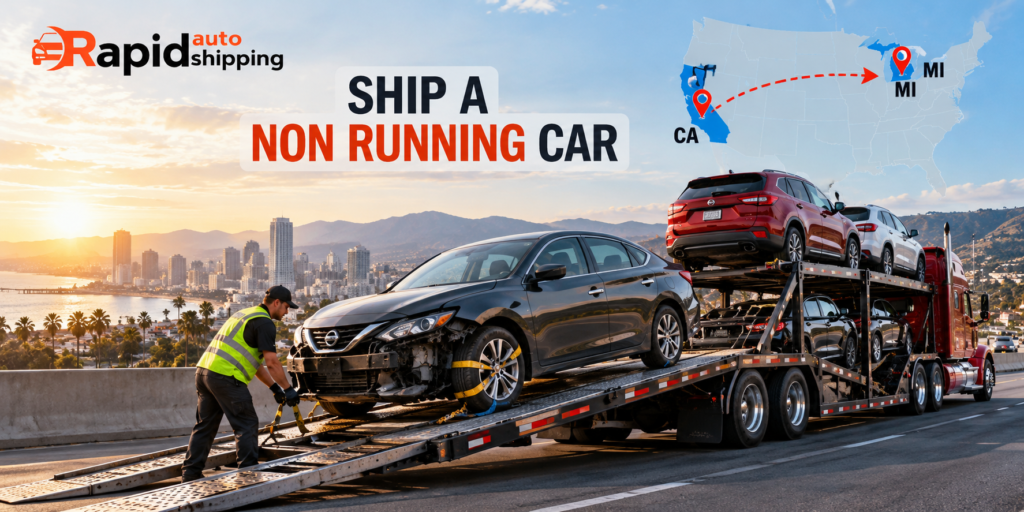
Shipping a vehicle that will not start can feel complicated, especially when you need to move it across state lines or transport it to a repair shop, dealership, auction, or new home. The good news is that you do not necessarily need a running vehicle to arrange professional auto transport. With the right equipment, a suitable carrier, and proper planning, you can ship a non-running car throughout the United States.
Whether your vehicle has a dead battery, engine failure, transmission problems, accident damage, or has been sitting unused for years, understanding your transport options can help you avoid unnecessary expenses. Rapid Auto Shipping helps customers explore vehicle shipping solutions, compare transport options, and arrange transportation based on their vehicle’s condition and route.
In this guide, you will learn how to ship a non running car, what affects shipping costs, which transport methods are available, how to prepare your vehicle, and how to choose a reliable carrier. You will also discover practical ways to reduce costs without compromising safety.
What Does It Mean to Ship a Non-Running Car?
To ship a non-running car means transporting a vehicle that cannot operate normally under its own power. Unlike a standard vehicle shipment, which typically involves driving or loading a functioning car, inoperable vehicle transport may require specialized equipment to load, secure, and unload the vehicle.
A car can be considered inoperable for several reasons, including:
- A dead battery or electrical system failure
- Engine or transmission problems
- Accident damage that prevents the vehicle from moving
- Flat, missing, or damaged tires
- Broken steering or braking components
- A vehicle that has been stored for an extended period
- Mechanical problems that make driving unsafe
The exact condition matters because not every non-running vehicle requires the same equipment. A car that starts but cannot be driven safely may need a different loading arrangement from a vehicle with locked wheels, damaged suspension, or no functioning steering.
When requesting a quote, explain whether the vehicle rolls, steers, brakes, and can shift into neutral. Accurate information helps the transport provider identify a suitable carrier and avoid unexpected loading complications.
How to Ship a Non Running Car in the USA
Arranging non-running car shipping becomes easier when you understand the process before booking.
1. Collect Your Vehicle Information
Start by gathering essential details about the car. These typically include the year, make, model, pickup address, delivery destination, and preferred shipping dates.
You should also describe the vehicle’s mechanical condition. For example, mention whether the engine will not start, the battery is dead, the wheels are locked, or the car has suffered accident damage.
If possible, provide photographs showing the exterior, tires, wheels, and any significant damage. Clear photos can help the transport provider evaluate loading requirements.
2. Request a Specialized Auto Transport Quote
When you contact Rapid Auto Shipping, request a quote specifically for an inoperable vehicle. Do not assume that a standard running-car shipping estimate includes the equipment needed for a non-running car.
Your quote should reflect the vehicle’s condition, route, shipping distance, transport method, and any special loading requirements.
Ask whether the quoted amount includes winching, additional loading equipment, residential pickup, and other applicable charges. Understanding these details upfront helps you compare offers more accurately.
3. Choose the Right Transport Equipment
A vehicle that does not start may require a winch, specialized loading equipment, or another suitable solution. Cars with locked wheels, significant accident damage, or compromised steering may need more specialized handling.
Discuss your vehicle’s exact condition before selecting a carrier. The provider should confirm that the assigned equipment can safely load and transport it.
4. Confirm Pickup and Delivery Arrangements
Once you select a suitable option, confirm the pickup window, estimated transit time, delivery location, and contact details.
Make sure the pickup and delivery areas have enough room for the carrier to operate. If the vehicle is located in a narrow residential street, underground parking garage, or restricted-access facility, an alternative meeting point may be necessary.
5. Inspect the Vehicle and Complete the Handover
Before loading, document the vehicle’s condition with dated photographs and review the inspection report or bill of lading.
At delivery, inspect the vehicle again and record any new damage before signing the final paperwork, following the carrier’s claims procedure if necessary.
How Much Does It Cost to Ship a Non-Running Car?
The cost to ship a non-running car varies according to the route, vehicle condition, equipment requirements, distance, and availability of suitable carriers. There is no single price that applies to every inoperable vehicle shipment.
A non-running vehicle often costs more to transport than a comparable running car because loading and unloading may require additional labor or equipment.
Factors That Affect Non-Running Car Shipping Prices
Shipping distance: Longer routes generally have higher total transportation costs. However, the price per mile can sometimes be lower on long-distance shipments than on short routes.
Vehicle condition: A car that rolls, steers, and brakes may be easier to load than one with locked wheels, severe damage, or a nonfunctional steering system.
Vehicle size and weight: Larger vehicles, heavy SUVs, vans, and trucks may require more space or specialized equipment.
Transport method: Open transport is often the more economical choice when suitable equipment is available. Enclosed transport may offer additional protection but can cost more and may not be appropriate for every inoperable vehicle.
Pickup and delivery locations: Rural areas, restricted-access properties, and locations far from common carrier routes may increase costs.
Season and demand: Shipping demand, carrier availability, weather conditions, and seasonal relocation patterns can influence prices.
Loading requirements: Winching, special handling, or additional equipment may affect the final quote.
Can You Save Up to 30%?
Potential savings depend on the original quote, route, vehicle condition, and available carrier capacity. A claim such as “save up to 30%” should not be treated as a guaranteed discount for every shipment.
To reduce your costs, compare itemized quotes for the same route and service level. Ask whether the price includes all required loading equipment and whether any additional charges could apply.
You may also save by maintaining flexible pickup dates, choosing a convenient loading location, and selecting open transport when it is suitable for your vehicle.
The best approach is to compare the complete service and final price rather than choosing the lowest initial estimate.
Best Ways to Transport a Non-Running Vehicle
Choosing the right transport method is essential when you need to ship a non-running car. The best option depends on whether the vehicle rolls, steers, brakes, and can be safely secured.
Open Auto Transport
Open auto transport is commonly used for standard vehicle shipping and may be available for non-running vehicles when the carrier has appropriate loading equipment.
It can be a cost-effective option for everyday cars, project vehicles, and vehicles being moved between states. However, not every open carrier is equipped to handle every inoperable vehicle.
Before booking, confirm that the carrier can load your specific vehicle and that any required winching or special equipment is included in the quote.
Enclosed Auto Transport
Enclosed auto transport moves vehicles inside a covered trailer, providing protection from direct exposure to road debris and weather during transit.
This option may be worth considering for classic cars, collectible vehicles, luxury models, or valuable project cars. However, enclosed carriers have specific loading limitations, and not all can accommodate non-running vehicles.
Ask whether the enclosed carrier can safely handle your car’s condition, dimensions, and loading requirements before making a reservation.
Winch-Assisted Loading
Winch-assisted loading can help move a vehicle that cannot drive onto a suitable transport trailer. A winch pulls the vehicle into position using appropriate equipment and secure attachment points.
This method may work for a car with a dead battery or engine failure if the wheels roll and the vehicle can be safely controlled.
If the wheels are locked, the steering is damaged, or the vehicle cannot roll, additional equipment may be necessary. Tell the provider about these limitations before booking.
Flatbed or Specialized Vehicle Transport
Some non-running vehicles are better suited to a flatbed or specialized transport arrangement. This can be relevant for heavily damaged cars, vehicles with unusual dimensions, or cars that require particular loading procedures.
A flatbed is not automatically the best choice for every inoperable vehicle. Equipment suitability, route distance, loading access, and the vehicle’s condition all need to be considered.
How to Prepare a Non-Running Car for Shipping
Proper preparation helps reduce delays and makes vehicle handover easier.
Document the Vehicle’s Condition
Take clear photos of the exterior, interior, tires, wheels, and existing damage. Keep copies of relevant paperwork and note any mechanical problems that could affect loading or transport.
Remove Personal Belongings
Remove loose personal items and valuables unless the provider has explicitly confirmed that particular items are permitted. Personal belongings may not be covered by the carrier’s cargo insurance and can create weight or safety issues.
Check the Tires and Wheels
Tell the carrier if any tires are flat, missing, or unable to roll. Locked or damaged wheels can significantly change the equipment needed to load the vehicle.
Secure Loose Components
Remove or secure loose exterior parts, including detachable accessories that could fall off during transport. Inform the carrier about body damage or components that cannot be secured safely.
Provide Keys When Required
Even if the car does not start, the carrier may need the keys to access the ignition, steering lock, trunk, or other components. Confirm key requirements before pickup.
Share Accurate Access Information
Explain whether the car is in a garage, driveway, repair facility, auction yard, or restricted-access property. Provide any height, clearance, gate, or scheduling restrictions in advance.
Discuss Battery and Fuel Conditions
Tell the provider if the battery is disconnected, damaged, or missing. Follow the carrier’s instructions for fuel levels and any safety concerns involving leaking fluids or damaged electrical components. A vehicle with a suspected fuel leak or other hazardous condition may require special arrangements before transport.
How to Choose a Reliable Non-Running Car Shipping Company
Choosing a suitable transport provider is about more than finding a low price. The company should understand inoperable vehicle requirements and arrange transportation that matches the car’s condition.
Verify Carrier Credentials
Check the motor carrier’s applicable federal registration and operating authority through the Federal Motor Carrier Safety Administration (FMCSA), where relevant. You can also review available safety and insurance information.
Understand whether the company you contact is a broker arranging transportation, a motor carrier performing the transport, or a business offering both services. Ask who will actually transport your vehicle.
Confirm Insurance Details
Ask for information about the transporting carrier’s cargo insurance and what it covers. Coverage can vary, and exclusions may apply to pre-existing damage, mechanical problems, personal belongings, or specific vehicle conditions.
Do not assume that every form of vehicle damage is automatically covered. Request clarification about applicable limits, exclusions, deductibles, and the claims process.
Request a Written Quote
A written quote should clearly identify the route, vehicle condition, transport method, estimated schedule, and included services. Ask about possible additional fees for winching, special equipment, or difficult pickup access.
Review Communication and Scheduling
A reliable provider should explain the process, communicate changes, and set realistic expectations. Be cautious of promises of guaranteed pickup times or unusually low prices that are not supported by clear terms.
Review the Inspection and Claims Process
Before booking, understand how vehicle condition is documented at pickup and delivery. Keep your photographs, quote, agreement, inspection reports, and communications in an accessible place.
Why Choose Rapid Auto Shipping?
Shipping a vehicle that cannot run requires careful planning, accurate condition details, and the right transport arrangement. Rapid Auto Shipping can help customers explore non-running vehicle shipping options for domestic routes across the United States.
When requesting a quote, provide the vehicle’s year, make, model, pickup and delivery locations, preferred dates, and a clear description of its mechanical condition. Mention whether the car rolls, steers, brakes, and can shift into neutral.
This information helps determine which transport arrangements may be suitable and whether specialized loading equipment is required.
Before confirming your shipment, review the quote, carrier assignment, insurance details, loading arrangements, and expected pickup window. Confirm any additional equipment charges in writing.
Whether you are moving a project car, transporting a vehicle after a breakdown, relocating a classic car, or delivering an inoperable vehicle to a repair facility, the right planning can help make the process more straightforward.
Request a quote from Rapid Auto Shipping to discuss your vehicle’s condition and compare available transport options.
Common Mistakes to Avoid When Shipping a Non-Running Car
Avoiding a few common mistakes can help prevent unexpected costs and scheduling problems.
Not disclosing mechanical issues: Failing to mention locked wheels, broken steering, or accident damage can result in unsuitable equipment being dispatched.
Choosing a quote based on price alone: A low estimate may not include specialized loading or other necessary services. Compare the full price and scope of service.
Assuming every carrier transports inoperable vehicles: Equipment and loading capabilities vary. Confirm suitability before booking.
Overlooking pickup access: A large transport truck may not be able to reach a narrow street, low-clearance garage, or restricted property.
Failing to document existing damage: Photographs and inspection reports provide a useful record of the vehicle’s condition before and after transportation.
Expecting an exact delivery time too early: Transit estimates can change because of weather, route conditions, carrier schedules, and other operational factors. Ask for a realistic delivery window and updates.
FAQs About Shipping a Non-Running Car
1. Can I ship a car that does not start?
Yes. You can often ship a car that does not start, provided a suitable carrier and loading method are available. The carrier needs to know why the vehicle does not start and whether it can roll, steer, and brake.
2. How much does it cost to ship a non-running car?
The price depends on distance, vehicle size, mechanical condition, route demand, transport method, and loading requirements. Inoperable vehicles may cost more than running cars because they can require extra equipment or labor. Request a quote based on your specific vehicle and route.
3. Is shipping a non-running car more expensive?
It often is, but not always by the same amount. A car that rolls and steers may require relatively straightforward loading, while one with locked wheels or severe damage can require specialized equipment and additional handling.
4. Can a non-running car be shipped across the country?
Yes, cross-country transport may be possible when a carrier with appropriate equipment is available. Provide the exact pickup and delivery locations and disclose any mechanical or loading limitations when requesting a quote.
5. Do I need to be present when the car is picked up?
You may not always need to be present personally, but an authorized person may need to provide access, keys, and vehicle information and complete the required paperwork. Confirm the carrier’s handover requirements in advance.
6. Can I ship a car with flat tires?
Possibly. The carrier needs to know whether the tires are flat, damaged, missing, or unable to roll. Depending on the condition, special loading equipment may be necessary.
7. Can I ship a car with a locked steering wheel?
It may be possible, but locked steering can complicate loading and positioning. Disclose the issue before booking so the provider can determine whether the carrier has suitable equipment.
8. Is open or enclosed transport better for a non-running car?
Open transport may be more economical, while enclosed transport provides additional protection from weather and road debris. The right choice depends on the vehicle’s value, condition, loading requirements, and the equipment available.
9. How long does non-running car shipping take?
Transit time varies with distance, route, carrier availability, pickup scheduling, weather, and loading requirements. Ask for an estimated pickup and delivery window rather than relying on a universal timeline.
10. How can I save money when shipping a non-running car?
Compare complete written quotes, keep pickup dates flexible where possible, provide accurate vehicle details, and consider open transport if suitable. Verify whether winching and other required equipment are included before comparing prices.
11. Is a non-running car covered by carrier insurance?
Coverage depends on the transporting carrier’s policy, terms, and exclusions. Request insurance details and clarify how pre-existing damage, mechanical issues, and damage during loading or transit are handled.
12. How do I get a quote from Rapid Auto Shipping?
Provide your vehicle’s year, make, model, pickup and delivery locations, preferred dates, and a detailed description of its condition. Explain whether the vehicle rolls, steers, brakes, and can shift into neutral so the appropriate transport options can be evaluated.
Final Thoughts
You do not necessarily need a working engine to move a vehicle to another state. When you ship a non running car, the key is to match the vehicle’s condition with suitable equipment, a qualified carrier, and a clear transport agreement.
Compare quotes carefully, verify carrier credentials and insurance information, document the vehicle’s condition, and disclose mechanical problems before pickup. These steps can help reduce delays, avoid unexpected charges, and make your shipping experience more predictable.
If you need to move an inoperable vehicle within the United States, contact Rapid Auto Shipping to explore available options and request a quote tailored to your route and vehicle condition.