Aircraft O-rings undergo mandatory visual inspections during routine maintenance checks for signs of cracking, flat spots, or hardening. Mechanics use specialized magnifying tools to detect micro-abrasions or contamination embedded within the elastomer surface. Any seal showing signs of wear or deformation is immediately discarded and replaced with a fresh component. Adhering to these strict inspection schedules prevents unexpected in-flight hydraulic or pneumatic failures.
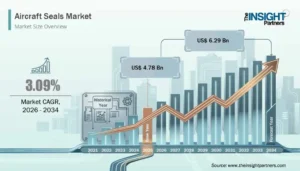
The global Aircraft O-Rings Market was valued at US$ 142.36 million in 2025 and is projected to reach US$ 182.26 million by 2034, expanding at a Steady Compound Annual Growth Rate (CAGR) of 2.78% during the forecast period of 2026–2034.
The growth of the aircraft O-rings market is primarily propelled by the ongoing post-pandemic fleet expansion, rising global passenger traffic, and accelerated production schedules across major commercial and defense aircraft original equipment manufacturers (OEMs). O-rings are critical elastomeric, metallic, and thermoplastic sealing components installed across key aviation applications including engines, nacelles, fuel systems, hydraulic actuation systems, flight control mechanisms, and landing gear where leak-proof operation under extreme thermal and pressure conditions is vital for operational safety.
Besides OEM assembly lines, routine inspection cycles and strict aviation safety standards established by regulatory authorities (such as the FAA and EASA) drive reliable recurring revenue through Maintenance, Repair, and Overhaul (MRO) channels. As operational aircraft age globally, operators are replacing degraded seals with advanced fluoroelastomer (FKM), fluorosilicone, and PTFE-based O-rings designed to tolerate prolonged fluid exposure, aggressive synthetic jet fuels, and high mechanical strain.
Get a PDF Sample- https://www.theinsightpartners.com/sample/TIPRE00024852
Executive Insights & Key Market Trends
-
Engine and Hydraulic Systems Leading Demand: Modern commercial turbofans and hydraulic actuation systems operate under higher compression ratios and elevated thermal thresholds, making thermal stability a key selection criterion for aerospace-grade O-rings.
-
Shift Toward Sustainable Aviation Fuels (SAF): As airlines ramp up adoption of SAF blends, sealing components are exposed to new chemical compositions. Manufacturers are engineering high-performance elastomers capable of resisting chemical degradation without compromising elasticity or seal integrity over extended service intervals.
-
Commercial Aviation Fleet Modernization: Single-aisle narrow-body aircraft production continues to serve as a primary demand driver. Fleet expansion across North America, Europe, and Asia-Pacific is generating substantial backlogs for aerospace component suppliers.
Key Industry Players
The market features a mix of established global multi-industrial manufacturers, aerospace component specialists, and regional precision sealing providers. Prominent players operating in the global aircraft O-rings market include:
-
EnPro Industries
-
Freudenberg Group
-
Greene Tweed and Co., Inc.
-
Hutchinson SA
-
Parker-Hannifin Corporation
-
Saint-Gobain S.A.
-
Trelleborg AB
-
Viton
-
Aerospace Fasteners Incorporated
-
Ge Mao Rubber Industrial Co., Ltd Inc
These industry players are prioritizing material R&D, long-term supply agreements with commercial and defense aerospace OEMs, and expanding specialized MRO supply networks to maintain competitive advantage.
Future Outlook (2026–2034)
Looking ahead to 2034, the market is poised to experience structural shifts fueled by next-generation aircraft programs, urban air mobility (UAM) platforms, and hybrid-electric propulsion systems. Over the coming years, aerospace sealing manufacturers will place a heavier emphasis on lightweighting and extreme-environment polymers to support eco-efficient aircraft architectures.
Furthermore, digitalized MRO inventory systems and on-demand precision manufacturing will help mitigate supply chain disruptions for critical maintenance spares. While raw material price fluctuations and strict certification timelines pose operational challenges, sustained growth in international air transit, military fleet modernization, and MRO service expansion will ensure a steady upward trajectory for the global aircraft O-rings industry through 2034.
Related Reports-
Aircraft Engine Component Market Share, Growth & Forecast by 2034
Aircraft Engine Seals Market Size, Growth & Forecast by 2034
About The Insight Partners
The Insight Partners is a leading market research and consulting firm delivering actionable insights through in-depth industry analysis and strategic intelligence. The firm supports clients across various industries in making informed business decisions by providing comprehensive market forecasts, competitive assessments, and growth opportunities.
Contact Us:
If you have any queries about this report or if you would like further information, please contact us:
Contact Person: Ankit Mathur
E-mail: sales@theinsightpartners.com
Phone: +1-646-491-9876
Also Available in : Korean| German| Japanese| French| Chinese| Italian| Spanish