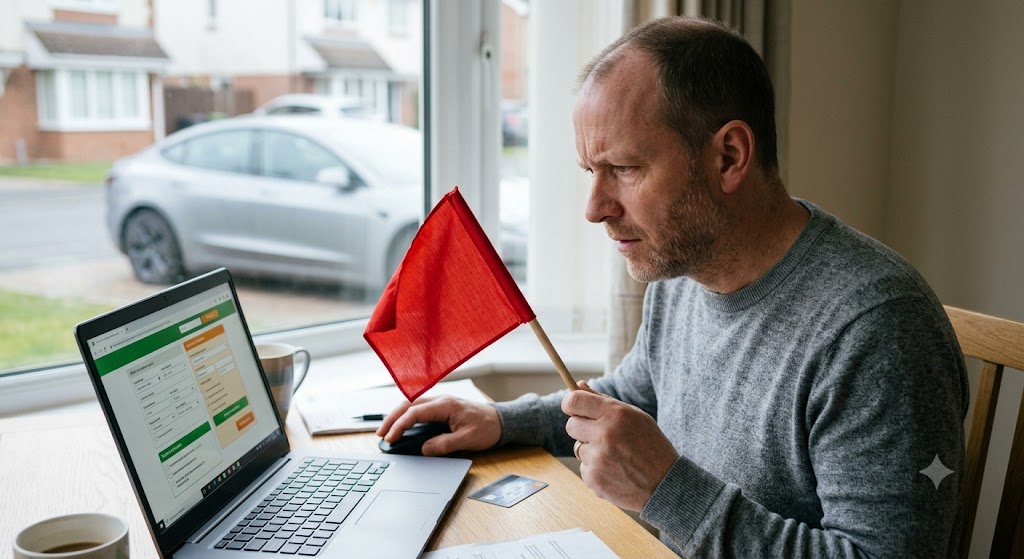
Red Flags to Watch Out for When Buying Car Insurance Online
The convenience of buying insurance online has also made it easier for questionable practices to slip past a buyer who is moving quickly. Before buying a new car insurance, knowing which warning signs to watch for protects you from a policy that looks fine at purchase and disappoints at claim time.
Red Flag One: A Premium That Looks Too Good
If one quote sits meaningfully below every other comparable quote, the difference usually traces to something excluded from the comparison rather than genuine efficiency. This is especially important when buying a new car insurance policy, as the initial premium can vary based on coverage and policy features. Check the declared value first, since a lower Insured Declared Value produces a lower premium and a lower payout ceiling by the same logic.
Check next whether the low quote is genuinely comprehensive or has been defaulted to third-party-only, or whether standard add-ons other insurers include as default are priced separately here. An unusually low premium is a reason to look closer, not a reason to buy faster.
Red Flag Two: Vague or Missing Policy Wording Before Purchase
A legitimate insurer provides the full policy wording, not just a summary, before you pay. If a platform pushes you toward payment while only showing a features list and withholding the actual policy document, that is worth pausing over.
The policy wording is what governs any future claim, and a summary that highlights benefits while obscuring exclusions is not a substitute for reading the actual terms, even briefly, before committing.
Red Flag Three: Pressure Tactics and Artificial Urgency
Countdown timers, “only 2 left at this price,” or aggressive follow-up calls pushing same-day payment are sales tactics, not insurance features. Genuine insurance pricing does not expire in minutes, and a legitimate quote remains valid for a reasonable period.
If you feel rushed into a decision before you have compared alternatives or read the schedule, that pressure itself is the red flag, independent of whether the underlying policy turns out to be adequate.
Red Flag Four: No Verifiable Claim Settlement Data
Every genuine insurer publishes claim settlement ratios, since this is regulatory-mandated disclosure. If a platform selling you a policy cannot point you to this data, or the insurer behind the policy is difficult to identify clearly, that is a meaningful gap in what should be basic, available information.
Be particularly cautious of intermediary platforms that obscure which insurer is actually underwriting the policy until after payment, since this prevents you from checking settlement history before committing.
Red Flag Five: Payment to an Individual or Non-Standard Account
Legitimate car insurance online is paid to the insurer directly or through a recognised payment gateway integrated with the insurer’s system. Payment requested to a personal bank account, an unfamiliar third-party account, or through an unofficial link sent via message or email is a serious warning sign of fraud, not a legitimate discount mechanism.
If an agent or platform asks for payment outside the standard, insurer-branded checkout flow, stop and verify independently before proceeding, ideally by contacting the insurer directly through their official website or customer service number.
Red Flag Six: No Physical or Verifiable Registered Address
A legitimate insurer or authorised intermediary has a verifiable registered address and IRDAI registration details, typically displayed in the website footer or terms page. Platforms that are difficult to identify beyond a name and a payment page warrant independent verification before you trust them with payment and personal vehicle details.
Red Flag Seven: Declared Value That Was Never Discussed
If you reach the payment stage without having seen or confirmed the Insured Declared Value anywhere in the process, that is a process failure worth stopping for. This figure should be visible and confirmable before payment, not buried in a schedule you only see after the transaction completes.
What to Do When You Spot a Red Flag
Slow down rather than abandoning the purchase entirely, unless the red flag suggests outright fraud, such as payment to a personal account. For pricing or wording concerns, request the full policy document before paying, and compare the specific terms against at least one other quote before deciding.
For anything suggesting fraud, verify the insurer’s identity directly through their official website rather than through the platform presenting the offer, and consider purchasing directly through the insurer’s own site if any doubt remains.
The Baseline Check That Catches Most Problems
Before paying for any online policy, confirm three things regardless of how convincing the platform seems: the specific insurer underwriting the policy and their published settlement ratio, the exact Insured Declared Value being offered, and that payment goes to a recognised, insurer-integrated gateway rather than an individual account. These three checks, taking only a few minutes, close off the majority of ways an online purchase can go wrong.
Trusting Your Instinct Alongside the Checklist
If something about a purchase flow feels engineered to prevent careful reading, rather than simply being efficient, that instinct is usually worth listening to. Legitimate insurers want informed customers who understand their coverage, since this reduces disputes later; platforms optimised purely to close the sale quickly, regardless of buyer understanding, are more likely to produce the gaps this article describes.
A purchase that takes fifteen minutes with these checks completed is not meaningfully slower than one completed in five without them, and the difference in outcome if you ever need to claim can be substantial.