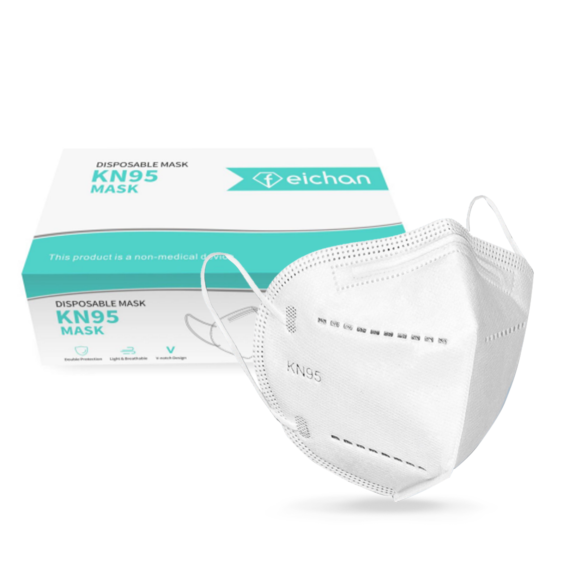
KN95 Face Mask
A KN95 Face Mask is a particulate-filtering respirator designed to help reduce the wearer’s exposure to airborne particles when it fits properly and is used according to the manufacturer’s instructions. These masks are commonly used in healthcare settings, workplaces, public transport, crowded indoor environments, and situations where reducing exposure to airborne contaminants is important.
Unlike loose-fitting face coverings, a KN95 respirator is designed to fit closely around the nose and mouth and filter a specified proportion of airborne particles under the applicable testing conditions. Its effectiveness depends on the quality of the product, its fit, the user’s correct handling, and the conditions in which it is worn.
KN95 masks are manufactured to meet the relevant Chinese respirator standard, GB 2626. They are often compared with N95 respirators, which are certified under a different standard in the United States. Although both categories are designed for particulate filtration, their certification systems and requirements are not identical.
Choosing the right mask requires attention to fit, filtration claims, product authenticity, comfort, and intended use. This guide explains how KN95 masks work, their benefits and limitations, and what to consider when buying them for personal or workplace use.
What Is a KN95 Face Mask?
A KN95 Face Mask is a filtering facepiece respirator designed to reduce exposure to airborne particles, including certain dusts, aerosols, and other particulate contaminants.
KN95 respirators are associated with China’s GB 2626 standard. Under the applicable standard, compliant KN95 respirators are designed to achieve at least 95% filtration efficiency against specified test particles under controlled laboratory conditions.
This filtration rating does not mean that every wearer receives 95% protection in every environment. Actual performance depends on the mask’s fit, the quality of the product, and how it is used.
Many KN95 masks feature multiple layers of filtration material, an adjustable nosepiece, and ear loops or other fastening systems. Their folded design often allows them to be stored compactly when unused.
KN95 respirators are different from ordinary cloth masks and loose-fitting disposable face coverings. They are designed to provide both particulate filtration and a closer facial fit, although the amount of leakage around the edges varies between products and wearers.
How Does a KN95 Face Mask Work?
KN95 respirators use layers of specialised filtration material to capture airborne particles as air passes through the mask.
The filtering material can capture particles through several mechanisms, including interception, impaction, diffusion, and electrostatic attraction. The combination of these mechanisms allows the material to filter particles across a range of sizes.
Multi-Layer Filtration
Many KN95 respirators use multiple layers, with different layers serving different purposes.
Outer layers may provide structural support and help protect the filtration material, while specialised filter layers capture airborne particles. Inner layers are designed to provide a comfortable surface against the face.
The exact construction varies by manufacturer, so buyers should review product specifications rather than assuming every mask uses the same materials or design.
Close Facial Fit
A respirator must fit closely around the nose, cheeks, and chin to perform effectively.
If air can easily pass through gaps around the edges, unfiltered air may enter without passing through the filtering material.
A properly adjusted nosepiece and correctly positioned straps can help improve fit. Facial hair in areas where the respirator seals against the skin can interfere with the seal.
Breathing Resistance
Respirators are designed to balance filtration performance with airflow resistance.
A mask that feels comfortable during brief use may feel different during prolonged wear or physical activity. Users should follow the manufacturer’s instructions and workplace guidance when choosing a respirator for extended tasks.
People who have medical concerns about wearing a respirator should seek appropriate professional advice.
Key Benefits of KN95 Face Masks
KN95 respirators offer several potential advantages when selected and worn correctly.
High Particulate Filtration
Compliant KN95 respirators are designed to meet the filtration requirements of their applicable standard.
This makes them a useful option for reducing exposure to many airborne particles compared with loose-fitting face coverings that do not provide equivalent filtration and fit.
However, filtration performance alone does not determine the protection a wearer receives. Fit and correct use are equally important.
Practical for Everyday Use
Many KN95 masks are lightweight and compact, making them convenient for commuting, travel, and other situations where a particulate respirator may be appropriate.
Their foldable designs can also make unused masks easier to store.
Users should keep respirators clean, dry, and protected from damage before use.
Multiple Design Options
KN95 respirators are available in different shapes, sizes, colours, and fastening styles.
Some feature a flat-fold design, while others use a cup-shaped or three-dimensional structure.
Different designs fit different faces, so trying several models may help users identify a respirator that provides a more secure and comfortable fit.
Useful in Selected Workplace Environments
Depending on the hazard and workplace requirements, an appropriate respirator may help reduce exposure to dust and other airborne particles.
Employers should assess the hazard and select suitable respiratory protection rather than assuming that every KN95 mask is appropriate for every workplace.
KN95 respirators do not provide universal protection against gases, vapours, oxygen-deficient atmospheres, or every hazardous substance.
Common Uses of KN95 Face Masks
KN95 respirators may be used in a variety of environments, depending on the exposure risk and applicable requirements.
Healthcare and Care Settings
Respirators may be appropriate for certain healthcare activities where protection against airborne particles is required.
Healthcare facilities should follow their infection prevention policies, workplace risk assessments, and applicable respiratory protection guidance.
A KN95 respirator should not automatically be treated as equivalent to a respirator approved for a particular healthcare programme. Where a specific certification is required, the appropriate certified product should be selected.
Public Transport and Crowded Indoor Spaces
People may choose to wear a particulate respirator in crowded indoor environments, particularly when exposure to airborne respiratory particles is a concern.
Examples include public transport, busy indoor venues, and other shared spaces.
The level of protection depends on fit, product quality, and consistent use. Respirators work best when worn correctly over both the nose and mouth.
Construction and Industrial Work
Certain KN95 respirators may be suitable for selected tasks involving non-oil-based airborne particles when the product is appropriate for the hazard and the applicable workplace requirements.
However, construction and industrial environments can involve serious respiratory hazards, including silica dust, welding fumes, chemicals, and other contaminants.
A KN95 mask should not be assumed to provide adequate protection for every occupational exposure. Employers should conduct a risk assessment and select respiratory equipment that meets the applicable requirements.
Travel
Travellers may use KN95 respirators in airports, stations, aircraft cabins, and other crowded environments.
Their compact packaging makes them convenient to carry, but masks should be replaced if damaged, contaminated, or otherwise unsuitable for continued use.
Travellers should also follow current public health guidance and any applicable requirements at their destination.
Dusty Environments
A suitable particulate respirator may help reduce exposure to certain airborne dusts.
However, the type and concentration of dust matter. Some occupational dusts can cause serious health problems and require a formal respiratory protection programme and equipment selected for the specific hazard.
KN95 respirators are not a substitute for appropriate engineering controls, ventilation, or specialised respiratory protection where those measures are required.
KN95 vs N95 vs Surgical Masks
These mask categories differ in their standards, intended uses, and fit characteristics.
KN95 Respirators
KN95 respirators are associated with China’s GB 2626 standard. They are designed to meet specified particulate filtration and performance requirements when tested under that standard.
Product quality and authenticity can vary, so buyers should verify the manufacturer and supporting documentation.
N95 Respirators
N95 respirators are certified by the US National Institute for Occupational Safety and Health (NIOSH) under applicable US requirements.
They are designed to filter at least 95% of specified airborne particles under the relevant test conditions.
NIOSH approval is a distinct certification process. A KN95 label alone does not establish that a product is NIOSH-approved.
Surgical Masks
Surgical masks are generally designed primarily to provide a barrier against droplets and splashes and to help reduce the release of respiratory droplets from the wearer.
They are typically looser-fitting than filtering facepiece respirators, so air can enter or escape around their edges.
A surgical mask and a KN95 respirator should not be assumed to offer the same level of wearer protection.
Which Option Should You Choose?
The right choice depends on the intended use, exposure risk, required certification, and fit.
For occupational use, employers should follow applicable regulations and respiratory protection requirements. For general use, selecting an authentic respirator that fits well and can be worn consistently is important.
How to Choose a High-Quality KN95 Face Mask
Choosing a suitable respirator requires attention to several important factors.
Verify the Manufacturer
Check the manufacturer’s name, product identification, and supporting documentation.
Be cautious of products that make broad claims without providing verifiable details. Packaging alone does not prove that a respirator meets its stated standard.
Where workplace certification is required, verify the exact product against the relevant approval or certification information.
Check the Standard and Markings
KN95 respirators are associated with GB 2626. Product markings and documentation should be consistent with the applicable requirements.
Do not assume that a product is certified simply because it displays a KN95 label. Counterfeit or mislabelled products may not perform as claimed.
For NIOSH-approved respirators, check the approval markings and official NIOSH certification information rather than relying on a seller’s description.
Assess the Fit
A suitable respirator should sit securely over the nose, mouth, and chin.
Check that the nosepiece can be adjusted and that the fastening system holds the mask in place without excessive gaps.
Facial shape varies, so a respirator that fits one person may not fit another. Users should assess fit each time they put on the mask.
For occupational use, fit testing may be required under the applicable respiratory protection programme.
Consider Comfort and Breathability
Comfort matters, particularly when a respirator must be worn for extended periods.
Factors include the mask’s shape, material against the skin, fastening system, and breathing resistance.
A comfortable respirator is easier to wear consistently, but comfort should never replace the required level of protection.
Review Product Condition and Packaging
Inspect the respirator before use. Do not use a mask that is torn, damaged, wet, visibly contaminated, or otherwise compromised.
Follow the manufacturer’s instructions regarding storage and use. Damaged packaging may affect the condition of the product.
Businesses purchasing in bulk should maintain appropriate storage conditions and check stock regularly.
How to Wear a KN95 Face Mask Correctly
Correct use helps the respirator provide its intended performance.
First, wash or sanitise your hands before handling the mask. Inspect the respirator to ensure that it is intact and suitable for use.
Position the mask over the nose, mouth, and chin. Secure the straps according to the manufacturer’s instructions and adjust the nosepiece to fit the contours of the nose.
Check for noticeable gaps around the nose, cheeks, and chin. Air should pass through the filtering material rather than easily escaping around the edges.
Avoid touching the front of the respirator while wearing it. If adjustment is necessary, handle the straps where possible and perform hand hygiene afterward.
A user seal check should be performed each time the respirator is put on, following the manufacturer’s instructions. A seal check does not replace formal fit testing where that is required.
Remove the respirator carefully by handling the straps. Follow the manufacturer’s guidance on disposal, storage, or reuse. Do not wash a disposable KN95 respirator unless the manufacturer specifically provides validated instructions for that process.
How Long Can You Wear a KN95 Face Mask?
There is no single wear duration that applies to every KN95 respirator.
The appropriate duration depends on the manufacturer’s instructions, the environment, the level of exposure, and whether the mask becomes damaged, wet, dirty, or difficult to breathe through.
For workplace use, employers should follow the relevant respiratory protection programme and applicable regulations.
A disposable respirator should be replaced when it is damaged, contaminated, loses its fit, or becomes difficult to breathe through. Users should not continue wearing a compromised respirator simply because the recommended time has not elapsed.
Storage and reuse instructions vary by product. Follow the manufacturer’s guidance and avoid sharing respirators between users.
Buying KN95 Face Masks in Bulk
Businesses and organisations that require respirators regularly may purchase them in bulk, but procurement should prioritise authenticity and suitability.
Compare Pricing and Product Documentation
Request quotations from several suppliers and compare the cost per mask, shipping fees, minimum order quantities, and delivery times.
Also request the product’s technical documentation and verify that it meets the intended use and any applicable certification requirements.
The lowest price is not necessarily the best value if the product’s quality or authenticity cannot be established.
Check Supplier Reliability
A reliable supplier should provide clear product information, transparent pricing, and consistent stock availability.
Ask about the manufacturer’s identity, product traceability, delivery schedules, and procedures for handling damaged or incorrect orders.
For organisations with ongoing requirements, planned replenishment can help avoid shortages.
Store Respirators Properly
Store masks in accordance with the manufacturer’s instructions, in a clean and dry environment.
Protect unused respirators from moisture, dust, excessive heat, and physical damage.
Keep stock organised and check packaging and product condition before distribution.
Limitations of KN95 Face Masks
Although KN95 respirators can provide useful particulate filtration, they have important limitations.
First, filtration ratings are based on specified laboratory tests. They do not guarantee the same percentage of protection for every wearer or situation.
Second, poor fit can allow unfiltered air to enter around the mask. Facial hair, an incorrectly adjusted nosepiece, or unsuitable sizing can compromise the seal.
Third, KN95 respirators are not designed to protect against every airborne hazard. Standard particulate-filtering models do not provide protection against all gases and vapours and should not be used in oxygen-deficient environments.
Finally, respirators are only one part of risk management. Appropriate ventilation, exposure controls, hygiene practices, and other protective measures may also be necessary.
Conclusion
A KN95 Face Mask is a particulate-filtering respirator designed to reduce exposure to specified airborne particles when it meets the relevant requirements and fits correctly. Its compact design and availability in different shapes make it a practical option for selected personal and workplace applications.
When choosing a KN95 respirator, verify the manufacturer, review the applicable standard, assess the fit, and follow the product’s instructions. Businesses should also consider authenticity, supplier reliability, storage conditions, and any workplace certification requirements.
Understanding both the benefits and limitations of KN95 masks helps users make informed decisions about respiratory protection. For occupational hazards, the correct respirator should always be selected through an appropriate risk assessment and in accordance with applicable safety requirements.
Frequently Asked Questions
1. What is a KN95 face mask?
A KN95 face mask is a particulate-filtering respirator associated with China’s GB 2626 standard. It is designed to filter at least 95% of specified test particles under the applicable laboratory conditions.
2. Is a KN95 mask the same as an N95 mask?
No. Both are designed for particulate filtration, but they follow different standards and certification systems. N95 respirators are certified by NIOSH in the United States, while KN95 respirators are associated with China’s GB 2626 standard.
3. Can a KN95 face mask protect against airborne particles?
A compliant KN95 respirator can help reduce exposure to specified airborne particles when it fits properly and is used correctly. Its effectiveness depends on product quality, fit, and the exposure conditions.
4. How should a KN95 mask fit?
A KN95 respirator should cover the nose, mouth, and chin and fit closely around the face. Check for gaps and adjust the nosepiece and straps according to the manufacturer’s instructions.
5. Can KN95 face masks be reused?
Reuse depends on the specific product and the manufacturer’s instructions. Replace a respirator if it becomes damaged, wet, contaminated, difficult to breathe through, or unable to maintain a suitable fit.
6. How can I identify a genuine KN95 face mask?
Check the manufacturer’s identity, product markings, technical documentation, and applicable conformity information. Be cautious of unsupported filtration claims and sellers that cannot provide verifiable product details.
7. Are KN95 masks suitable for workplace use?
They may be suitable for certain workplace applications, but the required protection depends on the hazard and applicable regulations. Employers should conduct a risk assessment and verify whether a specific respirator standard or certification is required.