KN95 Face Mask
Face masks are used in many settings where people want an additional layer of respiratory protection from airborne particles. Among the different options available, the KN95 Face Mask is widely recognised for its close-fitting design and filtration performance when it is manufactured to the relevant standard and worn correctly.
Unlike loose-fitting face coverings, a KN95-style respirator is designed to fit more closely around the nose and mouth. This helps air pass through the filtering material rather than easily travelling through large gaps around the edges. However, filtration performance alone does not determine how well a mask works in practice. Fit, authenticity, condition, correct use, facial hair, storage, and the environment all matter.
Whether masks are being purchased for personal use, workplaces, travel, healthcare-related environments where appropriate, or organisational supplies, understanding their basic features can make product selection easier. This guide explains how KN95 masks work, what to look for when purchasing them, how to wear them properly, and how they compare with other common face masks.
What Is a KN95 Face Mask?
A KN95 Face Mask is a particulate-filtering respirator associated with China’s KN95 standard. Genuine products made and tested to the applicable requirements are designed to achieve a high level of filtration under specified laboratory conditions.
The mask usually covers the nose, mouth, and chin while fitting more closely to the face than a typical loose-fitting disposable mask.
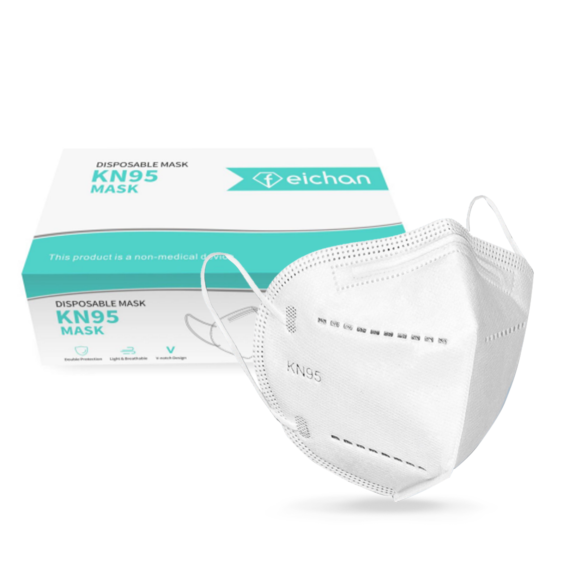
Common features may include multiple layers of filtering material, ear loops or other securing components, a mouldable nosepiece, and a structured shape intended to improve facial coverage.
It is important to distinguish between a genuine compliant KN95 respirator and products that merely use similar terms or shapes. Buyers should review manufacturer information, markings, packaging, testing claims, and applicable regulatory requirements before relying on a product for a particular environment.
How Does a KN95 Mask Work?
A KN95 respirator works by combining filtration material with a close facial fit.
The filter material is designed to capture airborne particles as air moves through the mask. Different physical mechanisms within the material can contribute to particle capture rather than the mask functioning like a simple kitchen strainer.
Fit is equally important.
If significant gaps exist around the nose, cheeks, or chin, some air can bypass the filter material. This can reduce the protection provided to the wearer.
For this reason, choosing the right KN95 Face Mask involves considering both filtration claims and how well the particular model fits the individual user.
What Does KN95 Mean?
The term KN95 refers to a specific respirator classification rather than simply describing the shape of a mask.
The designation is associated with filtration requirements and other performance criteria under the relevant Chinese standard.
The “95” is commonly associated with the respirator’s ability to filter at least 95% of specified test particles when tested under defined conditions.
This does not mean that wearing any product labelled KN95 automatically reduces every airborne risk by exactly 95%. Real-world performance depends heavily on fit, correct use, product quality, and exposure conditions.
Consumers should therefore avoid judging a respirator by the number in its name alone.
Main Features of a KN95 Face Mask
Although products vary between manufacturers, several features are commonly found in KN95 respirators.
Multi-Layer Construction
Many KN95 masks use multiple material layers. Different layers may contribute to structure, comfort, filtration, and protection of the filter media.
The exact construction varies, so product specifications should be reviewed when comparing options.
Adjustable Nosepiece
A mouldable nosepiece helps users shape the mask around the bridge of the nose.
Correct adjustment can reduce gaps and may also help limit air escaping upward toward glasses.
Close-Fitting Shape
KN95 masks are designed to sit closer to the face than many basic disposable masks.
Common shapes include folded, flat-fold, and structured designs.
Secure Attachment
Many KN95 masks use ear loops, although designs can vary.
The securing system should hold the respirator firmly without causing excessive discomfort.
Nose and Mouth Coverage
When worn correctly, the mask should fully cover the nose and mouth and extend beneath the chin.
Why Fit Matters With a KN95 Face Mask
A high-quality filter cannot perform as intended if much of the breathing air is passing around the edges of the mask.
Fit should therefore be one of the main considerations when choosing and wearing a KN95 respirator.
After putting the mask on, check for obvious gaps around the nose, cheeks, and chin.
The mask should remain securely positioned during normal head movement and conversation.
Facial shapes differ, which means one KN95 model may fit one person well and another person poorly. Trying different legitimate models may be necessary to find a suitable option.
In occupational settings where respirators are required for specific hazards, formal respiratory protection requirements may apply, including medical evaluation, fit testing, training, and other controls. A general consumer mask guide is not a substitute for a workplace respiratory protection program.
How to Wear a KN95 Face Mask Correctly
Correct use can help the respirator provide its intended level of performance.
First, wash or sanitise your hands before handling a clean mask where practical.
Inspect the respirator before putting it on. Do not use it if the filtering material, straps, nosepiece, or other important components are visibly damaged.
Position the mask over your nose and mouth, making sure the lower section sits beneath your chin.
Secure the ear loops or other attachments according to the manufacturer’s instructions.
Press and shape the nosepiece around the bridge and sides of the nose using both hands where appropriate. Avoid simply pinching one small point if the design requires the nosepiece to follow the full contour of the nose.
Check the edges for noticeable gaps.
Once positioned, avoid repeatedly touching or adjusting the front of the mask.
How to Check the Fit
A basic user seal check can help identify obvious leakage, although it is not the same as formal occupational fit testing.
With the respirator correctly positioned, pay attention to whether air seems to escape significantly around the nose, cheeks, or chin when breathing.
If you feel substantial leakage, readjust the nosepiece and mask position.
If the respirator continues to fit poorly, consider trying a different model or size where available.
People should follow the manufacturer’s instructions because designs differ.
A well-fitting KN95 Face Mask should remain stable without requiring constant adjustment.
KN95 Face Mask vs Surgical Mask
KN95 respirators and surgical masks are designed with different performance characteristics and intended uses.
A surgical mask generally fits more loosely around the face. It can provide source control and a barrier against certain droplets and splashes depending on its design and applicable standard.
A KN95 respirator is designed to fit more closely and filter airborne particles according to the relevant respirator standard.
This distinction becomes important when the primary goal is reducing exposure to airborne particles.
However, the appropriate product depends on the setting, risk, local guidance, workplace requirements, and individual needs.
KN95 vs N95 Respirator
KN95 and N95 are respirator classifications associated with different standards.
N95 respirators are regulated under United States requirements, while KN95 respirators are associated with Chinese standards.
Both classifications include high particulate filtration requirements under their respective test conditions, but certification systems, testing procedures, design requirements, and regulatory frameworks are not identical.
For consumers, the key point is to verify that the product genuinely complies with the standard it claims to meet.
In regulated workplaces, use the respirator type required by the applicable occupational safety program rather than assuming that all “95” respirators are automatically interchangeable.
KN95 vs Cloth Masks
Cloth face coverings vary considerably in material, construction, number of layers, and fit.
A genuine KN95 Face Mask is manufactured to meet defined respirator performance requirements, while ordinary cloth masks generally do not have the same standardised particulate filtration requirements.
Cloth masks may also fit more loosely.
For situations where higher particulate filtration and closer facial fit are desired, a genuine, well-fitting respirator can offer important advantages.
However, the appropriate choice should always reflect the specific environment and current health or workplace guidance.
Who May Use KN95 Masks?
KN95 masks may be used by adults in a variety of everyday and organisational settings, depending on individual circumstances and applicable guidance.
Potential users can include commuters, travellers, workers, members of the public, customers in crowded indoor environments, and organisations maintaining respiratory protection supplies.
Some workplaces may have specific requirements that go beyond simply providing a KN95 mask.
Healthcare facilities and other higher-risk professional environments may also have specific policies about approved respirators.
Individuals with medical concerns about respirator use should seek guidance from an appropriate healthcare professional.
KN95 Masks for Travel
Travel can involve spending extended periods in crowded indoor environments such as airports, terminals, public transport, and other enclosed spaces.
Some travellers choose a KN95 Face Mask because its compact design makes it easy to carry and its close fit provides a higher level of particulate filtration than many loose-fitting face coverings when used correctly.
When travelling, carry enough clean masks for the planned journey and possible delays.
Keep unused masks in clean, dry packaging or storage.
If a mask becomes wet, visibly dirty, damaged, or difficult to breathe through, it should generally be replaced according to manufacturer guidance.
KN95 Masks in Workplaces
Businesses may keep respiratory protective equipment for certain tasks or environments.
However, there is an important difference between voluntary mask use and respirators required to protect workers from occupational hazards.
Where respiratory protection is required because of workplace exposure, employers may need to follow specific safety regulations and implement a formal respiratory protection program.
This can involve hazard assessment, respirator selection, training, fit testing, maintenance procedures, and other requirements.
Businesses should therefore select masks according to the actual workplace risk rather than simply purchasing a product because it carries the KN95 name.
Can Facial Hair Affect KN95 Performance?
Facial hair can interfere with the seal of a close-fitting respirator.
Hair located between the mask sealing surface and the skin can create gaps that allow air to bypass the filter.
This can reduce the effectiveness of the respirator.
The issue is especially important in occupational environments where respiratory protection is required.
People relying on tight-fitting respirators should follow applicable workplace requirements and manufacturer instructions regarding facial hair and fit.
Can You Reuse a KN95 Face Mask?
Whether a KN95 can be reused depends on the product, environment, contamination risk, condition of the respirator, and manufacturer instructions.
Many KN95 products are marketed as disposable respirators and should not be treated as permanently reusable equipment.
A mask should not continue to be used when it becomes wet, dirty, damaged, contaminated, stretched, difficult to breathe through, or unable to maintain an appropriate fit.
Do not wash a disposable KN95 unless the manufacturer specifically states that the product is designed for such treatment. Washing can damage filtration material and affect performance.
Always prioritise manufacturer instructions and relevant health or workplace guidance.
How to Store KN95 Masks
Proper storage helps protect unused masks from moisture, dirt, crushing, and unnecessary handling.
Keep new masks in their original packaging where practical.
For personal use, clean masks can be carried in a suitable dry container or bag that protects them from damage.
Avoid storing masks in locations where they can become wet, excessively hot, contaminated, or compressed.
Businesses purchasing larger quantities should store cartons in a clean, dry environment and monitor stock condition.
Inventory rotation can also help organisations manage larger supplies efficiently.
How to Identify a Quality KN95 Face Mask
Product quality matters because not every mask sold with “KN95” in its title necessarily provides the performance consumers expect.
Review the manufacturer’s identity and product information.
Check whether the mask clearly states the standard it claims to meet and whether packaging and markings are consistent and professional.
Be cautious of vague filtration claims, missing manufacturer information, unrealistic certifications, and products with unclear origins.
For high-risk or regulated settings, purchasing through established suppliers and verifying relevant documentation is particularly important.
Price alone should never be used as proof of quality.
Common Mistakes When Wearing KN95 Masks
One common mistake is leaving the nose uncovered. A respirator should cover both the nose and mouth to function as intended.
Another problem is poor nosepiece adjustment. Large gaps around the bridge of the nose can allow substantial air leakage.
Wearing a mask that is too loose can also reduce performance.
Users should avoid repeatedly pulling the mask below the chin and putting it back into position, particularly in environments where contamination is a concern.
Continuing to use a damaged, wet, dirty, or poorly fitting mask is another mistake.
Correct selection and consistent use are just as important as purchasing the right product.
Buying KN95 Face Masks in Bulk
Bulk purchasing may be useful for businesses, schools, organisations, workplaces, travel groups, and facilities that maintain emergency supplies.
Before ordering large quantities, review the manufacturer, standard, model, packaging, shelf-life information where applicable, storage requirements, and documentation.
It can also be useful to test a smaller quantity first because fit varies between models.
If a particular design does not fit intended users properly, purchasing thousands of units may create unnecessary waste.
Organisations should also establish appropriate storage and stock rotation procedures.
Individually Wrapped KN95 Masks
Individually packaged respirators can offer practical advantages in some environments.
Separate packaging can help keep unused masks clean while they are stored, transported, or distributed.
This can be useful for offices, reception areas, travel kits, emergency supplies, events, and workplaces.
However, individual wrapping does not prove that a mask meets the KN95 standard.
Buyers should still verify product specifications and manufacturer claims before making a purchasing decision.
When Should a KN95 Mask Be Replaced?
Replace the respirator according to manufacturer guidance and whenever its condition makes continued use inappropriate.
Common reasons for replacement include visible dirt, moisture, physical damage, broken straps, loss of shape, poor fit, or increased breathing resistance.
A mask that no longer seals properly around the face should not be relied upon for close-fitting respiratory protection.
The environment in which the respirator is used can also affect replacement decisions.
For professional or higher-risk settings, follow workplace procedures and relevant infection-control or occupational safety requirements.
Choosing the Right KN95 Face Mask
The best respirator is not simply the one with the most impressive packaging.
Start by checking whether the product is genuinely manufactured to the claimed standard.
Next, consider fit. The mask should comfortably cover the nose, mouth, and chin while limiting obvious gaps.
Review the securing method, nosepiece, material, packaging, manufacturer details, and intended use.
If buying for an organisation, consider whether multiple models or sizes may be needed to accommodate different facial shapes.
For occupational hazards, respirator selection should be based on a proper risk assessment and applicable safety requirements.
Why Proper Fit and Quality Matter
Respiratory protection depends on more than filtration material.
A genuine filter combined with poor facial fit may not deliver the expected real-world protection because air can travel through gaps.
Similarly, a close-fitting mask of uncertain quality may not provide reliable filtration.
A suitable KN95 Face Mask should therefore combine verified performance with a secure and comfortable fit.
Users should also understand the limitations of the product and recognise when specialised respiratory equipment is necessary.
KN95 Face Mask for Practical Respiratory Protection
A KN95 Face Mask can provide effective particulate filtration when it is genuine, appropriately selected, correctly fitted, and used according to its instructions.
Its close-fitting design distinguishes it from many loose face coverings, while its lightweight and disposable construction can make it practical for personal, travel, workplace, and organisational use.
However, buyers should not rely on the KN95 label alone. Product authenticity, applicable standards, manufacturer information, facial fit, mask condition, and the specific environment all need to be considered.
For everyday use, selecting a reliable product and wearing it consistently can improve its practical performance. In workplaces or higher-risk environments, users should follow relevant professional, regulatory, occupational health, and infection-control requirements.
Understanding these factors helps consumers and organisations make better decisions when selecting, wearing, storing, and replacing KN95 respirators.
Frequently Asked Questions About KN95 Face Mask
What does KN95 mean on a face mask?
KN95 is a respirator classification associated with a Chinese standard. The classification includes requirements for particulate filtration and other performance characteristics under defined test conditions.
Does a KN95 mask filter 95% of particles?
A compliant KN95 respirator is designed to meet a filtration requirement of at least 95% for specified test particles under defined laboratory conditions. Real-world protection also depends heavily on fit and correct use.
Is a KN95 better than a surgical mask?
They serve different purposes. KN95 respirators are designed for close facial fit and particulate filtration, while surgical masks are generally looser fitting and may be designed for source control and fluid resistance depending on the applicable standard.
Is KN95 the same as N95?
No. KN95 and N95 are classifications under different standards and regulatory systems. Although both include high particulate filtration requirements, their certification and testing frameworks are not identical.
How should a KN95 mask fit?
It should fully cover the nose and mouth, extend beneath the chin, and sit closely against the face without significant gaps around the nose, cheeks, or sides.
Can I wash a KN95 face mask?
Disposable KN95 respirators generally should not be washed unless the manufacturer specifically states otherwise. Washing can damage the filtering material and affect performance.
Can a KN95 mask be reused?
Reuse depends on the manufacturer’s instructions, environment, contamination risk, and condition of the respirator. Replace it when it becomes wet, dirty, damaged, difficult to breathe through, or unable to maintain a good fit.
Can a beard affect a KN95 mask?
Yes. Facial hair beneath the sealing surface can create gaps and reduce the effectiveness of a close-fitting respirator.
Why do my glasses fog when wearing a KN95?
Fogging can occur when warm exhaled air escapes around the nose. Carefully adjusting the nosepiece and improving the mask’s fit may reduce upward airflow.
Are all KN95 masks the same quality?
No. Quality and authenticity can vary between products and manufacturers. Check the claimed standard, manufacturer details, product markings, documentation, fit, and supplier reliability.
Can businesses buy KN95 masks in bulk?
Yes. Businesses and organisations can purchase KN95 masks in larger quantities. They should verify product specifications, storage requirements, authenticity, and suitability before placing substantial orders.
When should I replace my KN95 Face Mask?
Replace it when it becomes damaged, dirty, wet, contaminated, difficult to breathe through, or no longer fits securely. Manufacturer instructions and applicable workplace or health guidance should also be followed.