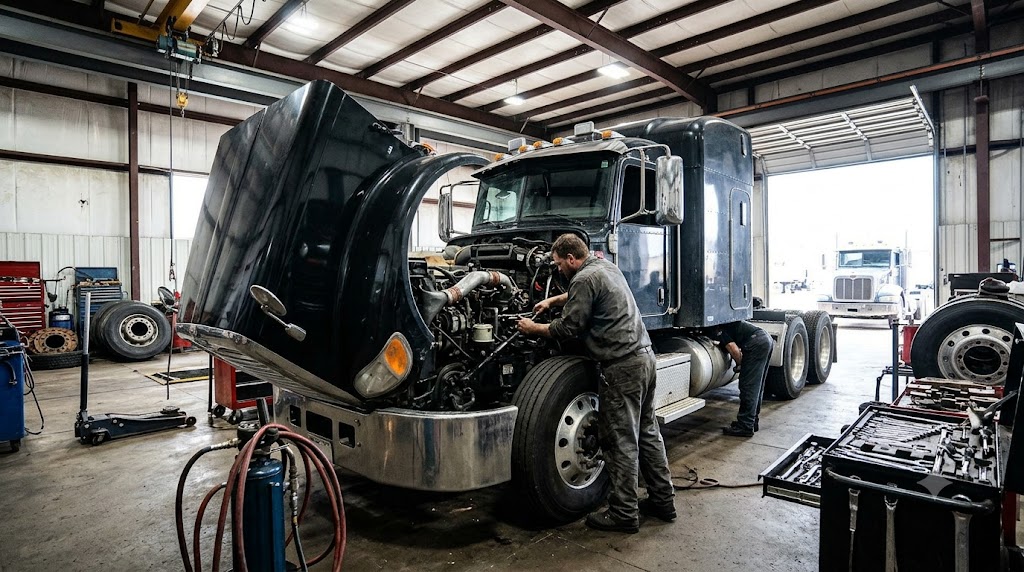
Commercial trucks play a vital role in transporting goods across Iowa and connecting regional businesses with national supply chains. When a semi-truck develops a mechanical problem, the consequences extend beyond the vehicle itself. Delivery schedules can be disrupted, operating costs can increase, and drivers can face additional pressure to complete their routes. Regular maintenance and timely repairs help commercial operators maintain reliable vehicles and reduce preventable interruptions.
For fleet managers and independent drivers, semi truck repair services in Des Moines, IA provide an important resource for diagnosing mechanical problems, addressing worn components, and maintaining vehicle performance. Understanding common truck failures, preventive maintenance requirements, and repair shop selection criteria helps you make informed decisions that support safety and operational efficiency.
Common Semi Truck Problems That Require Attention
Heavy-duty trucks operate under demanding conditions. Long distances, substantial loads, changing weather, and frequent stops place considerable stress on engines, brakes, tires, and other components.
Recognizing early warning signs helps you respond before a minor issue becomes a more serious mechanical failure.
Engine Performance Problems
Reduced power, rough operation, unusual smoke, warning lights, or increased fuel consumption can indicate an engine-related issue. Potential causes include fuel delivery problems, air intake restrictions, sensor faults, cooling system concerns, or other mechanical defects.
Modern diesel engines also rely on electronic controls and emissions systems. Proper diagnostic equipment helps technicians identify fault codes and investigate the underlying cause instead of replacing components unnecessarily.
Diesel particulate filters (DPFs) capture soot from diesel exhaust and periodically require regeneration, a process that burns off accumulated soot. When regeneration cannot complete successfully, or the filter becomes excessively restricted, warning lights, reduced engine power, and unplanned downtime may follow. Ask a qualified technician to investigate recurring regeneration problems rather than repeatedly ignoring warnings or attempting an unsuitable procedure.
Brake System Concerns
Commercial truck brakes require regular inspection and appropriate maintenance. Warning signs include unusual noises, changes in braking performance, air pressure problems, and visible component damage.
Brake systems vary by vehicle configuration, so repairs must follow the applicable manufacturer procedures and safety requirements. If braking performance is compromised, stop operating the vehicle and arrange appropriate assistance.
Transmission and Drivetrain Issues
Difficulty shifting, unusual vibration, fluid leaks, or unfamiliar drivetrain noises can indicate developing problems. Continuing to operate a truck with serious transmission or drivetrain symptoms can increase damage.
Prompt diagnosis helps determine whether the problem involves fluid condition, electronic controls, clutch components, or other mechanical parts.
Tire and Suspension Wear
Uneven tire wear, steering changes, vibration, or unusual handling can indicate alignment, suspension, inflation, or component problems.
Because tires affect traction, stability, and braking, inspect them regularly and address damage promptly. Follow the vehicle and tire manufacturer’s specifications for inflation and load limits.
Why Preventive Maintenance Matters for Commercial Fleets
Preventive maintenance helps identify deterioration before it results in an unexpected breakdown. A structured service schedule also helps fleet managers plan expenses and reduce disruptions to dispatch operations.
Maintenance requirements depend on the vehicle, engine, operating conditions, mileage, and manufacturer recommendations. A truck used for frequent short trips or heavy-duty applications might experience different maintenance demands from one operating under less severe conditions.
Commercial fleets must also account for applicable Federal Motor Carrier Safety Administration (FMCSA) requirements. Under 49 CFR § 396.17, covered commercial motor vehicles generally require periodic inspections at least once every 12 months. Applicable driver vehicle inspection report (DVIR) requirements under § 396.11 address reporting vehicle defects, while § 396.9 covers roadside inspection reports and out-of-service orders. The precise requirements depend on the vehicle and operation, so fleet managers should confirm which rules apply to their circumstances.
A comprehensive maintenance program should address:
- Engine oil and filter service.
- Cooling system condition and coolant levels.
- Fuel and air filtration.
- Brake system inspection.
- Tire pressure, tread condition, and wear patterns.
- Steering and suspension components.
- Electrical connections, lighting, and batteries.
- Transmission and drivetrain maintenance.
- Required emissions-system servicing, including DPF condition and regeneration concerns.
- Safety equipment, applicable inspection requirements, and maintenance records.
Record completed work, mileage, reported symptoms, and upcoming service requirements. Consistent documentation helps technicians identify recurring problems and gives fleet managers a clearer picture of vehicle condition.
How to Handle an Unexpected Truck Breakdown
A breakdown on a busy roadway creates risks for the driver and other road users. Your response should prioritize safety over completing the delivery.
When possible, move the truck to a safe location away from moving traffic. Activate the appropriate warning lights and follow company procedures for roadside incidents. Use warning devices and personal protective equipment as required by applicable regulations and the vehicle’s operating procedures.
Avoid attempting repairs in dangerous traffic conditions or working beneath a vehicle without appropriate equipment and safeguards.
Contact a qualified repair provider and describe the truck’s location, vehicle type, warning lights, symptoms, and any unusual sounds or smells. Ask whether the provider offers mobile truck repair or roadside assistance in your location. If on-site repairs are not possible, ask about towing arrangements and the expected next steps.
Do not continue driving a truck with serious brake problems, severe overheating, unsafe tires, or other conditions that compromise safe operation.
Choosing a Truck Repair Provider in Des Moines, IA
Selecting a suitable repair provider involves more than comparing labor rates. Commercial operators should evaluate technical capabilities, communication, turnaround expectations, and familiarity with heavy-duty vehicles.
Ask potential providers about their experience with your truck’s make, model, engine, transmission, and emissions equipment. Confirm whether they have the diagnostic tools and specialized equipment required for the work.
Ask whether the shop can perform the applicable annual commercial vehicle inspection, including the inspection required under 49 CFR § 396.17, or whether you will need to arrange that service elsewhere. Confirm that the inspection can be performed by a qualified inspector in accordance with applicable requirements.
Turnaround time also deserves specific questions. Ask when the truck can be inspected, when diagnostic results are likely to be available, whether required parts are in stock, and what the estimated completion date will be. For unexpected delays, find out how the shop communicates updates and whether it offers priority scheduling or roadside assistance. Actual repair times depend on the fault, parts availability, workload, and any additional problems discovered during diagnosis.
Request an explanation of the proposed repairs, including labor, parts, testing, and any additional work that might be necessary. A written estimate helps you understand the expected expense before authorizing repairs.
You should also ask about parts availability, warranty terms, service scheduling, and procedures for approving additional costs. For fleet operators, consistent documentation and clear communication are especially valuable when managing multiple vehicles. Reviewing a provider’s heavy-duty truck repair services can also help you identify the services to discuss before scheduling work.
Reducing Downtime and Controlling Repair Expenses
Unplanned repairs are expensive because they can involve both mechanical costs and lost operating time. Businesses can reduce some of this impact by monitoring vehicle condition and planning maintenance around operating schedules.
Pay attention to recurring warning lights, changes in fuel economy, fluid leaks, and driver reports of unusual behavior. Addressing these issues early can prevent further deterioration.
Keep frequently needed maintenance supplies available when appropriate, and maintain accurate service histories for each vehicle. When evaluating a repair, consider the truck’s overall condition, expected remaining service life, repair expense, and operational requirements rather than making decisions based solely on the initial price.
Keep Your Commercial Trucks Road-Ready in Des Moines, IA
Reliable semi trucks are essential for keeping freight moving and meeting delivery commitments. Preventive maintenance, early diagnosis, safe breakdown procedures, and careful repair provider selection help reduce avoidable downtime and support dependable fleet operations.
If your truck requires diagnostics, mechanical repairs, or scheduled maintenance in Des Moines, IA, contact a qualified heavy-duty truck service professional. Explain the symptoms, request a clear estimate, and arrange the necessary service to help keep your vehicle operating safely and efficiently.