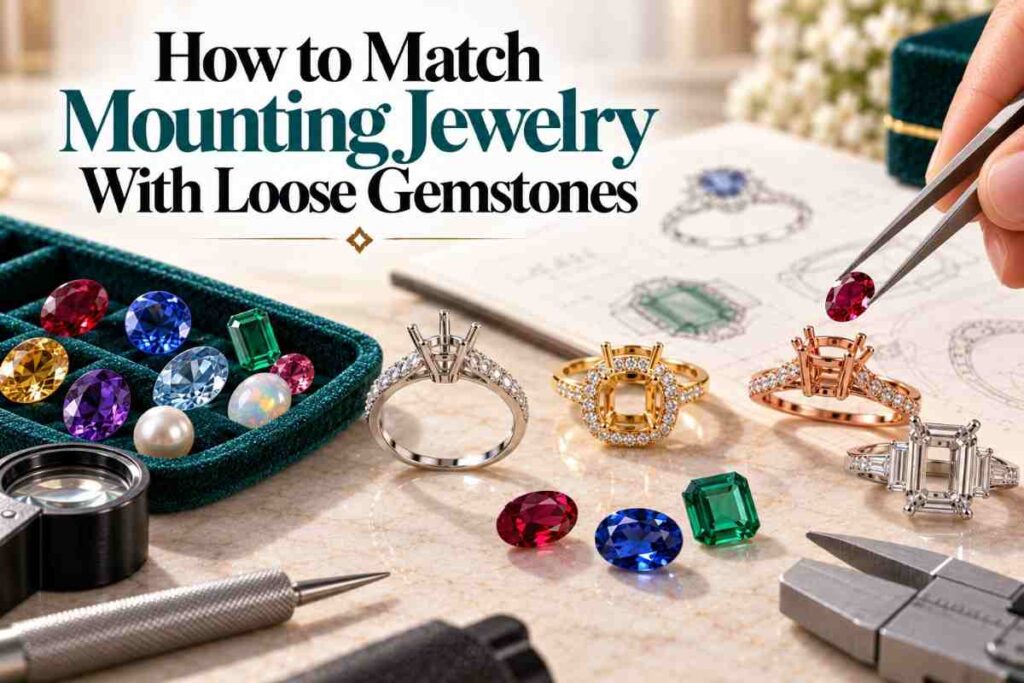
Diamonds are tough, uniform and forgiving. Coloured gemstones are not. A ruby, an emerald, an opal and a tanzanite all behave differently in a setting, because they differ in hardness, brittleness, cut style and sensitivity to heat and chemicals. Choosing a mounting without thinking about the gemstone can leave you with a stone that chips, loosens or looks wrong. This guide explains how to match mounting jewelry with loose gemstones, covering hardness, cut and size, colour and metal, and the settings that suit each type of stone.
Why Gemstones Need More Careful Matching
Gemstones vary far more than diamonds do. Some are very hard and durable, others are soft or easily cracked. Many are cut in shapes and sizes that do not follow the neat standards diamonds do, and some are treated in ways that make them sensitive to ultrasonic cleaners or heat.
A good match respects all of these differences, so that the mounting protects the stone and shows it at its best.
Step 1: Check the Gemstone’s Hardness and Toughness
Hardness, usually measured on the Mohs scale, indicates resistance to scratching. Toughness, which is separate, describes resistance to chipping and breaking. Both influence how exposed a stone can safely be in a ring or earring.

| Gemstone | Approx. Mohs Hardness | Practical Note |
| Ruby, sapphire | 9 | Very durable, suited to rings |
| Topaz | 8 | Hard but can cleave if knocked |
| Emerald | 7.5 to 8 | Often included and brittle, so protect corners |
| Aquamarine | 7.5 to 8 | Durable, good for rings |
| Amethyst, citrine | 7 | Good for everyday wear |
| Garnet | 6.5 to 7.5 | Varies by type |
| Peridot, tanzanite | 6.5 to 7 | Scratch and knock easily, favour protective settings |
| Opal | 5.5 to 6.5 | Soft and sensitive, better in earrings or pendants |
| Pearl | 2.5 to 4.5 | Very soft, best kept away from hard wear |
Values are approximate and vary by gem variety. As a rule, softer or more brittle stones belong in lower-impact pieces such as earrings and pendants, or in rings with protective settings such as bezels.
Step 2: Identify the Cut Style
The cut tells you what kind of seat the mounting needs.
- Faceted stones: need prongs or a bezel that grip the girdle evenly. Prong placement matters for corners and points.
- Cabochons: smooth, domed stones that suit bezel settings, which hold the base and sides securely.
- Step cuts (such as emerald cuts): have corners that benefit from protective prongs or a bezel.
- Freeform or custom cuts: often need a custom or adjustable mounting.
Step 3: Measure the Stone Precisely
Gemstones are weighed in carats, but carat weight does not translate neatly to size. Different gem species have different densities, so a one-carat sapphire and a one-carat emerald are not the same size. Always measure length, width and depth in millimetres and compare them with the mounting’s seat.
Many commercial gemstones are cut to calibrated sizes, such as 6 mm rounds or 8 x 6 mm ovals, which makes matching easier. Non-calibrated stones need more careful checking.
Step 4: Choose the Right Setting Style for the Gem
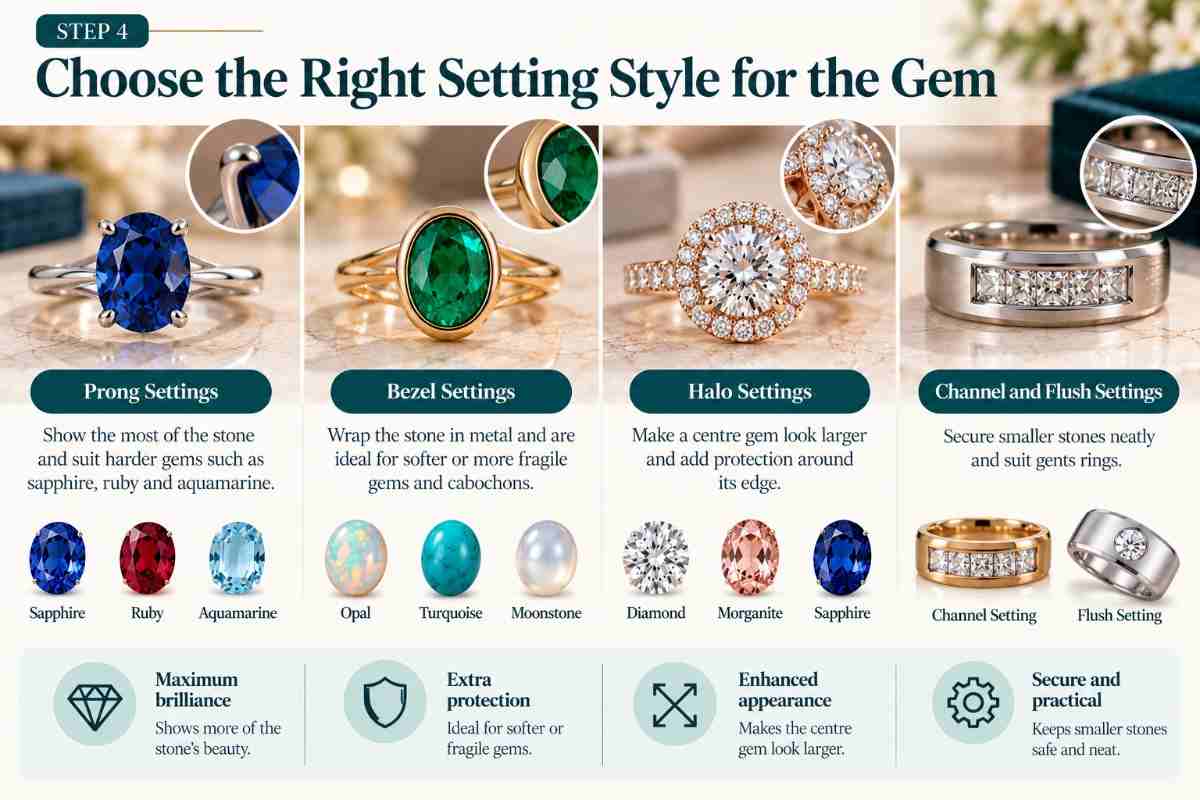
- Prong settings: show the most of the stone and suit harder gems such as sapphire, ruby and aquamarine.
- Bezel settings: wrap the stone in metal and are ideal for softer or more fragile gems and cabochons.
- Halo settings: make a centre gem look larger and add protection around its edge.
- Channel and flush settings: secure smaller stones neatly and suit gents rings.
Step 5: Think About Colour and Metal
Metal colour influences how a gemstone looks. This is partly personal taste, but a few tendencies are useful.
- Yellow and rose gold often warm and enrich red, orange and green stones.
- White gold and platinum tend to keep blue, violet and pale stones looking crisp and cool.
- Mixed metals can add contrast and interest, particularly in contemporary designs.
The mounting’s design should also suit the stone’s colour intensity. A deeply coloured stone often looks best in a simple setting that lets the colour lead, while paler stones can handle more decorative detail.
Step 6: Consider Treatments and Care
Many gemstones are treated to improve colour or clarity, for example oil or resin filling in emeralds, or heat in sapphires. Some treatments make stones sensitive to heat, ultrasonic cleaning or harsh chemicals. Tell the setter about any known treatment, because it can affect how the stone is set and how it should be cleaned afterwards.
Setting also involves heat and pressure on the mounting around the stone. Fragile stones may need cold-setting techniques or a design that minimises stress.
Step 7: Test Fit and Inspect
As with any stone, test fit it before setting. Check that the stone sits level and fully seated, that prongs or bezel walls meet it evenly, and that corners and points are protected. A stone that rocks or leaves gaps should be corrected before final setting.
Matching for Ladies and Gents Jewellery
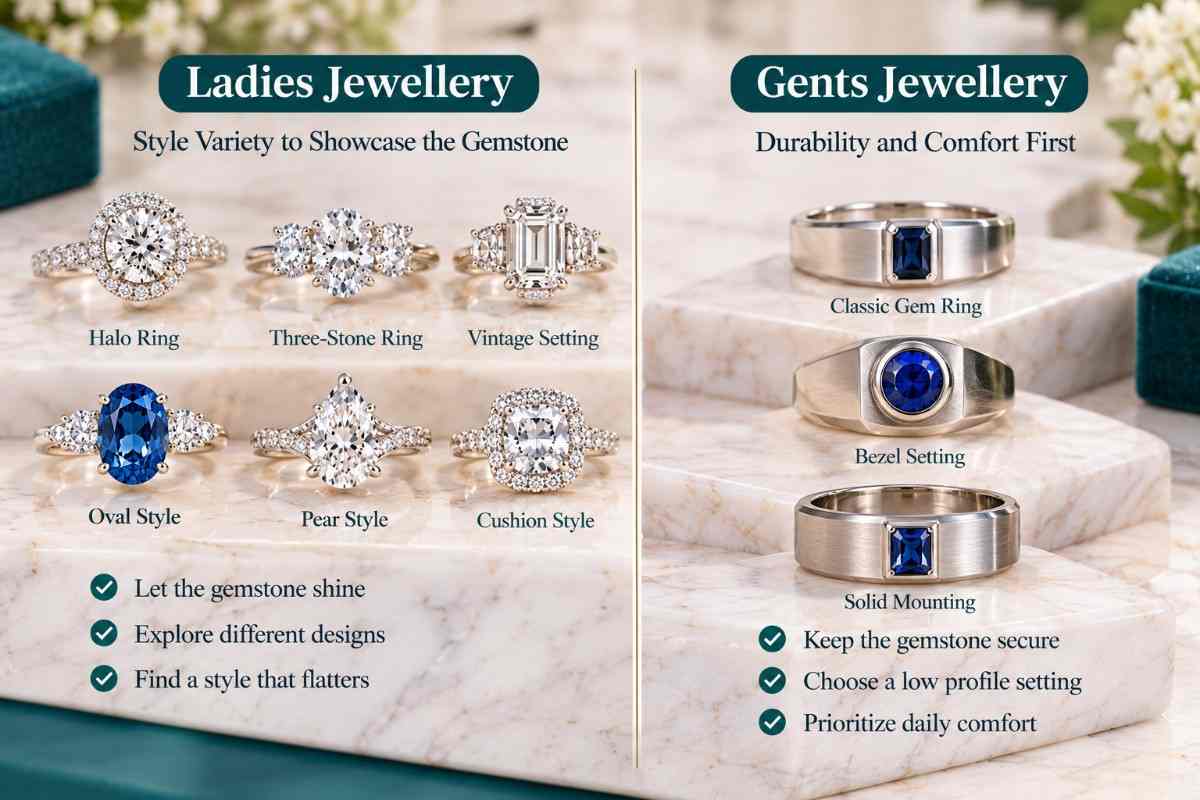
Ladies pieces typically give the gemstone centre stage, so style variety matters: halos, three-stone designs, vintage settings and elongated-shape options. A broad Ladies Ring Mounting range gives you more chances to find a seat that fits the stone and flatters its colour.
Gents pieces more often feature a single gem set low and securely, so durability and comfort are the priorities. A solid Gents Ring Mounting with a well-cut seat or bezel keeps a gemstone protected through daily wear.
Why Mounting Quality Matters
Gemstones raise the stakes on mounting quality. Uneven prongs, rough seats or inconsistent dimensions are especially damaging to softer stones. Sourcing precisely made mounting jewelry with clean seats and dependable consistency makes matching faster and lowers the risk of damaging stones during setting.
Quick Matching Checklist
- Is the gemstone hard and tough enough for the intended piece?
- Does the cut style suit the mounting’s seat?
- Are length, width and depth measured in millimetres and matched?
- Is the setting style right for the gem (prong, bezel, halo, channel)?
- Does the metal colour complement the stone?
- Are any treatments known and communicated to the setter?
- Has the stone been test fitted before setting?
Frequently Asked Questions
1.Which gemstones are best for everyday rings?
Ans. Hard, durable stones such as sapphire, ruby and aquamarine suit daily wear. Softer stones such as opal and pearl are better in earrings or pendants.
2.What setting is best for a soft gemstone?
Ans. A bezel setting is usually the safest, because the metal wall protects the stone’s edges. Low, protective designs help fragile gems last longer.
3.Can I use a diamond mounting for a coloured gemstone?
Ans. Often yes, provided the seat matches the stone’s shape and millimetre size and the setting suits its hardness. Always test fit, because gems do not always follow diamond sizing.
4.Does carat weight tell me what size mounting to use?
Ans. No. Different gems have different densities, so carat weight does not equal size. Measure the stone in millimetres.
Final Thoughts
Matching mounting jewelry with loose gemstones means looking beyond appearance. Consider hardness, cut, measured size, colour, metal and any treatments, then choose a setting that protects the stone and shows it off. With careful matching and well-made mountings, every gemstone can be set securely and look its best for years.