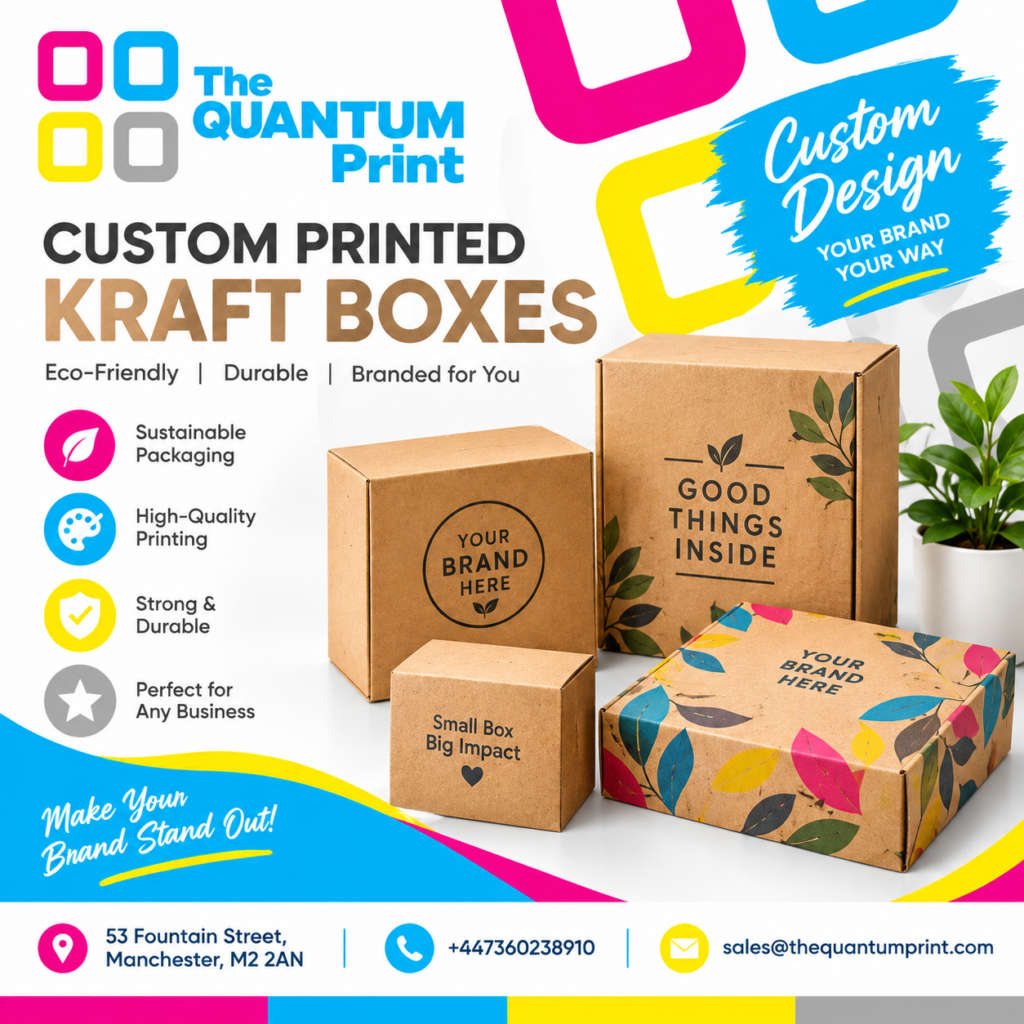
Packaging plays an important role in how products are protected, presented, stored and delivered. For many UK businesses, packaging is no longer viewed simply as an outer layer around a product. It can also communicate brand identity, provide useful product information and influence the customer’s overall unboxing experience.
Among the many packaging options available, kraft materials remain popular because they offer a practical combination of durability, simple aesthetics and printing flexibility. From independent retailers to growing e-commerce businesses, custom printed kraft boxes can be adapted to different products, brand styles and fulfilment requirements.

Why Kraft Packaging Remains Popular
Kraft paperboard is commonly associated with its natural brown appearance, although kraft packaging can also be produced with different finishes, colours and printed designs. Its straightforward appearance has made it particularly relevant to businesses looking for packaging that feels practical and contemporary.
A kraft packaging box can be used for a wide range of products, including:
- Handmade and artisan goods
- Cosmetics and personal-care products
- Food and bakery items
- Gifts and retail products
- Clothing and accessories
- Small e-commerce products
- Promotional and subscription packages
The material can also provide a suitable surface for branding, product details, instructions and other printed information.
How Custom Printing Adds Value
Plain packaging can protect a product, but printed packaging can communicate additional information before the box is even opened. Businesses can use printing to create consistency across their packaging and reinforce their visual identity.
Depending on the product and printing requirements, a business might include:
- Company logos and brand colours
- Product names and descriptions
- Care or usage instructions
- Website and contact information
- Social media details
- Recycling or disposal information
- Simple promotional messages
The goal should not be to cover every available surface with graphics. Effective packaging usually balances visual appeal with readability and practical information.

For example, a small independent brand might use a simple logo and one or two design elements, while an established retailer may require more detailed branding across several packaging sizes.
Choosing the Right Packaging Kraft Box
Selecting packaging involves more than choosing a material. Product dimensions, weight, protection requirements, storage conditions and shipping methods should all be considered before an order is produced.
Businesses should assess:
Product dimensions: The box should provide sufficient space without leaving excessive empty room that could allow the product to move during transportation.
Product weight: Heavier items may require stronger board or a suitable structural design.
Shipping requirements: E-commerce packaging needs to withstand handling during storage, sorting and delivery.
Printing area: Consider where the logo, product information and other graphics will appear before finalising the artwork.
Quantity requirements: Order volumes can influence production efficiency and overall packaging costs.
Getting these details right can reduce packaging waste and help prevent avoidable damage during fulfilment.
Current Packaging Trends for E-Commerce and Retail
Packaging expectations have changed as online shopping has grown. Customers increasingly encounter packaging as part of the purchasing experience, particularly when products are delivered directly to their homes.
One noticeable trend is the continued interest in simple, natural-looking packaging. Kraft’s understated appearance can complement brands that want a handmade, minimalist or environmentally conscious visual identity.
However, appearance should not be confused with environmental performance. Businesses should consider the complete packaging system, including material sourcing, inks, coatings, adhesives, recyclability and disposal instructions. A kraft appearance alone does not automatically make every packaging solution environmentally preferable.
Another important trend is right-sized packaging. Using boxes that are appropriately sized for their contents can help businesses manage storage requirements and reduce unnecessary material and void space during shipping.

Common Problems and Practical Solutions
Packaging decisions can create challenges if they are made without considering the complete product journey.
Problem: The box is too large.
Excess space can increase material usage and may require additional protective filling.
Solution: Measure the product carefully and consider a box design that provides a closer fit while still allowing safe packing.
Problem: Printed artwork looks different from expectations.
Colours and fine details can vary depending on the printing process and substrate.
Solution: Prepare print-ready artwork and review a suitable proof where appropriate before full production.
Problem: Packaging looks attractive but lacks protection.
A visually appealing box is not useful if the product is damaged during transportation.
Solution: Consider board strength, structural design, inserts and internal protection alongside appearance.
Problem: Branding is inconsistent.
Using different colours, fonts or logo treatments across packaging can weaken visual consistency.
Solution: Establish clear packaging artwork guidelines and use approved brand assets across product ranges.

Building a More Effective Packaging Strategy
A good packaging strategy considers the entire lifecycle of the box, from production and storage to customer delivery and disposal. Businesses should review packaging periodically as products, order volumes and customer expectations change.
For companies researching printed kraft solutions, The Quantum Print provides information about custom printed kraft boxes uk and their potential applications for branded packaging.
Before finalising packaging specifications, it is useful to prepare accurate product measurements, artwork files, expected order quantities and delivery requirements. These details allow packaging suppliers to understand the practical requirements rather than relying on assumptions.

Final Takeaway
Kraft packaging can provide a useful balance between presentation and practicality for modern retail and e-commerce businesses. A well-designed custom printed kraft box can protect products while providing space for branding, product information and customer-facing details.
The most effective approach is to treat packaging as both a functional product component and a communication tool. By selecting appropriate dimensions, considering structural strength, preparing accurate artwork and reviewing environmental characteristics carefully, businesses can create packaging that supports both operational needs and the customer experience.