A warehouse manager notices a dark stain spreading across a ceiling tile after a heavy spring storm. A week later, there are two more. By the time someone climbs up to look, water has been seeping under the membrane for months and soaking the insulation below.
Stories like this are common across Long Island, and they usually come down to one thing: who was trusted with the roof. For property owners searching for the best roofing company in Hauppauge, NY, the challenge isn’t finding a contractor. It’s finding one who will do the job right the first time.
This guide covers what separates a dependable roofer from an average one, why local experience matters, and what building owners should look for before signing a contract.
Why Roofing Choices Matter More on Long Island
Long Island’s weather is tough on roofs. Summers bring intense heat and UV exposure. Winters bring snow loads, ice, and repeated freeze-thaw cycles that open small cracks into larger problems.
Then there are nor’easters and the occasional tropical storm. High winds can lift poorly secured edges, and driving rain finds every weak seam. Coastal humidity and salt air add slow, steady wear on metal flashing and fasteners.
A roof that might last 25 years in a milder climate can fail much sooner here if it wasn’t installed with these conditions in mind. That’s why contractor selection deserves careful thought.
The Commercial Side of Hauppauge
Hauppauge is home to one of the largest industrial parks in the Northeast. Thousands of businesses operate out of warehouses, offices, manufacturing plants, and distribution centers, many of them built decades ago.
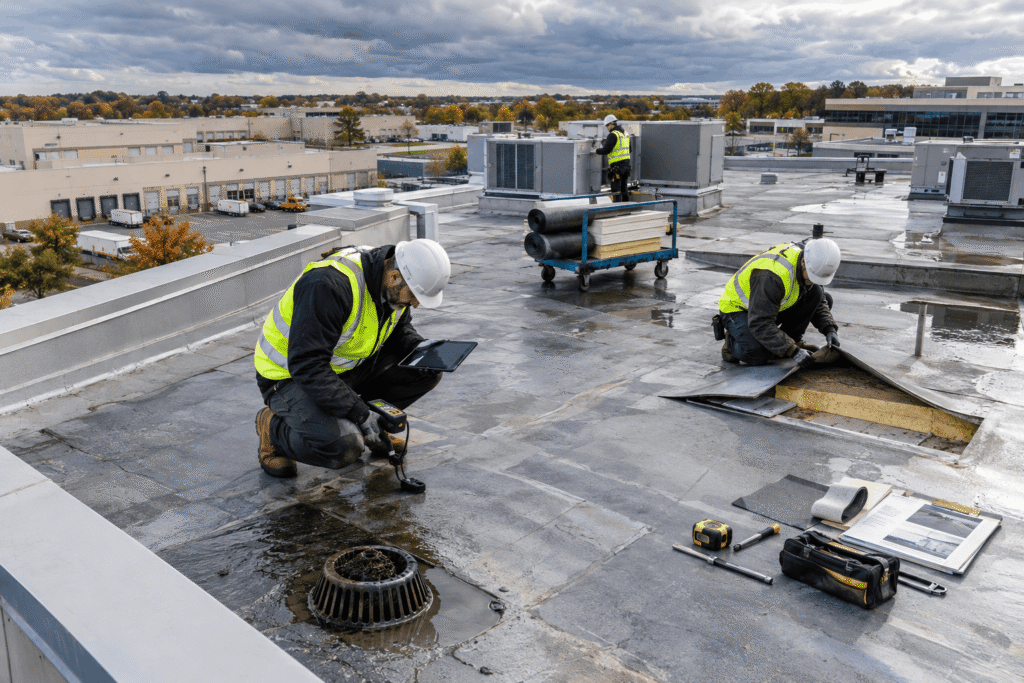
Most of these buildings have low-slope or flat roofs. These systems work very differently from the pitched, shingled roofs found on homes. They depend on sealed membranes, proper drainage, and careful detailing around HVAC units, vents, and skylights.
The community also crosses town lines. Part of Hauppauge sits in the Town of Smithtown, and part sits in the Town of Islip. As a result, many contractors working in the area handle projects throughout both towns, from retail plazas to large industrial sites.
What Separates a Great Roofer from a Good One
Licensing and insurance are the baseline, not the finish line. Any contractor working on Long Island should carry a valid Suffolk County license, general liability coverage, and workers’ compensation. Property owners can and should ask for proof.
Beyond that, experience with specific roofing systems is a major factor. A crew that installs asphalt shingles every day may not be the right fit for a TPO or EPDM membrane on a 50,000-square-foot warehouse. The skills and tools are different.
Manufacturer certifications also carry weight. Many major membrane manufacturers only offer their strongest warranties when an approved, trained contractor completes the installation. That certification signals the crew has been vetted and follows the maker’s standards.
Communication is often overlooked. The best contractors explain what they found, why a repair or replacement makes sense, and what the project will look like day to day. They put estimates in writing and spell out the scope, materials, timeline, and warranty terms clearly.
Understanding Flat Roof Replacement
Flat roofs don’t last forever, and patching only goes so far. Signs that a full replacement may be needed include widespread blistering, ponding water that stays for days, soft spots underfoot, and leaks that return no matter how often they’re repaired.
Modern options include single-ply membranes like TPO, PVC, and EPDM, along with modified bitumen and built-up roofing. Each has trade-offs in cost, energy efficiency, durability, and ease of repair.
TPO and PVC are popular for their reflective white surfaces, which can help lower cooling costs in summer. EPDM is known for flexibility and a long track record. Modified bitumen offers strong resistance to foot traffic, which matters on roofs with frequent equipment access.
For business owners weighing commercial flat roof replacement in Islip, NY, a thorough inspection should come before any decision. A core sample can reveal how many layers already exist and whether moisture has reached the insulation. Local building codes may also limit how many layers can stay in place.
The Real Benefits of Choosing Carefully
A well-installed roof protects far more than the building itself. It protects inventory, equipment, records, and the people working inside. A single major leak in a warehouse can damage stock worth far more than the cost of a quality roof.
Energy savings are another advantage. Properly insulated, reflective roofing systems can reduce the strain on HVAC units during hot Long Island summers. Over the life of the roof, those savings can add up.
There’s also the matter of long-term costs. A cheaper bid that cuts corners on flashing, fasteners, or insulation often leads to repeat repairs. A higher-quality installation tends to cost less over 20 years than a low-cost job that fails in eight.
Finally, strong warranties only work when the contractor stands behind them. A roofer who has been in the community for years is far easier to reach when a problem shows up than one who moves on after the job is done.
A Real-World Scenario
Consider the owner of a mid-sized distribution building near the Hauppauge Industrial Park. After years of small patch jobs, the roof had developed persistent ponding near the drains, and the repair bills kept climbing.
Rather than accepting the first bid, the owner collected three estimates. One contractor proposed simply laying a new membrane over the old one. Another recommended a full tear-off, new tapered insulation to improve drainage, and a reinforced TPO system.
The second option cost more upfront. But it solved the root cause of the ponding, added energy efficiency, and came with a manufacturer-backed warranty. Years later, the building stays dry and the maintenance budget has dropped significantly.
That kind of outcome is what property owners generally mean when they talk about the best roofing company in Hauppauge, NY. It isn’t about the flashiest ads or the lowest price. It’s about sound advice and lasting work.
Where Local Experience Fits In
Contractors who focus on commercial work tend to understand the details that matter on large, low-slope buildings. Firms such as Commercial Roofing Solutions are among the local businesses that handle this type of work across Suffolk County.
Still, no single name fits every project. Owners are best served by comparing several qualified contractors, checking references from similar buildings, and asking to see completed projects in person when possible.
Online reviews help, but they tell only part of the story. A conversation with a past client who owns a comparable property often reveals more than dozens of star ratings.
Red Flags Worth Watching For
Some warning signs show up early. Contractors who pressure owners to sign on the spot, ask for large cash deposits, or avoid putting details in writing should raise concern.
Another red flag is a bid that seems far lower than the others. Low prices sometimes mean skipped permits, thinner materials, or untrained labor. It’s worth asking exactly what’s included and what isn’t.
Door-to-door “storm chasers” appear after major weather events across Long Island. They often lack local licensing and may be gone long before any warranty claim comes up.
Final Thoughts
Choosing a roofer is one of the more important decisions a property owner in Hauppauge will make. The right contractor brings experience with local weather, knowledge of commercial roofing systems, and a commitment to clear, honest communication.
Taking time to compare bids, verify credentials, and ask the right questions pays off for decades. Whether the project is a minor repair or commercial flat roof replacement in Islip, NY, careful selection protects both the building and the budget.
Frequently Asked Questions
How much does a commercial flat roof replacement cost on Long Island?
Costs vary based on roof size, material, insulation needs, and whether a tear-off is required. Most projects are priced per square foot, so getting several detailed written estimates is the best way to understand the real cost.
How long does a flat roof typically last?
Most commercial flat roofs last between 15 and 30 years. The lifespan depends on the material, installation quality, drainage, and how consistently the roof is inspected and maintained.
What licenses should a roofing contractor have in Suffolk County?
Contractors performing work in Suffolk County generally need a home improvement or contractor license, depending on the project type. They should also carry general liability insurance and workers’ compensation coverage.
Is it better to repair or replace a flat roof?
Repairs make sense for isolated damage on a roof with plenty of life left. If leaks are widespread, insulation is wet, or the roof is near the end of its lifespan, replacement is usually more cost-effective.
What is the best time of year to replace a roof on Long Island?
Late spring through early fall typically offers the most reliable weather for roofing work. Many membrane materials need moderate temperatures to bond and seal properly, which makes mild, dry conditions ideal.