Picture a small shopping center after a summer storm. Water pools near the entrance, cracks spread across the drive lanes, and customers step around potholes on their way inside. For many property owners, that scene is what finally prompts the search for a concrete parking lot contractor in Houston, TX.
A parking lot is often the first thing visitors see. It shapes how people feel about a business before they even walk through the door. In a city with intense heat, heavy rain, and shifting soil, building that surface the right way matters more than most people realize.
Why Parking Lots in Houston Face Unique Challenges
Houston sits on a large layer of expansive clay soil. This soil swells when it gets wet and shrinks during dry spells. Over time, that constant movement can push and pull on any surface built above it.
Add in long, hot summers, sudden downpours, and the occasional tropical storm, and pavement takes a beating. Surfaces that might last decades in a milder climate can wear out quickly here if the groundwork is rushed.
This is one reason concrete has become a popular choice for commercial lots across the region. It handles heat well, resists softening under the sun, and holds its shape under heavy loads. But concrete is only as good as the planning and preparation behind it.
What a Concrete Parking Lot Project Really Involves
Many people assume a parking lot is just a slab of poured concrete. In reality, most of the important work happens before any concrete arrives on site.
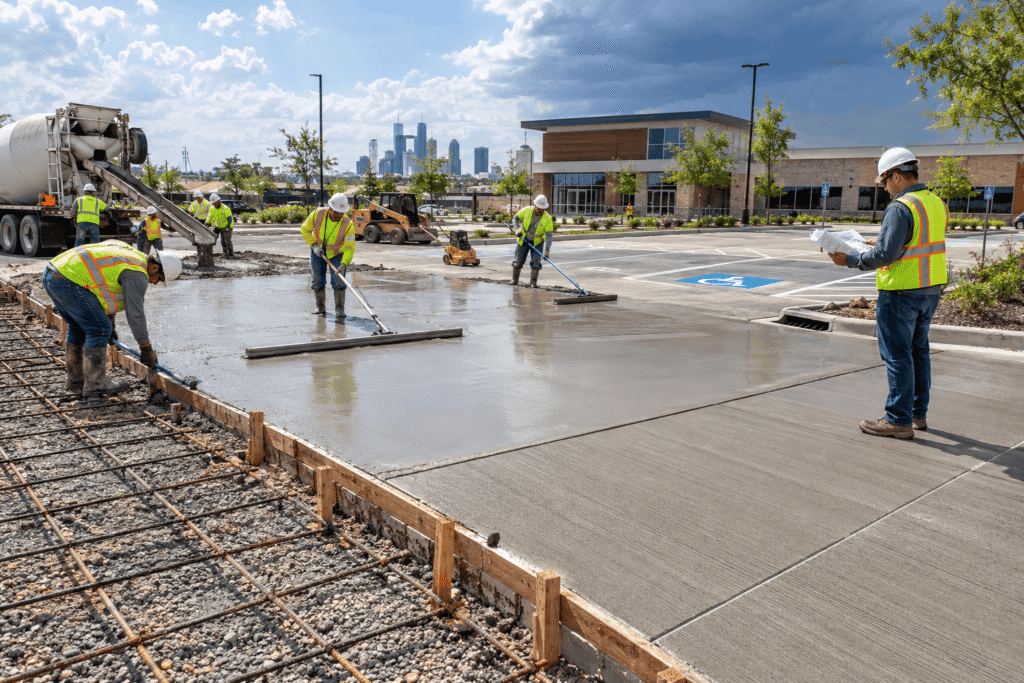
Experienced crews start with the soil. They test it, grade it, and often stabilize it with lime or cement to reduce movement. A solid base layer is then compacted to give the slab steady support.
Drainage comes next, and it’s a big deal in this part of Texas. A lot needs a slight slope so rainwater flows toward drains or the curb instead of sitting on the surface. Standing water weakens pavement and can create slip hazards for pedestrians.
Thickness is another key decision. Lots built mainly for passenger cars often use thinner slabs, while areas that see delivery trucks or garbage trucks need thicker, reinforced sections. Steel rebar or wire mesh is commonly added to help control cracking.
Finally, crews cut control joints into the concrete. These planned grooves give the slab a place to crack neatly as it expands and contracts, rather than splitting at random.
The Benefits of Concrete Over Other Surfaces
Asphalt is often cheaper upfront, so it’s fair to ask why so many owners choose concrete. The answer usually comes down to long-term value.
A well-built concrete lot can last 25 to 30 years or more with basic care. Asphalt typically needs resealing every few years and may need full replacement sooner. Over the life of a property, those repairs add up.
Concrete also stays cooler in the sun. Its lighter color reflects heat rather than absorbing it, which can make a noticeable difference on a 100-degree afternoon. That same light surface improves nighttime visibility, helping drivers and pedestrians see more clearly.
Maintenance tends to be simpler, too. Occasional cleaning, joint sealing, and quick crack repairs are usually enough to keep a concrete lot in good shape. There’s no sticky tar softening in summer heat or ruts forming under parked trucks.
There’s also the matter of appearance. A clean, smooth concrete lot gives a property a polished, professional look. For retail centers, medical offices, and churches, that first impression carries real weight.
Real-World Situations Where Concrete Makes Sense
Think about a busy grocery store. Delivery trucks arrive daily, shoppers circle for spots, and carts roll across the surface all day long. A thick, reinforced concrete lot can handle that constant traffic without breaking down.
Or consider a growing church in the suburbs. Attendance has doubled, and the old gravel lot turns muddy every time it rains. A new concrete lot with proper drainage solves the mess and makes the property safer for families and older members.
Warehouses and distribution centers offer another clear example. These sites see heavy trucks turning and braking in tight spaces. Concrete resists the surface damage that often shows up quickly on softer pavement.
Smaller projects benefit as well. An office building might only need to replace a damaged section or add a few new spaces. A skilled concrete parking lot contractor in Houston, TX can match the new work to the existing slab and correct drainage problems at the same time.
The same thinking applies beyond city limits. Property owners exploring concrete construction services in Sugar Land, TX often face similar soil and weather conditions, so many of the same design choices apply there too.
What to Look for When Hiring a Contractor
Not every paving company has deep experience with commercial concrete. Property owners should look for crews that understand local soil conditions and can explain how they plan to prepare the base.
It’s smart to ask about past projects of a similar size. A contractor who has handled retail centers or industrial yards will know how to plan for heavy loads and traffic flow.
Compliance is another factor that’s easy to overlook. Commercial lots usually need to meet Americans with Disabilities Act (ADA) rules for accessible parking, ramps, and signage. Local permits and drainage rules may also apply, and a good contractor will know how to handle them.
Clear communication matters, too. A reliable crew will walk owners through the timeline, explain how long the concrete needs to cure, and plan the work to limit disruption to daily operations.
Local firms such as Cross Construction Services are among the companies that work on commercial concrete in the greater Houston area. Comparing a few different contractors and reviewing their past work is usually the best way to find the right fit for a specific project.
Planning for the Long Haul
A parking lot is a long-term investment, not a quick fix. Choices made during planning, from soil prep to slab thickness, will affect how the surface performs for decades.
For owners weighing their options, it helps to think beyond the initial price. A carefully built lot can save years of repair costs, reduce safety risks, and keep a property looking its best. Whether the project is in central Houston or one of the growing suburbs, the right preparation makes all the difference.
Those comparing a concrete parking lot contractor in Houston, TX with providers of concrete construction services in Sugar Land, TX will find that the most important questions stay the same: How will the base be prepared, how will water drain, and how will the slab hold up over time?
Frequently Asked Questions
How much does a concrete parking lot cost in Houston?
Costs vary based on size, slab thickness, site prep, and drainage needs. Many commercial projects fall somewhere between $6 and $12 per square foot, but soil conditions and design details can push prices higher or lower.
How long does a concrete parking lot last?
With proper installation and routine care, a concrete lot can last 25 to 30 years or longer. Good drainage and regular joint sealing help extend its life.
How long before cars can park on new concrete?
Foot traffic is usually fine after a day or two. Most contractors recommend waiting about seven days before allowing cars, while concrete reaches full strength around 28 days.
Is concrete better than asphalt for a parking lot?
Concrete typically costs more upfront but lasts longer and needs less maintenance. It also stays cooler in hot weather and holds up better under heavy vehicles.
How thick should a concrete parking lot be?
Lots for passenger cars often use slabs around 4 to 5 inches thick. Areas with delivery trucks or heavy equipment usually need 6 to 8 inches, along with steel reinforcement.