Understanding the Connection Between Interest Rates and Home Affordability
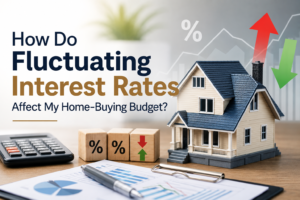
Buying a home is one of the biggest financial decisions you may make, and interest rates can significantly influence how much home you can comfortably afford. Even a small change in mortgage rates can affect your monthly payment, total borrowing cost, and purchasing power.
When interest rates rise, borrowing becomes more expensive. When rates fall, buyers may be able to qualify for larger loans while keeping their monthly payments within the same budget. Understanding this relationship can help you make a more informed decision instead of focusing only on the listed price of a property.
Why Mortgage Rates Matter to Your Monthly Payment
A mortgage payment generally includes principal and interest, with additional costs such as property taxes, homeowners insurance, and potentially mortgage insurance. While taxes and insurance can also change, the interest rate directly affects the cost of borrowing.
For example, consider a hypothetical $600,000 mortgage with a 30-year fixed term. At a lower interest rate, the principal-and-interest payment may be considerably less than it would be at a higher rate. Over several decades, that difference can add up to a substantial amount.
This means two buyers purchasing homes at the same price can have very different monthly expenses depending on when they secure their mortgages.
How Rising Rates Can Reduce Your Buying Power
When mortgage rates increase, your monthly payment rises unless you reduce the amount you borrow. As a result, you may need to consider a less expensive property to stay within your preferred monthly budget.
Suppose your target housing payment is $3,500 per month. If mortgage rates increase significantly, the same payment may support a smaller loan amount. You might therefore need a larger down payment, a lower purchase price, or a different loan structure.
For buyers searching in competitive markets, this can influence which neighborhoods and property types remain financially comfortable.
Falling Rates Can Increase Purchasing Power
Lower interest rates can have the opposite effect. If your income, down payment, and other financial circumstances remain unchanged, a lower rate can reduce the interest portion of your payment.
Some buyers may use those savings to purchase a home with a higher price tag. Others may choose to keep their original price range and benefit from a lower monthly payment.
However, lower rates can also encourage more people to enter the market. Increased buyer demand may contribute to stronger competition and higher home prices in some areas. Therefore, a lower rate does not automatically mean every buyer will find a cheaper home.
Don’t Focus Only on the Interest Rate
It is tempting to wait for the “perfect” mortgage rate, but rates are difficult to predict with certainty. Home prices, inventory, employment conditions, lending standards, and your personal finances can all change simultaneously.
Instead of making a decision based solely on whether rates are rising or falling, consider the complete cost of homeownership. Review the estimated mortgage payment, property taxes, insurance, maintenance, HOA fees, closing costs, and expected changes to your income or expenses.
A home should fit your broader financial plan—not simply meet a lender’s maximum approval amount.
Your Down Payment Also Plays an Important Role
The size of your down payment can help offset the impact of changing interest rates. A larger down payment generally means borrowing less, which can reduce your monthly principal-and-interest payment.
For example, if you are considering a $700,000 property, increasing your down payment reduces the mortgage balance. This may make the purchase more manageable even when interest rates are relatively high.
However, putting every available dollar into the down payment is not always the best approach. Buyers should also consider keeping sufficient cash reserves for closing expenses, moving costs, repairs, emergencies, and other homeownership expenses.
Consider the Difference Between Rate and Loan Cost
Two mortgage offers can have similar interest rates but different overall costs. Points, lender fees, closing costs, and other charges can affect the true expense of financing.
When comparing loan options, look beyond the advertised rate. Ask lenders for detailed estimates and compare the total borrowing costs, monthly payment, and terms.
A slightly lower rate may not necessarily be the best option if obtaining it requires substantial upfront costs.
How a Local Real Estate Professional Can Help
Understanding mortgage calculations is important, but applying them to the local housing market can be equally valuable. A knowledgeable Real Estate Agent Kirkland WA can help buyers evaluate properties based on their desired budget, neighborhood preferences, and current market conditions.
A real estate professional can also help you compare different property prices and identify homes that provide better value without pushing your monthly housing costs beyond a comfortable level.
Think About Your Long-Term Financial Position
Home buying should be approached with a long-term perspective. Instead of asking only, “How much can I borrow?” consider asking, “How much can I comfortably afford while maintaining my other financial goals?”
Your budget should account for potential repairs, changing property taxes, insurance costs, utilities, and lifestyle expenses. Building some financial flexibility into your home-buying plan can make homeownership more sustainable.
If rates eventually decline, refinancing may be an option depending on your circumstances, but refinancing is not guaranteed and comes with its own costs and eligibility requirements.
Work With the Market, Not Against Your Budget
Interest-rate fluctuations are a normal part of the housing and lending environment. Rather than trying to perfectly predict the next rate movement, buyers can focus on understanding their numbers and making decisions that remain comfortable under realistic scenarios.
A Redmond Realtor can provide valuable local perspective when you’re comparing properties, neighborhoods, pricing trends, and potential monthly costs. Combining that market knowledge with guidance from a qualified mortgage professional can help you develop a realistic purchase strategy.
Final Thoughts
Fluctuating interest rates can directly affect your home-buying budget by changing monthly mortgage payments and overall borrowing costs. Higher rates can reduce purchasing power, while lower rates may increase it—but market competition and home prices can change the equation.
The smartest approach is to establish a sustainable budget, compare financing options carefully, maintain adequate savings, and evaluate the total cost of ownership. By focusing on affordability rather than simply chasing the lowest possible rate, you can make a home purchase that better supports your long-term financial goals.