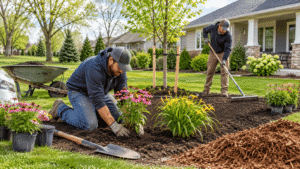
Every spring, homeowners across the Red River Valley step outside and look at the same thing: a lawn that’s flattened, patchy, and still damp from snowmelt. Flower beds that looked tidy in October now hold dead stalks and winter debris. For many people, this is the moment they start looking into gardening & landscaping services in Fargo, ND.
Yard care in this part of the country is different. A short growing season, heavy clay soil, and long, harsh winters shape every decision about what to plant and how to care for it. This article covers how local landscaping work is shaped by climate, what these services usually include, and why so many property owners in Fargo, ND choose to bring in outside help.
Why Landscaping in the Red River Valley Is Its Own Challenge
Fargo sits in USDA Hardiness Zone 4, where winter lows can drop to -30°F. Plants that thrive a few hundred miles south often won’t survive a single season here. That alone narrows the list of shrubs, perennials, and trees that make sense for local yards.
The soil adds another layer. Much of the valley rests on dense clay left behind by ancient Lake Agassiz. It holds nutrients well but drains slowly, cracks in dry summers, and gets sticky and compacted when wet. Locals sometimes call it “gumbo,” and anyone who has tried to dig a garden bed in it understands why.
Then there’s the calendar. The frost-free window usually runs from mid-May to late September. That leaves roughly four months for planting, growing, and finishing yard projects, so timing matters more than it does in milder regions.
What These Services Usually Cover
Gardening and landscaping in the region tends to fall into two broad areas. The first is ongoing maintenance, which keeps a property healthy through the season. The second is design and installation work, which changes how a yard looks or functions over the long term.
Maintenance often includes spring cleanup, mowing, edging, fertilizing, aeration, and weed control. Many providers also handle pruning, mulching, and perennial bed care. In fall, the focus shifts to leaf removal, final mowing, and preparing plants for winter.
Design and installation work covers bigger projects. That might mean new garden beds, retaining walls, patios, walkways, sod installation, or tree and shrub planting. Some companies also handle drainage fixes, which matter in a region known for spring flooding and slow-draining soil.
Seasonal flexibility is common too. Since outdoor work stops for several months each year, many local companies offer snow removal in winter. For property owners, that can mean one familiar crew caring for the property all year.
The Practical Benefits of Professional Help
The most obvious benefit is time. A well-kept yard takes steady weekly effort during a season that already feels too short. Many homeowners would rather spend those warm summer weekends at the lake than behind a mower.
Local knowledge is another big factor. Experienced landscapers know which plants handle Zone 4 winters, which grasses tolerate clay, and when to time aeration or seeding. That knowledge helps avoid costly mistakes, like planting trees that won’t survive their first January.
Soil management is a quieter benefit that often gets overlooked. Amending heavy clay with compost, grading beds for better drainage, and choosing the right mulch can turn a struggling garden into a healthy one. These are skills that take years to learn by trial and error.
There’s also the question of property value. A clean, well-planned landscape adds curb appeal, which matters when a home goes on the market. Even for people who aren’t selling, a healthy yard makes a home more enjoyable to live in.
Finally, professional crews bring the right equipment. Core aerators, sod cutters, and skid steers aren’t things most homeowners keep in their garage. Renting them is possible, but it adds cost and effort to every project.
How Fargo Homeowners Use These Services
Picture a young family that just bought an older home near one of Fargo’s established neighborhoods. The mature trees are beautiful, but the beds underneath are overgrown and the lawn is thin from years of shade. A landscaper might suggest shade-tolerant grass blends, cleaner bed edges, and hardy perennials like hostas and astilbe that do well in low light.
Or think about a retired couple in a newer development on the city’s south side. Their lot came with basic sod and little else. They want something easy to care for, so they choose native grasses, a small rock garden, and a drip irrigation line. The result looks finished but doesn’t demand hours of weekly work.
Commercial properties use these services differently. An office park or apartment complex needs consistent, reliable upkeep so the grounds always look professional. For these clients, scheduled maintenance contracts are often more practical than one-time projects.
Drainage problems are another common reason people call for help. After a wet spring, water may pool near a foundation or soak a low corner of the yard for weeks. Regrading, adding a dry creek bed, or installing a rain garden can redirect that water and protect the home.
Looking Beyond the City: Lake Country Properties
Many people in the metro also own cabins or second homes in Minnesota’s lake country, about an hour east. Landscaping there brings its own set of concerns. Sandier soils, shoreline erosion, and rules about lakeside vegetation all shape what’s possible.
Because of this, landscaping services in Detroit Lakes, MN often focus on shoreline restoration, native buffer plantings, and low-impact designs that protect water quality. Retaining walls and natural stone steps leading down to the water are popular projects as well.
Some regional companies work in both areas, which can help owners who split their time between city and lake. Good Lookin Properties LLC is one example of a local business serving property owners across the Fargo-Moorhead area and into lake country. Still, it’s wise to compare a few providers in either location before committing to a long-term plan.
What to Look For When Choosing a Provider
Experience with local conditions should come first. A company that understands clay soil, short seasons, and freeze-thaw cycles will make better recommendations than one using a generic approach.
It also helps to ask about insurance, licensing, and references from nearby properties. Seeing finished projects in person, or at least in photos, gives a clear sense of a company’s quality and style.
Communication matters more than many people expect. A good provider explains what they plan to do, why it suits the property, and how the work will be scheduled. Clear expectations up front prevent frustration halfway through the season.
Final Thoughts
Caring for a yard on the northern plains takes patience, planning, and a solid understanding of local conditions. Some homeowners enjoy handling it all themselves, while others find that professional help makes the short summer far more enjoyable.
Either way, knowing what gardening & landscaping services in Fargo, ND typically include, and how they adapt to this climate, makes it easier to make smart choices. A good first step is to walk the property this spring, note what’s working and what isn’t, and use that list to guide conversations with local experts.
Frequently Asked Questions
When should landscaping work start in Fargo, ND?
Most landscaping work begins in late April or early May, once the ground thaws and dries out. Planting is safest after mid-May, when the risk of hard frost usually passes.
What plants grow best in Fargo’s climate?
Hardy perennials like daylilies, peonies, coneflowers, and hostas do well in Zone 4. Native grasses, lilacs, and certain maples, oaks, and lindens also handle the cold winters and clay soil.
How much do landscaping services usually cost?
Costs vary widely by project size. Routine lawn care may run a modest weekly or monthly fee, while patios, retaining walls, or full redesigns can cost several thousand dollars or more.
How is lake property landscaping different from city landscaping?
Lake properties often deal with sandy soil, erosion, and shoreline regulations. That’s why landscaping services in Detroit Lakes, MN often focus on native plantings and erosion control near the water.
Is fall a good time for landscaping in North Dakota?
Yes. Early fall is ideal for aeration, overseeding, and planting trees and shrubs. Cooler temperatures and steady moisture help roots settle in before the ground freezes.