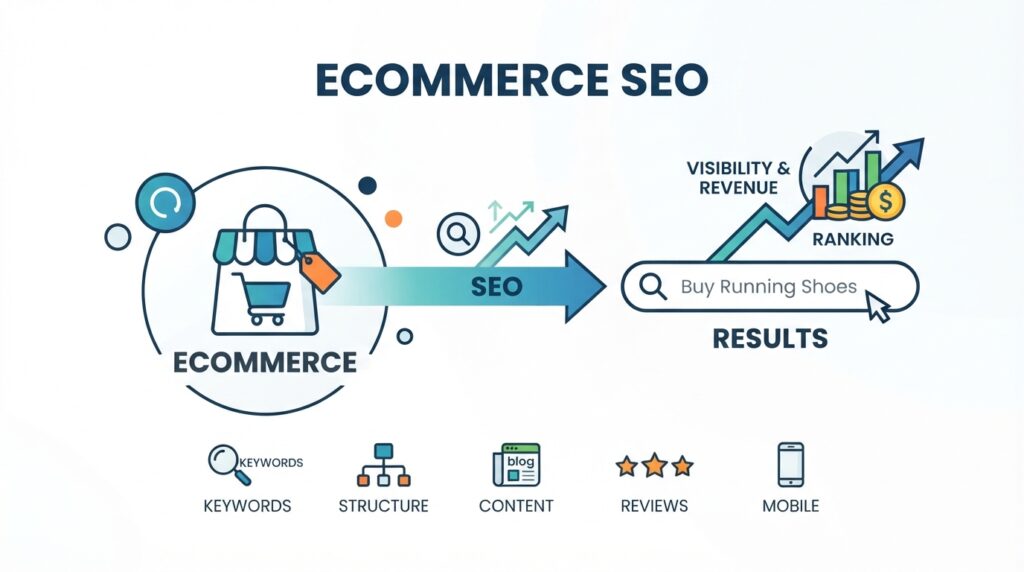
Running an online store involves more than listing products and waiting for customers to arrive. Your website needs strong visibility in search engines to attract qualified traffic and generate consistent sales. A well-planned Ecommerce SEO strategy helps your products appear when shoppers search for items they want to buy.
From product page optimization to technical improvements and keyword planning, every part of your website contributes to organic search performance. This guide explains the most effective Ecommerce SEO strategies to improve rankings, increase traffic, and drive more revenue.
What Is Ecommerce SEO?
Ecommerce SEO is the process of optimizing an online store so product pages, category pages, and other content rank higher in organic search results. The goal is to attract shoppers who are actively searching for products and convert them into customers.
Unlike traditional websites, ecommerce stores often contain hundreds or thousands of pages. Each page needs proper optimization to compete in search results.
A successful Ecommerce SEO strategy focuses on:
- Product pages
- Category pages
- Site architecture
- Internal linking
- Technical performance
- User experience
- Content marketing
Together, these elements help search engines understand your store and index your products effectively.
Why Ecommerce SEO Matters
Organic search remains one of the highest-converting traffic sources for ecommerce businesses. Customers searching through Google often have clear purchase intent.
An effective Ecommerce SEO strategy helps your business:
- Increase qualified organic traffic
- Improve product visibility
- Generate more online sales
- Reduce dependence on paid advertising
- Strengthen brand authority
- Improve customer acquisition over time
Higher rankings place your products in front of shoppers during the buying process.
Start with Ecommerce Keyword Research
Every successful campaign begins with thorough ecommerce keyword research.
Instead of targeting only broad keywords, identify search terms customers use at every stage of the buying journey.
Focus on keywords related to:
- Product names
- Product categories
- Brand names
- Features
- Materials
- Sizes
- Colors
- Buying intent
- Comparison searches
Long-tail keywords often attract highly qualified visitors because they reflect specific purchase intent.
Understanding customer search behavior helps you organize products and content more effectively.
Product Page Optimization Best Practices
Strong product page optimization improves both rankings and conversions.
Each product page should contain unique, helpful information instead of manufacturer descriptions.
Include:
Optimized Product Titles
Use descriptive titles containing your primary keyword naturally.
Include relevant attributes such as:
- Brand
- Product type
- Model
- Size
- Color
Unique Product Descriptions
Write original descriptions focused on customer needs.
Explain:
- Features
- Benefits
- Specifications
- Materials
- Usage
- Care instructions
Avoid duplicate content across similar products.
Optimize Images
High-quality product images improve user experience.
Every image should include:
- Descriptive file names
- Keyword-focused alt text
- Compressed file sizes
- Multiple viewing angles
Image optimization supports accessibility while improving page speed.
Add Customer Reviews
Customer reviews provide fresh content and build trust.
Reviews also strengthen product relevance by naturally including related search terms.
Improve Category Pages
Category pages often target high-volume keywords.
Optimize each category page with:
- Unique introductory content
- Clear product organization
- Descriptive headings
- Internal links
- Filter options
- SEO-friendly URLs
Well-structured category pages help search engines understand product relationships.
Focus on Technical SEO for Ecommerce
Large ecommerce websites require strong technical foundations.
Proper technical SEO for ecommerce improves crawling, indexing, and user experience.
Important technical improvements include:
Improve Site Speed
Fast-loading pages reduce bounce rates and improve customer satisfaction.
Optimize:
- Images
- JavaScript
- CSS
- Browser caching
- Content Delivery Network (CDN)
Page speed remains an important ranking signal.
Optimize Mobile Experience
Most online shoppers browse and purchase using mobile devices.
Your ecommerce website should provide:
- Responsive design
- Fast mobile loading
- Easy navigation
- Simple checkout process
Mobile usability directly affects both rankings and conversions.
Manage Duplicate Content
Product filters, sorting options, and URL parameters often create duplicate pages.
Reduce duplication through:
- Canonical tags
- Proper URL structure
- XML sitemaps
- Robots.txt management
Clean website architecture improves search engine efficiency.
Use Structured Data
Schema markup helps search engines understand ecommerce content.
Useful schema types include:
- Product
- Offer
- Review
- Aggregate Rating
- Organization
- Breadcrumb
- FAQ
Rich results increase visibility within search results and improve click-through rates.
Strengthen Internal Linking
Internal links help distribute authority throughout your website.
Connect related pages such as:
- Categories
- Products
- Buying guides
- Blog articles
- Brand pages
Logical linking improves navigation for users while helping search engines crawl your site.
Create Content That Supports Sales
Content marketing complements Ecommerce SEO.
Publish helpful resources such as:
- Buying guides
- Product comparisons
- Gift guides
- Industry trends
- Frequently asked questions
- How-to articles
Informational content attracts customers before they make purchasing decisions.
Avoid Common Ecommerce SEO Mistakes
Many online stores lose rankings because of avoidable issues.
Common mistakes include:
- Duplicate product descriptions
- Broken internal links
- Slow page speed
- Missing image alt text
- Thin category pages
- Poor mobile experience
- Missing structured data
- Orphan pages
Regular SEO audits help identify and resolve these problems early.
Ecommerce SEO and National SEO
As ecommerce businesses expand, broader organic visibility becomes increasingly important.
While Ecommerce SEO focuses on optimizing products and category pages, National SEO targets competitive keywords across an entire country. Combining both strategies strengthens domain authority, increases search visibility, and attracts customers throughout national markets. Learn more about what is national seo and strategies to boost your business revenue.
Businesses selling products nationwide benefit from integrating Ecommerce SEO with National SEO to support long-term organic growth.
Frequently Asked Questions
What is Ecommerce SEO?
Ecommerce SEO is the process of optimizing an online store to improve organic rankings, increase qualified traffic, and generate more sales through search engines.
Why is ecommerce keyword research important?
Ecommerce keyword research identifies the search terms customers use when looking for products. This information guides product pages, category pages, and content strategy.
What is product page optimization?
Product page optimization improves titles, descriptions, images, structured data, customer reviews, and page experience to increase visibility and conversions.
Why is technical SEO important for ecommerce websites?
Technical SEO for ecommerce improves website speed, crawlability, indexing, mobile usability, and duplicate content management, all of which influence search performance.
How long does Ecommerce SEO take?
Most ecommerce websites begin seeing measurable improvements within several months. Results depend on website quality, competition, content, technical health, and ongoing optimization.