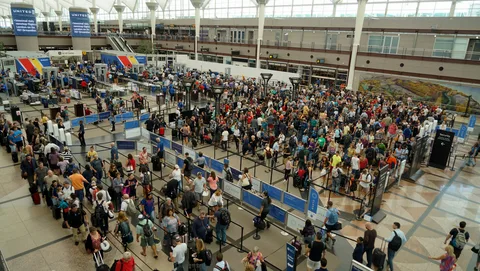
Travelers passing through TSA security checkpoints at Denver International Airport to avoid long security lines.
Traveling through Denver International Airport (DEN) can be exciting, but long TSA security lines can make your journey stressful. During busy travel periods, passengers may experience longer waiting times, especially during early mornings, weekends, holidays, and peak vacation seasons.
Understanding how airport security works and preparing before reaching the terminal can help you save time and avoid unnecessary delays. Whether you are traveling for business or vacation, these practical tips will help you move through security more efficiently.
1. Check Denver Airport Security Wait Times Before Leaving
One of the easiest ways to avoid long security lines is to check current airport security conditions before leaving home or your hotel.
Checking denver airport security wait times can help you understand how busy the security checkpoints are and plan your arrival accordingly.
You can check updates through:
- The official Denver International Airport website.
- TSA information and airport security resources.
- The airport’s official mobile services, where available.
- Airport information displays after arriving at the terminal.
Remember that security waiting times can change quickly depending on passenger traffic, staffing, and checkpoint conditions. Always allow additional time even when reported lines appear short.
2. Arrive at the Airport Early
Arriving early is one of the most effective ways to reduce travel stress.
Denver International Airport is a large airport, and passengers may need additional time for parking, checking luggage, finding their airline counter, and reaching security.
As a general planning guideline:
- Domestic flights: Arrive approximately 2 hours before departure.
- International flights: Arrive approximately 3 hours before departure.
During major holidays or particularly busy travel periods, consider allowing extra time.
Arriving early gives you more flexibility if security lines become longer than expected.
3. Apply for TSA PreCheck
TSA PreCheck is a trusted traveler program designed to make airport security screening more convenient for eligible passengers.
Travelers with TSA PreCheck can generally use designated screening lanes and may be allowed to keep their shoes, belts, and light jackets on during screening. Laptop and compliant liquids may also remain in carry-on bags, subject to screening requirements.
Benefits include:
- Access to dedicated TSA PreCheck lanes at participating checkpoints.
- A potentially faster screening experience.
- Less preparation at the security conveyor.
- More convenient travel for frequent flyers.
However, TSA PreCheck does not guarantee immediate screening or eliminate all security checks.
4. Prepare Your Carry-On Bag Before Reaching Security
Packing your carry-on bag correctly can make the screening process easier for both you and other passengers.
Before leaving for the airport, organize your belongings so that security officers can inspect them without unnecessary delays.
Follow these simple tips:
- Keep liquids in containers that meet TSA requirements.
- Place electronic devices where they can be easily accessed if required.
- Avoid carrying prohibited items.
- Keep travel documents in an accessible pocket.
- Remove unnecessary metal objects before entering the screening area.
The better organized your luggage is, the easier it becomes to follow security instructions.
5. Choose the Right Security Checkpoint
Denver International Airport has multiple security checkpoint options. Passenger traffic can vary between checkpoints depending on the time of day and airport operations.
Before joining a line, check the airport’s current checkpoint information and follow the signs and staff instructions.
Some checkpoint options may offer different access arrangements depending on airline, terminal access, operating hours, and eligibility.
Do not assume that the shortest-looking line is always the fastest. Checkpoint availability and security procedures can change throughout the day.
6. Travel During Less Busy Hours When Possible
Your flight departure time can influence how crowded the airport becomes.
Early mornings, weekends, and holiday periods can bring increased passenger traffic. If your travel schedule is flexible, choosing a less busy departure period may make the airport experience more comfortable.
Consider these general travel patterns:
| Travel Period | What to Expect |
|---|---|
| Early morning | Potentially busy due to departing flights |
| Midday | Passenger traffic varies |
| Late afternoon | Can become busy during peak travel |
| Evening | Traffic depends on flight schedules |
| Holidays | Higher passenger volumes are common |
These are general patterns, not guaranteed predictions. Always check current airport information before traveling.
7. Keep Your Boarding Pass and Identification Ready
Another simple way to avoid delays is to have your travel documents ready before reaching the security checkpoint.
Keep your boarding pass and acceptable identification easily accessible. Travelers should also check current TSA identification requirements before their departure date.
Avoid searching through your bags or phone while standing at the front of the security line.
If you are traveling with children or elderly family members, help them prepare their documents in advance.
8. Follow Airport Arrivals and Departure Information
Airport conditions can change because of weather, flight schedules, and passenger volume.
Checking denver airport arrivals information can help travelers understand flight activity and plan their airport transportation more effectively.
For passengers meeting friends or family, checking arrival updates can also prevent unnecessary waiting at the terminal.
However, remember that flight arrival information and TSA security waiting times are two different things. Arrivals information does not directly indicate how long departure security screening will take.
Use both resources for better travel planning.
9. Avoid Common Mistakes That Cause Security Delays
Some common mistakes can increase screening time and create unnecessary problems.
Avoid these situations:
- Carrying prohibited or restricted items.
- Packing liquids incorrectly.
- Waiting until the last minute to organize your belongings.
- Arriving without acceptable identification.
- Ignoring airport security instructions.
- Assuming every checkpoint has the same waiting time.
Following TSA rules and preparing your luggage in advance can help make the screening process smoother.
Final Thoughts
Avoiding long security lines at Denver International Airport starts with proper preparation. Checking airport updates, arriving early, organizing your carry-on luggage, and using TSA PreCheck when eligible can help make your journey easier.
Whether you are departing from Denver or checking flight information for family members, staying informed about airport conditions is important. Plan ahead, follow security instructions, and give yourself enough time to reach your gate without unnecessary stress.
Frequently Asked Questions
1. How can I avoid long security lines at Denver Airport?
Check current security information, arrive early, prepare your carry-on luggage, and consider enrolling in TSA PreCheck if eligible.
2. What is the best time to go through security at Denver Airport?
There is no guaranteed quiet period. Passenger traffic depends on flight schedules, weekdays, holidays, and airport operations.
3. Does TSA PreCheck reduce waiting times at Denver Airport?
It can provide access to dedicated screening lanes, which may reduce waiting time. However, shorter waits are not guaranteed.
4. How early should I arrive at Denver International Airport?
A general recommendation is two hours before domestic flights and three hours before international flights. Allow additional time during busy periods.
5. Where can I check Denver Airport security information?
Visit the official Denver International Airport website and TSA resources for current airport and screening information.