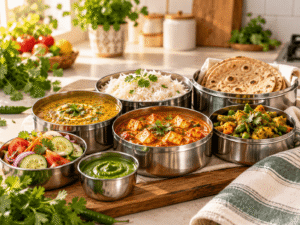
Malaysian food is built on bold flavour: sambal, rempah, kicap, belacan, a proper pot of curry. That boldness is also why sodium creeps up so easily. The good news is that most of what makes our food taste good has nothing to do with salt, and a few kitchen habits can bring sodium down without anyone at the table noticing.
Key Takeaways
- Malaysian adults average 3,167 mg of sodium a day, well above the WHO limit of 2,000 mg, and sauces and condiments are a big part of it.
- Aromatics, sourness, chilli heat and properly cooked rempah can carry a dish that uses noticeably less salt.
- Umami from ingredients like tomatoes, mushrooms or a pinch of MSG fills the gap salt leaves, because MSG has about one-third the sodium of salt.
- Cut gradually. Small reductions each week are easier to live with than a sudden switch.
Why is sodium so high in Malaysian home cooking?
Sodium is high mainly because it arrives from several directions at once. The Malaysian Community Salt Survey measured 24-hour urine sodium in 798 adults and found an average of 3,167 mg a day, about 7.9 g of salt, with roughly 79% above 2,000 mg (MyCoSS, Journal of Health, Population and Nutrition, 2021). The World Health Organization’s limit for adults is under 2,000 mg of sodium, or less than 5 g of salt, a day (WHO).
In a typical home kitchen, the salt shaker is only one contributor. Others include:
- Sauces: light and dark soy sauce, kicap manis, oyster sauce, fish sauce.
- Fermented and preserved ingredients: belacan, budu, cincalok, tempoyak, salted fish, salted egg, preserved vegetables.
- Shortcuts: stock cubes, instant paste mixes and seasoning powders.
- Salty proteins: ikan bilis, fish balls, processed sausages and luncheon meat.
A single dish often stacks three or four of these. The first step is simply noticing that stack.
Build flavour before you reach for salt
The most effective sodium cut happens at the start of cooking, not at the end.
Cook the rempah fully. Frying spice paste slowly until the oil separates (pecah minyak) develops deep, rounded flavour. Under-cooked rempah tastes raw and thin, which tempts cooks to add salt to compensate.
Lean on aromatics. Shallots, garlic, ginger, galangal, lemongrass, turmeric leaf, kaffir lime leaf and pandan all add complexity without sodium. Bruise lemongrass and tear lime leaves to release more aroma.
Toast your spices. Dry-toasting coriander, cumin and fennel seeds before grinding makes them noticeably more fragrant, so less seasoning is needed to make a curry taste finished.
Use heat and pepper. Fresh chilli, dried chilli and white pepper sharpen a dish and make lower salt far less noticeable.
Use sourness to brighten, not salt
Acid makes food taste more seasoned than it is. Malaysian cooking already has a rich toolkit: asam jawa (tamarind), asam keping, calamansi, lime, tomato and pineapple. A squeeze of calamansi over mee goreng or a little more tamarind in an asam pedas lets you pull back on salt and fish sauce while the dish still tastes lively. Add acid near the end of cooking and taste as you go.
Get smarter with sauces and shortcuts
Because sauces are often the biggest source, small changes here count most.
- Measure, don’t pour. Using a spoon instead of pouring straight from the bottle makes it easier to cut back gradually.
- Choose reduced-sodium versions of soy sauce where available, and compare the sodium figure per 100 ml on labels.
- Pick one salty anchor per dish. If a sambal already uses belacan, go lighter on salt and skip the extra fish sauce.
- Make stock from scratch with chicken bones, pork bones or vegetables instead of stock cubes, and season it lightly.
- Rinse or soak salted fish and preserved vegetables before cooking.
Replace some salt with umami
When salt comes down, food can taste “empty”. That missing feeling is often a lack of savouriness, or umami, rather than a lack of salt. You can bring it back with:
- Umami-rich ingredients: ripe tomatoes, dried shiitake mushrooms, homemade bone broth, and a small amount of dried shrimp or ikan bilis (still salty, so use sparingly).
- A pinch of MSG in place of part of the salt.
That second option works because of simple chemistry. Table salt is about 39% sodium by weight, while MSG is about 12%, so gram for gram MSG carries around one-third of the sodium (Ajinomoto Health & Nutrition, citing USDA data). Ajinomoto Malaysia’s explainer on how MSG vs salt compares on sodium walks through the difference in more detail.
In a University of California, Davis study, 163 adults tasted reduced-salt dishes with added MSG and rated them as well as or better than the full-salt originals, with sodium cuts of 31% to 61% depending on the dish (EurekAlert!, 2020). The research was industry-supported, but the principle is easy to test at home: halve the salt in your next pot of soup, add a small pinch of MSG, and taste.
One rule matters most. MSG lowers sodium only when it replaces salt. Adding it on top of the usual seasoning raises the total.
Cut gradually so your palate keeps up
Sudden, large cuts often fail because food tastes noticeably different and the salt comes back. A steadier approach works better:
- Week one: reduce added salt in everyday dishes by about a quarter.
- Week two: switch to measuring sauces and drop one salty ingredient where two are used.
- Week three onwards: bring in partial umami swaps and more acid, then keep trimming.
Many people find that after a few weeks, food they used to enjoy starts tasting too salty. That is a sign the approach is working.
Eating out and ordering in
Home cooking is only part of the picture. When eating out, ask for less gravy or sauce on the side, go easy on the soup of noodle dishes (much of the sodium sits in the broth), and balance a salty meal with lighter choices later in the day.
The bottom line
Cutting sodium in Malaysian cooking does not mean giving up on flavour. Properly cooked rempah, generous aromatics, a sour note, some heat and a thoughtful umami swap can carry a dish that uses far less salt and fewer sauces. Start small, measure what you pour, and let your palate adjust. Your family is unlikely to notice anything except that dinner still tastes good.