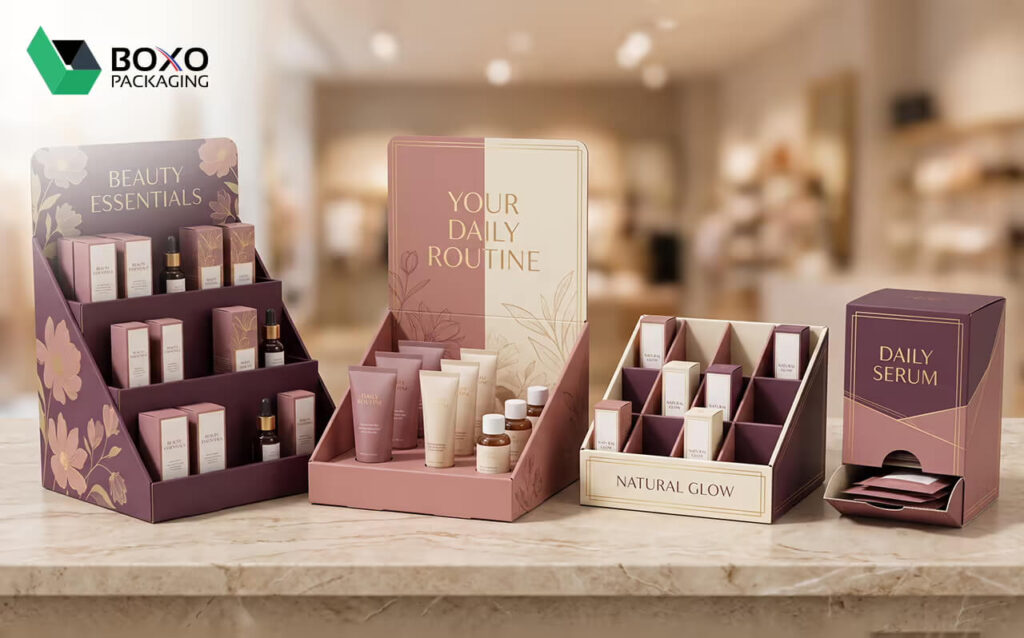
Impulse buys often happen within arm’s reach of the till. Well planned counter display boxes put small, easy to grab products right where shoppers are waiting to pay. This guide covers the main styles, materials and cost factors so you can brief a supplier clearly.
What a Counter Display Box Does
A counter display box is a compact carton that holds several units and presents them upright on a countertop. It usually opens with a tear strip, a hinged lid or a cut away front panel, so staff can set it out without unpacking each item.
The aim is to save time and keep stock tidy in a small footprint. A good unit also leaves space for a logo, price panel or promotional message facing the customer.
Styles and Where They Fit
The best style depends on product size, counter space and how quickly the item sells. Four options cover most requests:
- Tray style boxes: a shallow open front unit that suits candy, lip balm and small accessories.
- Tuck top display boxes: a lidded carton that doubles as a shipping box and a display once opened.
- Tiered boxes: stepped shelves that show more units at once.
- Dispenser boxes: a cut out opening that lets shoppers pull items out one at a time.
Most shops start with a tray style box, as it is the simplest and lowest cost option.
Materials and Board Strength
Folding carton board of around 300 to 400 GSM suits light products and gives sharp printing. Corrugated board, usually E or B flute, is better for heavier items or units that must hold their shape for weeks.
Weight matters more than size here. A small box packed with dense items can sag at the front panel if the board is too thin. For anything touching food, ask your supplier for board suitable for direct contact and confirm it meets FDA food contact requirements.
At Boxo Packaging, we usually ask for product weight, counter space and the number of units per display before suggesting a board grade. These details decide wall thickness far more than appearance does.
Printing and Finishing Choices
Digital printing suits short runs and frequent design changes. Offset printing gives richer color and a lower unit price on larger orders, while flexographic printing is common directly on corrugated board.
Matt lamination, spot UV and foil add a premium look, though each raises the cost. A bold one or two color design on kraft board can still stand out and stay affordable.
Cost Factors and Sustainability
Order quantity has the biggest effect on price, since setup and tooling are spread across more units. Board grade, size, print colors and finishing then add to the total, and a new cutting die is a one off charge.
Look for FSC certified board, water based inks and single material designs that recycle more easily. Avoid claiming a box is “fully green”, as every material has some footprint. Plastic windows and heavy lamination can complicate recycling.
Ordering Tips Before You Commit
Request a physical sample and fill it with real stock. Check that it stays upright when loaded, that the front panel does not sag and that staff can set it out quickly.
Allow extra lead time, since production and freight can take several weeks. A reliable supplier will question your specification rather than simply accept it. That is how we work at Boxo Packaging, because fixing a problem early costs far less than a reprint, especially with counter display boxes.
Cosmetic Rigid Packaging: A Practical Guide for Premium Beauty Brands
A heavy, well finished box tells a shopper what a product costs before they check the price. Cosmetic rigid packaging gives perfume, skincare sets and makeup collections the weight and feel that thinner cartons cannot match. This guide covers the structure, materials and cost factors so you can brief a supplier clearly.
What Makes a Rigid Box Different
A rigid box is built from thick greyboard, wrapped in printed paper and assembled into a firm case that does not collapse when squeezed. Standard cartons are folded from a single flat sheet, while rigid boxes are glued together from several pieces.
This gives a premium feel and stronger protection for glass bottles and palettes. The trade-off is cost and space, since rigid boxes usually arrive assembled and cannot ship flat.
Styles Used in Beauty
The best style depends on product weight, price point and how the unboxing should feel. Four options cover most requests:
- Lid and base boxes: a separate lid lifts off a deep base, suited to gift sets and fragrance.
- Magnetic closure boxes: a hidden magnet holds the flap shut, popular for skincare collections.
- Book style boxes: a hinged lid that opens like a cover, good for palettes and keepsake sets.
- Drawer boxes: a tray slides out of a sleeve for a neat reveal.
Start with the style that suits your bestseller, then adapt it across the range.
Materials and Board Weights
Rigid boxes typically use greyboard of 1.5 to 3 mm, wrapped in printed or coated paper of around 120 to 157 GSM. Thicker board suits heavier glass items, while thinner board keeps lighter sets neat and affordable.
Inserts matter as much as the shell. Card, molded pulp or EVA foam inserts hold bottles firmly, though card and pulp recycle more easily than foam. In the US, the FDA regulates cosmetics, and the outer box is generally a labeling matter rather than a contact material.
At Boxo Packaging, we usually ask for product weight, container type and sales channel before suggesting a board thickness, since a shelf item and a posted item need different strength.
Finishes and Wrapping Papers
Matt or soft touch lamination, foil, embossing and spot UV add a luxury look, though each raises the cost. Textured and specialty papers can look rich without heavy printing.
Some coatings and foils complicate recycling, so weigh the look against disposal. A simple one or two color design on quality paper often feels more refined than a crowded one.
Cost Factors and Sustainability
Order quantity has the biggest effect on price, since tooling and hand assembly are spread across more units. Board thickness, size, wrap paper, finishes and inserts then add to the total.
Look for FSC certified board and paper, water based adhesives and inks, and single material inserts. Avoid claiming a box is “fully green”, as every material has some footprint. Rigid boxes use more material than folding cartons, so consider whether the premium feel suits your product.
Ordering Tips Before You Commit
Request a physical sample and fit the real product inside. Check that corners are clean, the lid closes smoothly and the insert holds the item without rattling.
Allow extra lead time, since rigid boxes involve more handwork and freight can take several weeks. A reliable supplier will question your specification rather than simply accept it. That is how we work at Boxo Packaging, because fixing a problem early costs far less than a reprint, especially with cosmetic rigid packaging.