A burst pipe at 2 a.m. or a storm that pushes water under the back door can turn an ordinary night into a stressful scramble. In those first hours, homeowners and business owners often aren’t sure what to do or how quickly they need to act. Emergency Water Damage Restoration in Ranger, GA focuses on that critical window, when fast decisions can limit the damage and lower long-term repair costs.
This article explains why speed matters, what usually causes water damage in homes and businesses, and how proper drying protects a building’s health and value.
Why the First 48 Hours Matter So Much
Water doesn’t stay where it lands. It moves into drywall, slips under flooring, and soaks into insulation, wood framing, and furniture. The longer it sits, the deeper it travels and the harder it is to remove.
Restoration professionals often describe water damage as a timeline. In the first few hours, water spreads and starts staining materials. Within a day, drywall may swell and wood can begin to warp.
Mold is the biggest concern. Under the right conditions, it can start growing within 24 to 48 hours. North Georgia’s warm, humid climate makes those conditions easier to reach, especially in summer.
That is why emergency response matters. Quick water removal and drying often mean the difference between a simple cleanup and a full rebuild of walls, floors, or cabinets.
Common Causes of Water Damage in Homes
Most residential water damage doesn’t come from dramatic floods. It comes from everyday systems that fail without warning.
Plumbing failures top the list. Supply lines under sinks, aging water heaters, and cracked pipes can release a surprising amount of water. A single burst supply line can leak hundreds of gallons before anyone notices.
Appliance leaks are another frequent source. Washing machine hoses, dishwasher connections, and refrigerator ice-maker lines all wear out over time. Because these appliances sit against walls or inside cabinets, small leaks can go unseen for weeks.
Weather-related damage is also common in the region. Heavy spring storms, clogged gutters, and poor drainage can send water into basements and crawl spaces. Rural properties with sloped lots sometimes deal with runoff that pools near the foundation.
Frozen pipes occasionally cause trouble during cold snaps. Georgia winters are mild most years, but a hard freeze can catch homeowners off guard, especially in homes with pipes in exterior walls or unheated crawl spaces.
Common Causes of Water Damage in Commercial Buildings
Businesses face many of the same risks, plus a few unique ones. Larger plumbing systems, rooftop HVAC units, and fire sprinkler lines all add potential failure points.
Flat commercial roofs can collect standing water after heavy rain. Over time, that water finds weak seams and drips into ceilings, offices, or storage areas. Sprinkler malfunctions can also release large volumes of water in minutes.
For business owners, the impact goes beyond property. Closed doors mean lost revenue, delayed orders, and frustrated customers. That’s why many local businesses look into Commercial Restoration Solutions in Ranger, GA before a problem happens, so they understand their options in advance.
The Hidden Risks of Lingering Moisture
Visible water is only part of the problem. The moisture you can’t see often causes the most damage.
Water wicks upward into drywall and settles into wall cavities. It can sit under vinyl or laminate flooring long after the surface looks dry. Insulation can hold moisture for weeks, quietly feeding mold growth.
Lingering moisture creates several risks:
- Mold and mildew growth that can affect indoor air quality
- Wood rot in subfloors, framing, and trim
- Musty odors that are hard to remove later
- Weakened building materials, such as crumbling drywall or sagging ceilings
- Pest attraction, since damp areas draw insects like termites
People with allergies, asthma, or other breathing concerns are often the first to notice problems. Persistent odors or a stuffy feeling indoors can signal moisture that was never fully removed.
Why Proper Drying and Cleanup Matter
Many people try to handle water damage with towels, box fans, and an open window. That can help with small spills, but it rarely removes moisture trapped inside walls and floors.
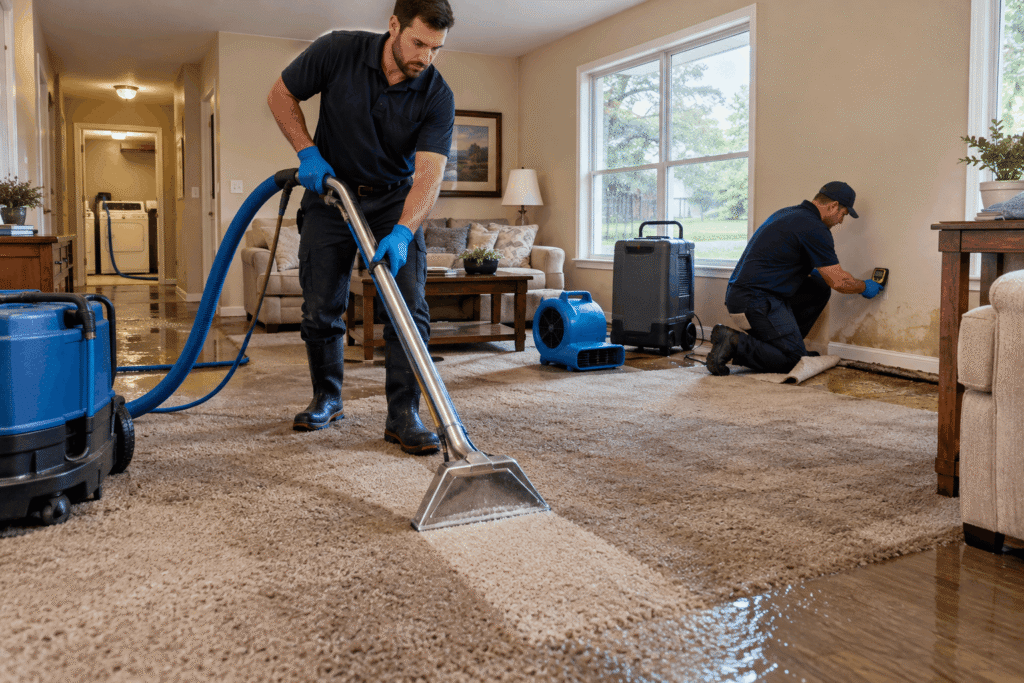
Professional drying relies on a few key tools. Moisture meters and thermal imaging cameras help locate hidden water. Commercial dehumidifiers pull moisture from the air, while air movers speed up evaporation from surfaces.
The process is measured, not guessed. Technicians track moisture levels each day until materials return to normal readings. Industry standards, such as those published by the IICRC (Institute of Inspection, Cleaning and Restoration Certification), guide much of this work.
Understanding Water Categories
Not all water is the same. Restoration experts usually sort it into three categories:
- Category 1 (clean water): From supply lines or faucets. Lowest health risk.
- Category 2 (gray water): From washing machines or dishwashers. May contain contaminants.
- Category 3 (black water): From sewage backups or outdoor floodwater. Requires careful handling and often removal of soaked materials.
The category affects how cleanup happens. Clean water damage may allow carpet and padding to be dried and saved. Black water usually means porous materials must be removed and replaced for safety.
It’s also worth knowing that clean water can become contaminated over time. Water that sits for a couple of days may move into a higher category as bacteria grow.
Real-World Examples
Consider a family who returns from a weekend trip to find their kitchen floor soaked. A cracked supply line under the sink has been leaking for two days. The hardwood is already cupping, and the base cabinets have absorbed water.
In a case like this, quick extraction and drying might save part of the flooring. Cabinets may need to be pulled away from the wall so air can reach the hidden space behind them. Without that step, mold could develop out of sight.
Now picture a small retail shop after a spring thunderstorm. Water seeps through a worn roof seam and drips onto inventory and ceiling tiles. The owner wants to reopen as soon as possible.
Here, the focus shifts to protecting stock, removing damaged ceiling materials, and drying the space while limiting downtime. Many restoration teams work in phases so parts of a business can stay open during the process.
A third example involves a homeowner who notices a musty smell in a back bedroom months after a minor leak. The carpet looked dry, so no one checked further. A moisture inspection reveals damp subflooring and early mold growth. This is a common scenario, and it shows why thorough drying matters even when damage seems small.
What Property Owners Can Do Right Away
While waiting for help, a few simple actions can reduce damage. Shutting off the main water valve stops the source in plumbing-related leaks. Turning off electricity in affected areas lowers the risk of shock.
Taking photos and videos of the damage helps with insurance claims. Moving furniture, electronics, and important papers to dry areas can save personal belongings. It’s also wise to avoid using household vacuums on standing water, since they aren’t built for it.
Choosing a Restoration Provider
When looking for help, property owners often compare response times, certifications, and experience with insurance documentation. Local familiarity can also matter, since nearby teams understand regional weather patterns and common building styles.
Providers in the area, such as Voda Cleaning & Restoration, are among the options residents may come across while researching emergency help. Asking about IICRC certification, drying methods, and how moisture is documented is a smart way to compare any company.
For businesses, it can help to ask whether a provider handles larger spaces and offers Commercial Restoration Solutions in Ranger, GA that minimize disruption to daily operations.
Final Thoughts
Water damage moves fast, and the cost of waiting usually grows by the hour. Understanding the causes, the hidden risks of moisture, and the value of proper drying helps property owners make calmer, smarter decisions when an emergency strikes.
A good next step is to locate your main water shutoff valve today and check the hoses on your washing machine and other appliances. Small habits like these, paired with a basic understanding of Emergency Water Damage Restoration in Ranger, GA, can protect a home or business from far bigger problems down the road.
Frequently Asked Questions
How quickly should water damage be addressed?
Ideally, within the first 24 to 48 hours. Mold can begin growing in that window, and materials like drywall and wood start breaking down the longer they stay wet.
Does homeowners insurance cover water damage?
It depends on the cause. Sudden events like a burst pipe are often covered, while gradual leaks or flood damage may not be. Reviewing your policy and documenting damage with photos is always a good idea.
How long does it take to dry a water-damaged home?
Most structural drying takes about three to five days, depending on how much water was involved and which materials were affected. Technicians typically monitor moisture levels daily until everything is fully dry.
Can wet carpet be saved after water damage?
Sometimes. Carpet soaked with clean water can often be dried and cleaned if treated quickly. Carpet exposed to sewage or floodwater usually needs to be replaced for health and safety reasons.
Is it safe to stay in a home with water damage?
For minor, clean-water leaks, it’s often safe as long as electrical hazards are addressed. Sewage backups, major flooding, or visible mold may make it safer to stay elsewhere until cleanup is complete.