A cat’s nutritional needs change throughout its life. A growing kitten needs nutrients that support rapid development, an adult cat needs balanced food to maintain energy and a healthy weight, while a senior cat may benefit from nutrition suited to changing digestion, activity, and muscle condition. Choosing the right food is therefore about more than selecting a flavor or comparing package sizes. Cat owners also need to consider nutritional value, feeding requirements, product quality, and Cat food Price in Pakistan. A food that fits your cat’s life stage and daily needs can offer better value than simply choosing the cheapest available option. This guide explains what cats need at different stages of life and how to make practical decisions when selecting and feeding cat food. Understanding a Cat’s Nutritional Needs Cats have nutritional requirements that are different from humans and many other pets. Their bodies are designed to obtain essential nutrients from animal-based sources, and a balanced diet provides the protein, fats, vitamins, minerals, and water needed for normal body functions. Protein plays an important role in maintaining muscles and supporting growth. Cats need adequate protein throughout their lives, although the amount and overall nutritional balance may vary according to age and individual needs. Fats provide concentrated energy and also contribute to healthy skin and coat condition. Certain essential fatty acids are particularly useful for maintaining normal skin and coat health. Vitamins and minerals support numerous processes in the body, including normal bone development, immune function, metabolism, and other everyday functions. A complete diet should provide these nutrients in appropriate amounts. Water is equally important. Cats should have access to clean, fresh water every day. Hydration supports normal digestion and other essential body processes. Because nutritional requirements vary by life stage, feeding the same type and quantity of food throughout a cat’s entire life may not always be appropriate. Kitten Nutrition: Supporting Early Growth and Development The first stage of a cat’s life is a period of rapid growth. Kittens are developing their bones, muscles, organs, brain, and immune system, so their nutritional needs are different from those of adult cats. Kitten food should provide nutrient-dense nutrition appropriate for their stage of development. Protein supports muscle development, while fats provide energy for their active lifestyle. Vitamins and minerals also contribute to normal bone development and other essential functions. Proper nutrition during kittenhood can support: Healthy bone and muscle development Normal brain development Immune system development Appropriate growth and weight gain Daily energy and activity Kittens also have smaller stomachs than adult cats, so they may need appropriately sized meals offered more frequently. Feeding recommendations should always be adjusted according to the kitten’s age, size, activity, and the guidance provided on the food packaging. Adult cat food is not necessarily designed to meet the same nutritional requirements as food formulated specifically for growing kittens. For this reason, owners should select a product appropriate for the kitten’s development stage. Adult Cat Nutrition: Maintaining Energy and Healthy Weight Once a cat reaches adulthood, its nutritional priorities change. Growth is no longer the main focus. Instead, the goal is to maintain healthy body condition, lean muscle, normal digestion, energy, and overall wellbeing. A balanced adult cat diet should provide the nutrients required for everyday activity without supplying excessive calories. Portion control becomes especially important because overfeeding can contribute to unwanted weight gain. An indoor cat that spends most of its day resting may have different energy requirements from an active cat that regularly runs, climbs, and plays. Age, body size, activity level, and individual metabolism can all affect how much food a cat needs. Owners should pay attention to changes in body condition rather than relying only on how much food is placed in the bowl. If a cat is gaining or losing weight unexpectedly, its feeding routine may need to be reviewed. Persistent changes should be discussed with a veterinarian. Balanced adult nutrition can help support: Lean muscle maintenance Normal energy levels Healthy digestion Skin and coat condition Appropriate body weight Senior Cat Nutrition: Supporting Healthy Aging As cats grow older, their nutritional needs can change again. Senior cats may become less active, experience changes in appetite, or have different digestive needs. A suitable senior diet should provide balanced nutrition while supporting muscle maintenance, digestion, normal mobility, and overall vitality. Food that is appropriate for an older cat should be selected according to the individual animal rather than age alone. Senior cat owners should monitor several everyday changes, including appetite, body weight, water intake, activity, and digestion. A noticeable change in any of these areas can sometimes indicate that the cat’s nutritional needs or overall health require attention. Older cats may also benefit from a feeding routine that remains consistent and easy to manage. If a senior cat develops a noticeable health or dietary issue, owners should seek veterinary advice rather than changing the diet based solely on assumptions. Choosing Cat Food Based on Your Cat’s Needs Age is one of the most useful starting points when selecting cat food, but it is not the only factor. Consider your cat’s: Age and life stage Body size Activity level Eating habits Digestive sensitivity Body condition Individual health requirements Product labels can also help you make a more informed decision. Look at the nutritional information, ingredient details, feeding guidance, product type, and recommended life stage. Marketing claims on packaging can sometimes make food selection feel more complicated than it needs to be. Instead of focusing on a single highlighted ingredient or claim, consider whether the overall product is appropriate for your cat and whether it provides the nutritional balance required for its life stage. If your cat has a diagnosed health condition or specific dietary requirement, discuss suitable food choices with a veterinarian. How to Compare Cat Food Price in Pakistan For many households, Cat food Price in Pakistan is an important part of the purchasing decision. But comparing only the number printed on the package can give you an incomplete picture of value. Prices can vary because of differences in ingredients, formulation, pack size, product type, manufacturing costs, and distribution. A smaller package may have a lower total price but cost more per kilogram than a larger package. One practical way to compare products is to calculate the price per kilogram. For example, if one package costs Rs. 1,500 and contains 1.5 kg, the cost is Rs. 1,000 per kilogram. Another package may cost Rs. 2,500 but contain 3 kg, bringing its cost to approximately Rs. 833 per kilogram. This does not automatically make the larger package the better choice. The food still needs to be suitable for your cat, and the package should be used within the recommended storage and freshness period. The most useful comparison considers price alongside nutritional suitability, feeding requirements, freshness, pack size, and availability. Understanding Pet Food Price in Pakistan The broader Pet food price in Pakistan can vary considerably depending on the type of animal and the product being purchased. Cat food, kitten food, dog food, fish food, and specialized formulations can have different prices because their nutritional formulations and ingredients are not necessarily the same. Pack size also affects the total cost. Smaller packs can be practical when introducing a new food or feeding a single cat. Larger packs may be more convenient for households with several cats, provided the food can be stored correctly and consumed while fresh. Instead of choosing food based entirely on price, consider how much your cat needs each day and how long a particular package will last. This provides a clearer picture of the actual feeding cost. How to Feed Your Cat the Right Amount Even good-quality cat food needs to be fed appropriately. Overfeeding can contribute to excessive weight gain, while underfeeding may prevent a cat from receiving adequate nutrition. Start with the feeding guidance provided on the product packaging. Then consider your cat’s age, weight, activity level, and body condition. Portions may need to be adjusted as a cat grows, becomes more active, gains weight, or enters a different life stage. Treats should also be given in moderation. They can be useful for rewards, but they should not replace balanced meals. Fresh, clean water should be available every day. Owners should also observe their cat’s appetite, digestion, energy, and body weight. Sudden or persistent changes should be discussed with a veterinarian. How to Transition Your Cat to a New Food Cats can be sensitive to sudden dietary changes. Switching food gradually can make the process easier on the digestive system. A transition over approximately 7–10 days can follow this general pattern: Days 1–2: Mostly the current food with a small amount of the new food Days 3–4: Increase the proportion of new food Days 5–6: Move toward a higher proportion of new food Days 7–10: Gradually reach the new diet if your cat is responding well During the transition, monitor appetite, stool consistency, digestion, and general behavior. If your cat experiences persistent digestive problems or refuses food, seek veterinary advice. There is no need to rush the process. A gradual change gives your cat time to become accustomed to the new taste and texture. Proper Storage for Freshness and Quality Correct storage helps protect dry cat food from moisture, heat, and contamination. Keep food in a cool, dry location away from direct sunlight. Close the original packaging securely after each use, or use a clean airtight container when appropriate. Avoid storing food in humid areas where moisture can affect its quality. Always follow the storage instructions provided on the product packaging. Check the condition of the food before serving it and avoid using products that appear spoiled or have been stored improperly. Proper storage also helps maintain taste and freshness, which can make mealtime more enjoyable for your cat. Choosing a Reliable Pet Food Manufacturer Whether you are buying cat food or researching Dog food manufacturers in Pakistan, the same basic quality considerations can help you evaluate a pet food manufacturer. Look for clear product information, consistent formulations, appropriate nutritional guidance, quality-control practices, suitable packaging, and reliable availability. A manufacturer should make it reasonably easy for customers to understand what a product is designed for and how it should be fed. Clear feeding instructions and storage information are particularly useful for pet owners. Availability also matters. A suitable food is easier to incorporate into a feeding routine when it can be purchased consistently rather than requiring frequent changes because of supply issues. A Simple Checklist for Choosing Cat Food Before buying a product, ask yourself: Is it appropriate for my cat’s life stage? Does it provide balanced nutrition? Is the ingredient and nutritional information clear? Is the pack size suitable for my household? Does the price fit my budget? Can I store the food correctly? Does my cat respond well to it? This simple checklist can make the buying process much easier. Supporting Your Cat Through Every Life Stage Cats do not have the same nutritional needs throughout their lives. Kittens require nutrition that supports rapid growth and development. Adult cats need balanced food that helps maintain energy, lean muscle, digestion, and healthy body weight. Senior cats may need nutrition suited to changing activity, digestion, and overall condition. When comparing Cat food Price in Pakistan, look beyond the package price. Consider the nutritional suitability, serving requirements, pack size, storage needs, and how well your cat responds to the food. The best choice is one that fits both your cat’s life stage and your household’s practical needs. With suitable nutrition, appropriate portions, fresh water, and a consistent feeding routine, you can give your cat a better foundation for health and wellbeing at every stage of life.

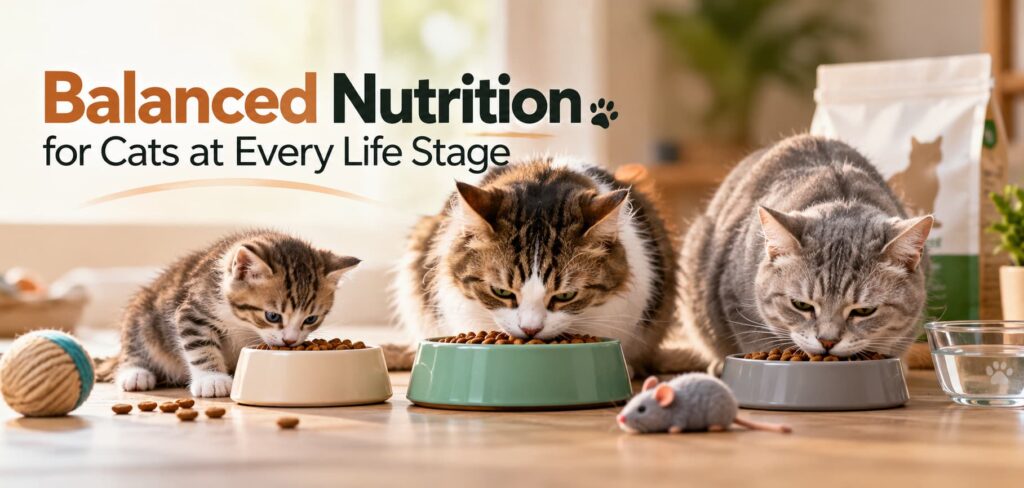
A cat’s nutritional needs change throughout its life. A growing kitten needs nutrients that support rapid development, an adult cat needs balanced food to maintain energy and a healthy weight, while a senior cat may benefit from nutrition suited to changing digestion, activity, and muscle condition.

Choosing the right food is therefore about more than selecting a flavor or comparing package sizes. Cat owners also need to consider nutritional value, feeding requirements, product quality, and Cat food Price in Pakistan. A food that fits your cat’s life stage and daily needs can offer better value than simply choosing the cheapest available option.

This guide explains what cats need at different stages of life and how to make practical decisions when selecting and feeding cat food.

Understanding a Cat’s Nutritional Needs

Cats have nutritional requirements that are different from humans and many other pets. Their bodies are designed to obtain essential nutrients from animal-based sources, and a balanced diet provides the protein, fats, vitamins, minerals, and water needed for normal body functions.

Protein plays an important role in maintaining muscles and supporting growth. Cats need adequate protein throughout their lives, although the amount and overall nutritional balance may vary according to age and individual needs.

Fats provide concentrated energy and also contribute to healthy skin and coat condition. Certain essential fatty acids are particularly useful for maintaining normal skin and coat health.

Vitamins and minerals support numerous processes in the body, including normal bone development, immune function, metabolism, and other everyday functions. A complete diet should provide these nutrients in appropriate amounts.

Water is equally important. Cats should have access to clean, fresh water every day. Hydration supports normal digestion and other essential body processes.

Because nutritional requirements vary by life stage, feeding the same type and quantity of food throughout a cat’s entire life may not always be appropriate.

Kitten Nutrition: Supporting Early Growth and Development

The first stage of a cat’s life is a period of rapid growth. Kittens are developing their bones, muscles, organs, brain, and immune system, so their nutritional needs are different from those of adult cats.

Kitten food should provide nutrient-dense nutrition appropriate for their stage of development. Protein supports muscle development, while fats provide energy for their active lifestyle. Vitamins and minerals also contribute to normal bone development and other essential functions.

Proper nutrition during kittenhood can support:

  • Healthy bone and muscle development
  • Normal brain development
  • Immune system development
  • Appropriate growth and weight gain
  • Daily energy and activity

Kittens also have smaller stomachs than adult cats, so they may need appropriately sized meals offered more frequently. Feeding recommendations should always be adjusted according to the kitten’s age, size, activity, and the guidance provided on the food packaging.

Adult cat food is not necessarily designed to meet the same nutritional requirements as food formulated specifically for growing kittens. For this reason, owners should select a product appropriate for the kitten’s development stage.

Adult Cat Nutrition: Maintaining Energy and Healthy Weight

Once a cat reaches adulthood, its nutritional priorities change. Growth is no longer the main focus. Instead, the goal is to maintain healthy body condition, lean muscle, normal digestion, energy, and overall wellbeing.

A balanced adult cat diet should provide the nutrients required for everyday activity without supplying excessive calories. Portion control becomes especially important because overfeeding can contribute to unwanted weight gain.

An indoor cat that spends most of its day resting may have different energy requirements from an active cat that regularly runs, climbs, and plays. Age, body size, activity level, and individual metabolism can all affect how much food a cat needs.

Owners should pay attention to changes in body condition rather than relying only on how much food is placed in the bowl. If a cat is gaining or losing weight unexpectedly, its feeding routine may need to be reviewed. Persistent changes should be discussed with a veterinarian.

Balanced adult nutrition can help support:

  • Lean muscle maintenance
  • Normal energy levels
  • Healthy digestion
  • Skin and coat condition
  • Appropriate body weight

Senior Cat Nutrition: Supporting Healthy Aging

As cats grow older, their nutritional needs can change again. Senior cats may become less active, experience changes in appetite, or have different digestive needs.

A suitable senior diet should provide balanced nutrition while supporting muscle maintenance, digestion, normal mobility, and overall vitality. Food that is appropriate for an older cat should be selected according to the individual animal rather than age alone.

Senior cat owners should monitor several everyday changes, including appetite, body weight, water intake, activity, and digestion. A noticeable change in any of these areas can sometimes indicate that the cat’s nutritional needs or overall health require attention.

Older cats may also benefit from a feeding routine that remains consistent and easy to manage. If a senior cat develops a noticeable health or dietary issue, owners should seek veterinary advice rather than changing the diet based solely on assumptions.

Choosing Cat Food Based on Your Cat’s Needs

Age is one of the most useful starting points when selecting cat food, but it is not the only factor.

Consider your cat’s:

  • Age and life stage
  • Body size
  • Activity level
  • Eating habits
  • Digestive sensitivity
  • Body condition
  • Individual health requirements

Product labels can also help you make a more informed decision. Look at the nutritional information, ingredient details, feeding guidance, product type, and recommended life stage.

Marketing claims on packaging can sometimes make food selection feel more complicated than it needs to be. Instead of focusing on a single highlighted ingredient or claim, consider whether the overall product is appropriate for your cat and whether it provides the nutritional balance required for its life stage.

If your cat has a diagnosed health condition or specific dietary requirement, discuss suitable food choices with a veterinarian.

How to Compare Cat Food Price in Pakistan

For many households, Cat food Price in Pakistan is an important part of the purchasing decision. But comparing only the number printed on the package can give you an incomplete picture of value.

Prices can vary because of differences in ingredients, formulation, pack size, product type, manufacturing costs, and distribution. A smaller package may have a lower total price but cost more per kilogram than a larger package.

One practical way to compare products is to calculate the price per kilogram.

For example, if one package costs Rs. 1,500 and contains 1.5 kg, the cost is Rs. 1,000 per kilogram. Another package may cost Rs. 2,500 but contain 3 kg, bringing its cost to approximately Rs. 833 per kilogram.

This does not automatically make the larger package the better choice. The food still needs to be suitable for your cat, and the package should be used within the recommended storage and freshness period.

The most useful comparison considers price alongside nutritional suitability, feeding requirements, freshness, pack size, and availability.

Understanding Pet Food Price in Pakistan

The broader Pet food price in Pakistan can vary considerably depending on the type of animal and the product being purchased.

Cat food, kitten food, dog food, fish food, and specialized formulations can have different prices because their nutritional formulations and ingredients are not necessarily the same.

Pack size also affects the total cost. Smaller packs can be practical when introducing a new food or feeding a single cat. Larger packs may be more convenient for households with several cats, provided the food can be stored correctly and consumed while fresh.

Instead of choosing food based entirely on price, consider how much your cat needs each day and how long a particular package will last. This provides a clearer picture of the actual feeding cost.

How to Feed Your Cat the Right Amount

Even good-quality cat food needs to be fed appropriately. Overfeeding can contribute to excessive weight gain, while underfeeding may prevent a cat from receiving adequate nutrition.

Start with the feeding guidance provided on the product packaging. Then consider your cat’s age, weight, activity level, and body condition.

Portions may need to be adjusted as a cat grows, becomes more active, gains weight, or enters a different life stage.

Treats should also be given in moderation. They can be useful for rewards, but they should not replace balanced meals.

Fresh, clean water should be available every day. Owners should also observe their cat’s appetite, digestion, energy, and body weight. Sudden or persistent changes should be discussed with a veterinarian.

How to Transition Your Cat to a New Food

Cats can be sensitive to sudden dietary changes. Switching food gradually can make the process easier on the digestive system.

A transition over approximately 7–10 days can follow this general pattern:

  • Days 1–2: Mostly the current food with a small amount of the new food
  • Days 3–4: Increase the proportion of new food
  • Days 5–6: Move toward a higher proportion of new food
  • Days 7–10: Gradually reach the new diet if your cat is responding well

During the transition, monitor appetite, stool consistency, digestion, and general behavior. If your cat experiences persistent digestive problems or refuses food, seek veterinary advice.

There is no need to rush the process. A gradual change gives your cat time to become accustomed to the new taste and texture.

Proper Storage for Freshness and Quality

Correct storage helps protect dry cat food from moisture, heat, and contamination.

Keep food in a cool, dry location away from direct sunlight. Close the original packaging securely after each use, or use a clean airtight container when appropriate. Avoid storing food in humid areas where moisture can affect its quality.

Always follow the storage instructions provided on the product packaging. Check the condition of the food before serving it and avoid using products that appear spoiled or have been stored improperly.

Proper storage also helps maintain taste and freshness, which can make mealtime more enjoyable for your cat.

Choosing a Reliable Pet Food Manufacturer

Whether you are buying cat food or researching Dog food manufacturers in Pakistan, the same basic quality considerations can help you evaluate a pet food manufacturer.

Look for clear product information, consistent formulations, appropriate nutritional guidance, quality-control practices, suitable packaging, and reliable availability.

A manufacturer should make it reasonably easy for customers to understand what a product is designed for and how it should be fed. Clear feeding instructions and storage information are particularly useful for pet owners.

Availability also matters. A suitable food is easier to incorporate into a feeding routine when it can be purchased consistently rather than requiring frequent changes because of supply issues.

A Simple Checklist for Choosing Cat Food

Before buying a product, ask yourself:

  • Is it appropriate for my cat’s life stage?
  • Does it provide balanced nutrition?
  • Is the ingredient and nutritional information clear?
  • Is the pack size suitable for my household?
  • Does the price fit my budget?
  • Can I store the food correctly?
  • Does my cat respond well to it?

This simple checklist can make the buying process much easier.

Supporting Your Cat Through Every Life Stage

Cats do not have the same nutritional needs throughout their lives. Kittens require nutrition that supports rapid growth and development. Adult cats need balanced food that helps maintain energy, lean muscle, digestion, and healthy body weight. Senior cats may need nutrition suited to changing activity, digestion, and overall condition.

When comparing Cat food Price in Pakistan, look beyond the package price. Consider the nutritional suitability, serving requirements, pack size, storage needs, and how well your cat responds to the food.

The best choice is one that fits both your cat’s life stage and your household’s practical needs. With suitable nutrition, appropriate portions, fresh water, and a consistent feeding routine, you can give your cat a better foundation for health and wellbeing at every stage of life.

Leave a Reply

Your email address will not be published. Required fields are marked *