Market Overview
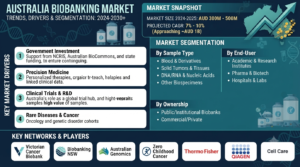
The Australia biobanking market is growing steadily, supported by rising genomic research, precision medicine adoption, surging government funding, an increasing burden of chronic disease, public-private collaboration, ethical regulatory frameworks, better cold-chain logistics, expanding clinical trial activity, population-scale health studies, and the growth of rare disease-focused biobanks. The market size reached USD 1,354.2 Million in 2025 and is projected to reach USD 2,107.1 Million by 2034, registering a compound annual growth rate (CAGR) of 4.88% during 2026-2034. National genomics programs, longitudinal cohort studies, disease-specific biobanks, and automated sample management are shaping the Australia biobanking market share and outlook through 2034.
Market Summary
- Biobanks collect, process, store, and distribute biological samples such as blood, tissue, cell lines, and nucleic acids, together with the clinical and lifestyle data that make them useful for research and treatment development.
- National initiatives such as Genomics Australia and the Genomic Health Futures Mission under the Medical Research Future Fund (MRFF) are funding projects that rely on high-quality biological samples for research and diagnostics.
- In 2025, the Australian Government committed over USD 140 million to two UNSW-led precision medicine initiatives, nearly USD 113 million to broaden the ZERO Childhood Cancer Program nationwide, and over USD 30 million to extend PrOSPeCT’s genomic profiling for advanced and rare adult cancers.
- Dedicated funding has supported disease-specific and population-wide biobanks across major cities, improving geographic coverage and research inclusion, while guidelines from the National Health and Medical Research Council (NHMRC) keep operations ethical and scientifically reliable.
- Cancer, diabetes, and cardiovascular disease account for a large share of national healthcare costs and research funding, and biobanks allow long-term collection of patient samples for longitudinal cohort studies.
- Hospitals and academic institutions are building biobanking into clinical workflows, collecting samples at diagnosis, treatment, and follow-up to enrich datasets for multi-phase analysis.
- Public-private partnerships between research institutions and biotechnology firms are creating biobank-linked genomic datasets that support drug discovery, biomarker validation, and patient stratification.
- New specialist biobanks, such as those for hearing loss genetics and the human gut microbiome, show the shift toward focused collections for rare and complex conditions.
- Ethical and privacy requirements, high costs of cold storage and data management, and the need for consistent sample quality and standardised protocols remain key challenges.
- The market is segmented by specimen type (blood products, solid tissue, cell lines, nucleic acid, others), biobank type (population-based biobanks, disease-oriented biobanks), application (therapeutics, research), end user (academic institutions, pharma and biotech companies), and region, with forecasts for 2026-2034.
Market Growth Drivers
Rising Investments in Genomics and Precision Medicine
Sustained investment in genomics and precision medicine is a central driver of biobanking. National initiatives such as Genomics Australia and the Genomic Health Futures Mission under the MRFF are funding projects that depend on well-annotated biological samples, and they aim to bring genomics into routine clinical care. That integration directly raises demand for organised biobanks that can supply ethically collected specimens. As personalised therapies become more common, researchers need diverse, longitudinal collections of DNA, RNA, and tissue for targeted drug discovery, biomarker validation, and patient stratification, which places biobanks at the backbone of precision medicine in Australia.
Government-Backed Programs Expanding Infrastructure
Federal and state programs are actively supporting the expansion and modernisation of biobanking infrastructure. The MRFF, backed by several billion dollars, has advanced biobanking in line with national research goals, and 2025 commitments to UNSW-led precision medicine initiatives, the ZERO Childhood Cancer Program, and PrOSPeCT all rely on high-quality sample collections. Dedicated funding streams have allowed disease-specific and population-wide biobanks to be set up in major cities, and investment in data management systems, sample tracking, and standardised collection protocols improves quality. A policy environment that encourages translational research and commercialisation also helps attract global clinical trials and research collaborations.
Growth in Chronic Disease Burden Driving Sample Demand
The rising burden of chronic disease increases demand for biospecimens. Cancer, diabetes, and cardiovascular disease account for a large proportion of national healthcare costs and research funding, and researchers use stored samples to study long-term outcomes and the genetic, molecular, and lifestyle factors behind them. Collecting samples over extended periods supports longitudinal cohort studies, and hospitals and academic institutions are embedding biobanking into clinical workflows to collect specimens at diagnosis, treatment, and follow-up. This approach improves understanding of disease progression, treatment resistance, and relapse, which is critical for developing effective interventions.
Request a Sample Report for In-Depth Market Insights: https://www.imarcgroup.com/australia-biobanking-market/requestsample
Porter’s Five Forces Analysis
Competitive Rivalry: Moderate
- Biobanking is mostly led by publicly funded institutes, hospitals, universities, and specialist providers, alongside commercial storage and services companies, so competition focuses on research partnerships, sample quality, and access.
- Sample quality and annotation, data and consent frameworks, accreditation, and specialist collections are key points of differentiation.
- Competition for grant funding and industry partnerships is intense, particularly for large cohort and disease-specific collections.
Supplier Power: Moderate to High
- Suppliers of freezers, cryogenic storage, automation, and sample tracking software hold influence over cost and capability, and many are global companies.
- Specialised consumables and reagents are often imported and tied to equipment platforms.
- Reliable power and cold-chain services are essential, which gives specialised logistics providers leverage.
Buyer Power: Moderate
- Pharmaceutical and biotechnology companies and large academic consortia negotiate on access fees, data quality, and exclusivity.
- Many biobanks depend on public funding and cost-recovery pricing, which limits their ability to set prices.
- Researchers can choose between local and international collections, so quality and access terms strongly influence demand.
Threat of Substitutes: Low to Moderate
- Databases, synthetic or computational models, and commercially sourced samples can substitute for some biobank use.
- Clinical trial sample collection can supply specimens outside formal biobank networks.
- For longitudinal, ethically governed, richly annotated samples, biobanks remain difficult to replace.
Threat of New Entrants: Low to Moderate
- Ethics approvals, consent frameworks, quality accreditation, and significant storage and data infrastructure create barriers.
- Trusted relationships with hospitals and patients take time to build, favouring established collections.
- New disease-specific biobanks can emerge with focused funding, as recent hearing loss and microbiome biobanks show.
Market Segmentation
Specimen Type Insights
- Blood Products
- Solid Tissue
- Cell Lines
- Nucleic Acid
- Others
Biobank Type Insights
- Population-Based Biobanks
- Disease-Oriented Biobanks
Application Insights
- Therapeutics
- Research
End User Insights
- Academic Institutions
- Pharma and Biotech Companies
Regional Insights
- Australian Capital Territory & New South Wales
- Victoria & Tasmania
- Queensland
- Northern Territory & South Australia
- Western Australia
Regional Analysis
Australian Capital Territory & New South Wales: The region combines the country’s largest hospital network and several leading research institutes, including UNSW-led precision medicine programs, supporting strong demand for biobanking and sample services.
Victoria & Tasmania: Melbourne’s concentration of research institutes, hospitals, and clinical trial activity makes Victoria a major hub for disease-oriented biobanks and academic collaboration.
Queensland: Brisbane’s Translational Research Institute hosts the Australian Human Microbiome Biobank, and the state’s growing research sector supports demand for specialised collections.
Northern Territory & South Australia: South Australia’s research and hospital network supports steady biobanking activity, while the Northern Territory’s remote and Indigenous communities raise the importance of ethical, culturally appropriate sample collection.
Western Australia: The state is home to the Aussie Ear Bank, the nation’s first biobank for genetic hearing loss, and its research institutes and hospitals support growing specialised collections.
Competitive Landscape
The Australia biobanking market combines publicly funded biobanks run by research institutes, hospitals, and universities with commercial providers of storage, automation, and sample management technologies. Competition is shaped by sample quality and annotation, access to clinical data, accreditation, specialised disease collections, and partnerships with pharmaceutical and biotechnology firms. New dedicated biobanks for conditions such as genetic hearing loss and the human gut microbiome show the growth of focused collections that support personalised therapies. The report covers market structure, key player positioning, top winning strategies, competitive dashboard, and company evaluation quadrant, along with detailed profiles of all major companies.
Key players include:
- Thermo Fisher Scientific
- Azenta Life Sciences
- Merck KGaA
- Ear Science Institute Australia
- Australian Human Microbiome Biobank
Recent Industry Developments
January 2025: The Ear Science Institute Australia launched the Aussie Ear Bank, the nation’s first biobank dedicated to genetic-associated hearing loss. Backed by AUD 650,000 in grants, the Western Australia-based facility will store tissue samples and genetic data and support global collaboration to develop personalised therapies for congenital and age-related deafness.
2025: The Australian Government committed over USD 140 million to two UNSW-led precision medicine initiatives, nearly USD 113 million to broaden the ZERO Childhood Cancer Program nationwide, and over USD 30 million to extend PrOSPeCT’s genomic profiling for advanced and rare adult cancers. The funding strengthens demand for high-quality sample collections and the infrastructure to support them.
June 2024: The Australian Human Microbiome Biobank officially opened at Brisbane’s Translational Research Institute. Led by Professor Gene Tyson, the facility collects and analyses human gut microbiota samples, using advanced anaerobic chambers and cultivation platforms to study species that cannot be cultured by standard methods and to support the development of microbiome-based therapeutics.
Key Aspects Required for the Australia Biobanking Market
- Market Performance: The market reached USD 1,354.2 Million in 2025 and is projected to reach USD 2,107.1 Million by 2034, driven by genomics investment, government funding, and chronic disease research.
- Market Outlook: A 4.88% CAGR during 2026-2034 reflects steady expansion supported by precision medicine, clinical trial activity, population-scale studies, and rare disease biobanks.
- Growth Drivers: Rising investments in genomics and precision medicine; government-backed programs expanding infrastructure; and growth in the chronic disease burden driving sample demand, together shaping long-term demand.
- Competitive Landscape: Providers and operators including Thermo Fisher Scientific, Azenta Life Sciences, Merck KGaA, Ear Science Institute Australia, and the Australian Human Microbiome Biobank compete and collaborate on sample quality, technology, and research partnerships.
- Value Chain Analysis: The value chain runs from sample collection in hospitals and clinics, through processing, quality control, and cryogenic storage, to data annotation and management, and then distribution to academic institutions and pharmaceutical and biotechnology companies for research and therapeutics across Australian regions.
- Industry Trends: National genomics programs; disease-specific and rare disease biobanks; automated sample tracking and data systems; public-private partnerships; and integration of biobanking into clinical workflows.
- Strategic Recommendations: Invest in automation, sample tracking, and secure data infrastructure; build disease-specific collections aligned with funded programs; strengthen consent and ethics frameworks including for Indigenous communities; partner with pharma and biotech on biomarker and therapeutics research; and improve cold-chain reliability.
Note: If you need any specific information that is not covered currently within the scope of the report, we will provide the same as a part of customization.
Speak to an analyst: https://www.imarcgroup.com/request?type=report&id=33589&flag=C
Frequently Asked Questions
- What is the size of the Australia biobanking market?
The market reached USD 1,354.2 Million in 2025 and is projected to reach USD 2,107.1 Million by 2034. - What is the expected growth rate of the Australia biobanking market?
The market is projected to grow at a CAGR of 4.88% during 2026-2034. - What is driving the growth of the Australia biobanking market?
Growth is driven by rising genomic research, precision medicine adoption, government funding, increasing chronic disease prevalence, public-private collaborations, ethical regulatory frameworks, cold-chain improvements, clinical trial activity, and the growth of rare disease-focused biobanks.
About Us
IMARC Group is a global management consulting firm that helps the world’s most ambitious changemakers to create a lasting impact. The company provides a comprehensive suite of market entry and expansion services. IMARC offerings include thorough market assessment, feasibility studies, company incorporation assistance, factory setup support, regulatory approvals and licensing navigation, branding, marketing and sales strategies, competitive landscape and benchmarking analyses, pricing and cost research, and procurement research.
Contact Us
IMARC Group
134 N 4th St., Brooklyn, NY 11249, USA
Email: sales@imarcgroup.com
Tel No: (D) +91 120 433 0800
United States: +1-631-791-1145