Building a house sounds simple when you first start thinking about it. Pick a plan, pick a lot, build the thing, move in. Then you actually start talking to home builders in Houston TX, and suddenly there are dozens of decisions staring back at you. Production builder or custom builder? Standard plan or your own layout? More choices or fewer headaches? Neither option is automatically right for everybody. What you’re really choosing is how much control you want, how involved you want to be, and how much flexibility you need once construction gets going.
Production Builders Keep Things Moving
A production builder usually has a system. They have home plans they’ve built before, subcontractors they regularly work with, established suppliers and a process that is already pretty well mapped out. You choose from a group of floor plans and then select finishes or upgrades from the choices they offer. That’s the basic idea. You’re not starting from a blank piece of paper. And honestly, some people like that. You don’t have to design every square foot of the house yourself, which can take a surprising amount of pressure off. The builder has done this before, and they’re repeating a process that already works.
But There Are Limits, Obviously
The catch is that production homes come with boundaries. You might be able to change the flooring or cabinets, but moving a bathroom across the house is another story. Maybe you want a bigger kitchen window or an extra wall removed. The answer may be no, even if the change seems pretty small to you. That’s because one little change can mess with several other parts of the build. Plumbing, electrical, framing, engineering. It all connects. Production builders are trying to keep the project predictable, so they aren’t usually interested in reinventing the plan for every buyer. That’s not really a flaw. It’s just how the model works.
Custom Builders Start With Your House, Not a Menu
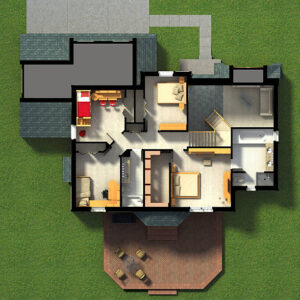
Custom building is a different animal. Instead of choosing a house that already exists on paper, you generally have more say in what gets designed. Maybe you have a weird-shaped lot. Maybe you need a giant pantry because you actually use one. Maybe you want the primary bedroom away from the kids’ rooms, or a home office that doesn’t feel like a desk shoved into a spare bedroom. Those things can be built into the design from the start. A custom builder can work with your plans, an architect, or a design team depending on the project. There’s more back and forth. More meetings, too. But that’s part of getting a house that feels like yours instead of a house that happens to fit you.
Custom Doesn’t Mean You Can Do Whatever You Want
This is where expectations need to stay realistic. Custom doesn’t mean unlimited. Your property still has rules. Setbacks, building codes, drainage, easements and zoning can all affect what gets built. Then there’s the budget, which has a funny way of bringing everybody back to reality. You might love the idea of huge windows across the back of the house until you find out what they cost. Same with complicated roof designs, massive kitchens, elaborate staircases and all those little extras that look great in pictures. A good custom builder isn’t supposed to agree with every idea just because you asked. Sometimes they’ll tell you that something isn’t worth the money. That’s useful.
The Price Tag Doesn’t Tell the Whole Story
This is one area where comparisons can get misleading. You see one production home advertised at a certain price and a custom builder quoting another number, and it looks like an easy comparison. It usually isn’t. What’s included? What are the allowances? Which appliances are covered? What type of flooring is standard? Are design fees included? What about site work? A custom home may require engineering, additional design work and site-specific construction that doesn’t show up in a basic production-home price. And the land itself can change everything. A simple lot and a difficult lot are two very different jobs. So don’t compare the first numbers you see and assume you’ve found the cheaper route.
You Also Have to Consider Your Own Patience
Here’s something people don’t always talk about. Building a custom house means making a lot of decisions. A lot. You’ll pick cabinets, flooring, lights, faucets, doors, paint, countertops and probably things you didn’t even know had a choice attached to them. Then someone asks where you want an outlet. Suddenly you’re standing there thinking, “I never thought about that.” Production building takes some of that decision-making away. For certain buyers, that’s actually a relief. You still get choices, but they’re more controlled. With custom construction, you have more freedom, but you also have more homework. That’s the trade.
Don’t Forget About Remodeling an Existing Home
There is a third option that gets overlooked because everyone gets focused on building new. Maybe you don’t actually need a new house. Maybe you already own a home in the neighborhood you like and just need to change it. In that situation, home renovations in Houston might make more sense than selling the property and starting from zero. A serious renovation can open up walls, change layouts, add rooms or update an older house in ways that make it feel completely different. There can be surprises, especially once walls start coming down. Old wiring, plumbing issues and structural problems don’t exactly announce themselves beforehand. Still, remodeling can be worth considering when the location is the part of your home you don’t want to give up.
Think About the House You Actually Need
Try not to get distracted by what looks impressive in a model home. Think about your normal Tuesday. Where do you drop your keys? Do you need a home office? Are groceries going to be carried straight into the kitchen, or is the pantry halfway across the house? Where will the kids dump their backpacks? Do you need more storage than you think? These details sound boring compared with a huge entryway or fancy staircase, but they’re the things you’ll live with every day. Custom building gives you more room to solve those problems. Production building gives you a more established layout. Figure out which matters more to you before you start chasing features.
The Builder You Hire Still Matters
Whatever route you take, don’t assume the builder’s label tells you everything. A production builder can be easy to work with or difficult. Same goes for a custom builder. Ask how they handle changes. Ask who communicates with you during construction. Find out what happens if materials are delayed or something doesn’t go according to plan. Read the contract instead of just signing it because everyone else is ready to move forward. Ask about warranties, allowances and the construction schedule. And if a builder gets irritated because you’re asking reasonable questions, pay attention to that. Building a house isn’t a small purchase.
Conclusion: Know What You’re Signing Up For
Production and custom builders are really two different approaches to the same basic goal. One gives you a more established process and a defined set of choices. The other gives you considerably more freedom, but it also asks more from you along the way. There will be decisions, changes, budget conversations and probably a few moments where you wonder why you ever started. That’s normal. The important thing is knowing what you’re signing up for before construction begins. Look at your budget, your property, your timeline and, maybe most importantly, how much control you actually want. Once you’re honest about those things, the choice between production and custom becomes a whole lot easier to understand.