
Choosing the right hosting solution is an important part of building and growing a website. While shared hosting works for many beginners, growing websites often need better performance, more resources, and greater control. This is where VPS hosting becomes a popular option.
When exploring VPS hosting, you’ll generally come across two choices: managed VPS hosting and unmanaged VPS hosting. Managed VPS includes technical assistance and server management from the hosting provider, while unmanaged VPS gives users full responsibility for maintaining their server environment.
For developers, system administrators, and technically experienced users, unmanaged VPS hosting can offer significant advantages. However, it also comes with certain responsibilities that may not suit everyone. In this guide, we’ll explain what unmanaged VPS hosting is, how it works, and the key pros and cons to consider before you decide.
What Is Unmanaged VPS Hosting?
Unmanaged VPS hosting, also known as self-managed VPS hosting, is a virtual private server environment where the hosting provider takes care of the physical hardware and network infrastructure, while the customer is responsible for server administration.
This means users are responsible for tasks such as:
- Operating system installation and updates
- Security configuration
- Software installation
- Server monitoring
- Backup management
- Performance optimization
- Troubleshooting and maintenance
Unlike managed hosting, there is little or no technical management included. The hosting provider typically ensures the server remains online, but everything inside the server is controlled by the customer.
How Does Unmanaged VPS Hosting Work?
A VPS uses virtualization technology to divide a physical server into multiple independent virtual servers. Each VPS receives dedicated resources such as CPU, RAM, storage, and bandwidth.
With unmanaged VPS hosting, users gain root or administrative access to the server. This level of access allows complete control over configurations, applications, security settings, and operating system customization.
Because users have full control, they can build a hosting environment that matches their exact requirements without being restricted by predefined configurations.
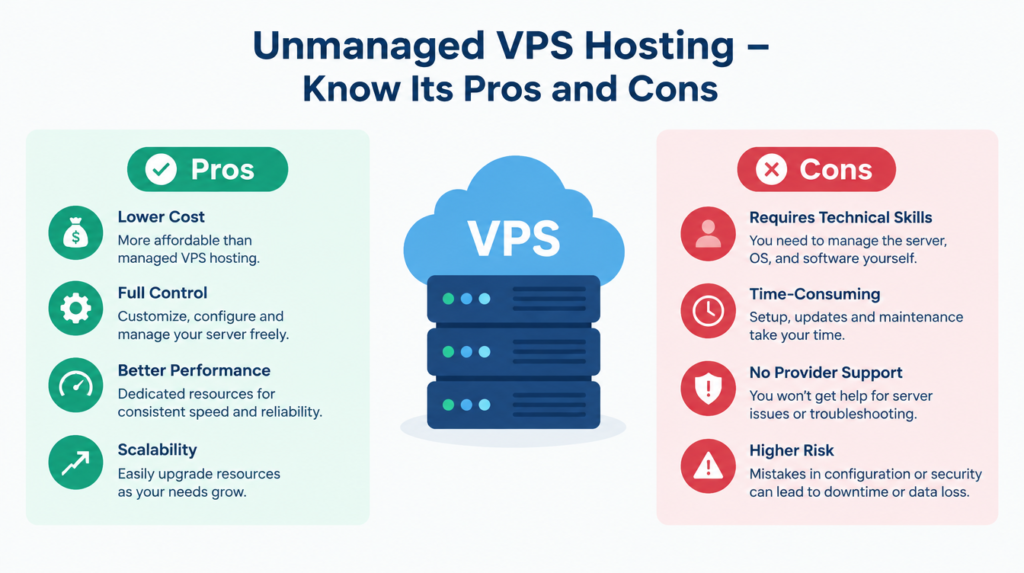
Pros of Unmanaged VPS Hosting
Complete Control Over the Server Environment
One of the biggest advantages of unmanaged VPS hosting is the level of control it provides. Users can configure the server exactly as needed, install preferred software, select operating systems, and customize settings based on specific project requirements.
This flexibility is particularly valuable for developers, agencies, and businesses running custom applications that require specialized configurations.
Greater Customization Options
Every website and application has different requirements. Unmanaged VPS hosting allows users to customize nearly every aspect of the server environment.
Whether you need a specific web server, database configuration, development framework, or security setup, an unmanaged VPS gives you the freedom to design the environment according to your needs. This level of customization is often not available with shared or managed hosting solutions.
Cost-Effective Hosting Solution
Because server management services are not included, unmanaged VPS hosting is generally more affordable than managed VPS hosting.
Businesses and developers with technical expertise can reduce hosting costs while still benefiting from dedicated resources and greater control.
For organizations with experienced IT professionals, unmanaged VPS can offer excellent value without sacrificing performance.
Better Resource Allocation
Unlike shared hosting, VPS hosting provides dedicated resources that are allocated specifically to your environment. This means your website or application is less likely to experience performance issues caused by neighboring users consuming excessive resources. Dedicated CPU, RAM, and storage contribute to more predictable performance and improved stability.
Ideal for Development and Testing Environments
Developers often use unmanaged VPS hosting to create testing environments, development servers, and staging platforms.
Having complete administrative access makes it easier to experiment with software, install development tools, create custom configurations, and test applications without restrictions. For technical teams, this flexibility can significantly improve workflows and development efficiency.
Cons of Unmanaged VPS Hosting
Requires Technical Knowledge
One of the most important factors to consider is the technical expertise required to manage an unmanaged VPS. Users are responsible for configuring and maintaining the server environment. Tasks such as server hardening, security updates, troubleshooting, and performance tuning require knowledge of server administration. For beginners or non-technical users, this learning curve can be challenging.
Security Management Is Your Responsibility
While an unmanaged VPS provides a secure foundation, the ongoing responsibility for protecting the server rests with the user.
This includes:
- Installing security updates
- Configuring firewalls
- Managing user permissions
- Monitoring security threats
- Addressing vulnerabilities
Failing to maintain proper security practices can increase the risk of cyberattacks and system compromise.
Time-Consuming Server Maintenance
Server administration requires ongoing attention. Regular maintenance tasks include software updates, monitoring services, backup management, log reviews, and troubleshooting.
Businesses without dedicated IT resources may find these responsibilities time-consuming and difficult to manage alongside daily operations.
Limited Technical Assistance
Most unmanaged VPS providers offer support for hardware and network-related issues but do not assist with server configuration or software management.
When problems occur within the operating system or applications, users are typically responsible for diagnosing and resolving them independently. This limitation can become challenging during critical situations.
Higher Risk of Configuration Errors
Because users have complete administrative access, mistakes can occur. Incorrect configurations, accidental deletions, security misconfigurations, or software compatibility issues can affect server stability and performance. Without proper expertise, resolving these problems may require significant time and effort.
Who Should Choose Unmanaged VPS Hosting?
Unmanaged VPS hosting is best suited for users who have server management experience or access to technical resources.
It is commonly chosen by:
- Developers
- System administrators
- Web development agencies
- Software companies
- Experienced website owners
- Businesses with in-house IT teams
For these users, the flexibility and control offered by unmanaged VPS hosting often outweigh the additional management responsibilities.
Who Should Avoid Unmanaged VPS Hosting?
Users without server administration experience may find unmanaged VPS difficult to maintain. Small business owners, beginners, and organizations without technical support often benefit more from managed VPS hosting because it eliminates many of the complexities associated with server management.
Managed solutions provide professional assistance, monitoring, and maintenance, allowing users to focus on their businesses instead of technical administration.
Why Businesses Consider bodHOST Self-Managed VPS Hosting
Businesses seeking flexibility and control often explore self-managed VPS solutions offered by providers such as bodHOST. Their VPS environments offer dedicated resources, SSD-powered storage, root access, scalable configurations, and reliable infrastructure that support a wide range of applications and workloads.
Because users maintain complete control over the server environment, businesses can configure their hosting platform according to specific performance, security, and application requirements.
Final Thoughts
Unmanaged VPS hosting offers an attractive combination of flexibility, performance, customization, and affordability. It provides dedicated resources and complete administrative control, making it an excellent option for users who possess the technical skills required to manage a server effectively.
However, these benefits come with added responsibility. Security management, software updates, server maintenance, and troubleshooting all become the user’s responsibility. Before choosing an unmanaged VPS, it is important to honestly evaluate your technical expertise and available resources.
For developers, IT professionals, and experienced website owners, unmanaged VPS hosting can be a powerful and cost-effective solution. For those who prefer a hands-off approach, managed VPS hosting may be the better choice. Understanding the pros and cons will help you select the hosting environment that best supports your website, applications, and long-term business goals.