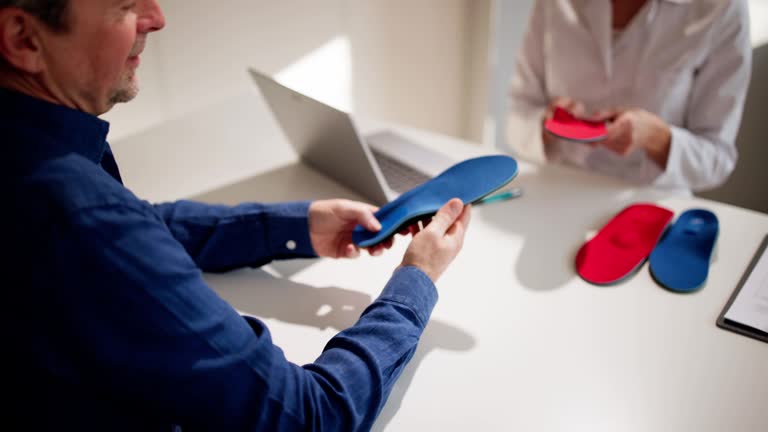
Foot pain doesn’t always arrive with some big warning. Sometimes it just creeps in. A little heel soreness in the morning, aching after work, or that tired feeling in your feet that you keep brushing off. Over time, though, it can become pretty hard to ignore. Orthotics can help in some of these situations, particularly when the way your feet move is adding extra stress. Custom made orthotics are built around the shape and needs of an individual foot, rather than being a one-size-fits-all solution. That doesn’t mean everybody with sore feet needs them. It means they can be useful when support and pressure control are actually part of the problem.
What Are Orthotics Actually Doing?
There’s a lot of confusion around orthotics. Some people think they’re just fancy shoe inserts. Others expect them to completely fix a painful foot. Neither view is quite right. An orthotic is mainly there to influence how your foot sits and moves while you’re standing or walking. It can provide support in certain areas, spread pressure around, or reduce some of the load being placed on irritated tissues. Think of it as changing the conditions your feet are working under. That can be helpful when your foot mechanics are contributing to pain. But if the underlying issue is something else, an insert sitting inside your shoe isn’t going to magically sort it out.
Could They Help With Plantar Fasciitis?
Plantar fasciitis is probably one of the first conditions people think about when heel pain comes up. And for good reason. That sharp pain under the heel, especially when you take those first steps after getting out of bed, can be brutal. The plantar fascia runs along the bottom of the foot and helps support the arch. When it is repeatedly overloaded or irritated, symptoms can stick around. Orthotics may help by supporting the arch and changing how force is distributed through the foot. For some people, that takes pressure away from the sore area. But don’t expect an insert to be the whole treatment. Calf stretching, foot exercises, footwear changes, and managing activity can all have a place too.
Not Every Sore Heel Has the Same Cause
Here’s where things get a little more complicated. Heel pain isn’t a diagnosis by itself. It’s a symptom. Plantar fasciitis is common, but there are other possibilities, including Achilles tendon issues, bursitis, nerve-related pain, and stress injuries. So, if your heel hurts, it doesn’t automatically mean you need an arch support. In some cases, changing foot mechanics can be useful. In others, the priority might be rest, rehabilitation, different footwear, or another form of treatment altogether. This is why copying what worked for your neighbour isn’t always a great idea. Their sore heel and your sore heel may have very different reasons behind them.
What About Flat Feet or High Arches?
Feet come in all sorts of shapes. Some people have low arches. Some have very high ones. And plenty of people have feet that don’t fit neatly into either category. Having flat feet or high arches isn’t necessarily a problem on its own. It becomes more relevant when the structure is linked with pain, fatigue, instability, or repeated strain. Orthotics can sometimes give the arch extra support or help spread pressure more evenly. The design depends on what the foot is doing, though. A person with a flexible flat foot isn’t necessarily going to need the same type of support as someone with a high, stiff arch. That’s one reason generic inserts don’t always feel right.
Can Orthotics Make Bunions More Comfortable?
Bunions are another area where expectations need to stay realistic. An orthotic isn’t going to take an established bunion and simply push the joint back into its old position. If only it were that easy. What an orthotic may do is change the way pressure travels through the foot, which can make walking or standing more comfortable for some people. It may also help reduce stress around the forefoot depending on the person’s movement pattern. Shoe choice matters here too. A supportive insert inside a narrow, tight shoe isn’t going to solve much. In fact, it can make things feel worse. The whole setup has to make sense.
Why a Proper Foot Assessment Makes a Difference
It’s tempting to buy an inexpensive insert online and hope for the best. Sometimes that works. If your problem is minor, a basic support may be all you need. Persistent pain is different, though. A proper assessment can look at how your feet move, how your ankle functions, where you’re putting pressure, and what happens when you walk. Your everyday shoes can also tell a story. Custom made orthotics are made from that sort of individual information, so they’re not simply shaped to look like an arch support. The aim is to match the device to the person wearing it. If you don’t know what is causing your pain, buying an expensive insert first can be a pretty unnecessary gamble.
Orthotics Aren’t Supposed to Work Alone
Another thing worth clearing up: orthotics aren’t usually a stand-alone fix. If your feet hurt because you’ve suddenly started running five days a week, for example, an insert isn’t going to erase the extra workload. Your muscles and tendons still need time to adapt. Depending on the condition, treatment may involve exercises, stretching, footwear changes, activity adjustments, or physical therapy alongside an orthotic. Some people improve quickly. Others don’t. Bodies are stubborn like that. The important thing is figuring out what is keeping the problem going instead of simply covering up the pain and hoping it disappears. An orthotic can be one useful piece of the puzzle, not the entire puzzle.
When Should You Get Your Feet Checked?
If heel or foot pain keeps hanging around, starts changing how you walk, or keeps coming back after you’ve tried simple measures, it’s worth having someone take a proper look. A podiatrist in Thuringowa can assess the foot, consider the likely cause of the symptoms, and work out whether orthotic support has a useful role. And that’s really the point. You don’t want an insert just because somebody said orthotics are good. You want the right treatment for the actual problem. For some people, that might include a custom device. For somebody else, it could be exercises, different shoes, rest, or another treatment entirely. Orthotics can be genuinely helpful for certain foot and heel problems, but the best results usually come when they’re chosen for a reason rather than bought on a guess.